
Honest Jons logo

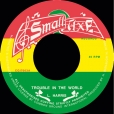
A highlight of the monumental Africa Must Be Free LP, never out on seven before, plus masterful dub. Such a great singer, shot dead at twenty-one during an argument about a stolen food-mixer.

Recording as Jah Carlos in 1976. Massive, glorious Soul Syndicate rhythm, with blazing horns, soulful reasoning, tremendous dub.

A locomotive Ben E. King cover and some wistful Deadly Headley. Derrick’s singing is clear as a bell; Striker Lee works the throttle. One to stick next to DM’s Seven Letters.

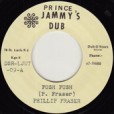
OG had been a UK-resident for five years by the time of this Brenton Wood cover, recorded here during the Soul Vendors 1967 tour. (One night Jimi Hendrix was the support.) A Procul Harem on the flip.

Reggaefied electro funk from 1986, riding the reverberations of Planet Rock.
Beatbox, synth, trumpet, and nursery-rhyme MC.

Funkin’ for New York (JA).
Betty Boop and a Alleyoop was jumping up and down… This feelin’s funk, that’s what it is, let it get into you, Jamaica funk, that’s what it is… Take it to the cosmo.

Lovely, upful, Chi-Town, rare groove vibes, with falsetto singing, horns and chorus. Produced by BB Seaton;  originally out on Golden Heart in 1974.

Inimitably mixed by King Tubby; The Aggrovators on top form, likewise; rocking horns.
With an excellent Temps, and three lovely Chicago Soul covers. Nobody does reggae-soul better than Delroy.
Aka Sings For I & I.

Cool Down Your Temper, followed by Jah Jah The Conqueror… murders she wrote. The Agrovators in the place, with Augustus Pablo; Bunny Lee at the desk; two killer Tubbys dubs to close out the sides.

Luminously upful mid-seventies roots.
Scunna’s bro King Tubby dishes up a heavy dub.
Lovely record.

OG breathing in and going deep with the Chain Smokers in 1976, for Clem Bushay.
Also featuring Trinity and Dillinger.
Rough, early-Pablo vibes. Terrific.

Dark, hypnotic, tripping nyabinghi from 1974.
Led by Ras Michael over four extended excursions, the music is organic, sublime and expansive, grounation-drums and bass heavy (with no rhythm guitar, rather Willie Lindo brilliantly improvising a kind of dazed, harmolodic blues).
Lloyd Charmers and Federal engineer George Raymond stayed up all night after the session, to mix the recording, opening out the enraptured mood into echoing space, adding sparse, startling effects to the keyboards.
At no cost to its deep spirituality, this is the closest reggae comes to psychedelia.

Vintage Wackies, and — spun out of Horace’s all-time greatest album — unmissable.
Appearing originally on the Solid Groove label out of Croydon in South London, Exclusively is sometimes misconstrued as the UK issue of Dance Hall Style. The tracks from both were recorded at the same sessions - with Bullwackie joined at the controls by Junior Delahaye and Prince Douglas - and issued close together in 1982-83, Croydon first.
Half of Exclusively non-exclusively versions four tracks from the Stateside release - three are re-titled - and also Eating Mess, which appeared on the first pressing of Dance Hall Style, though unlisted on the sleeve. The mixes are all different (and without dubs). Five further specials include the funky Musical Episode, a superior Bob Marley tribute, and a version of Rougher Yet.

Visions Of John Clarke was a little thrown together for its original release in 1979. Still, its sleeve carried a ringing endorsement from Bullwackies himself — ‘President of the John Clarke Fan Club’.
Visions attracted the early interest of no less than Studio 1 boss Coxsone Dodd, whose bid for distribution-rights was thwarted when the Brooklyn label Makossa quickly put in for a full licence. Out soon afterwards, the new version - entitled Rootsy Reggae - duplicated five tracks, but with markedly different mixes, fresh edits, and sometimes new instrumentation. This CD presents both albums complete with the original track order.
The singer — not to be confused with Johnny Clark — had been running with the Wackies operation for the past six years, ever since moving from Jamaica to New York. He’d cut memorable sevens with co-founder Munchie Jackson for the Tafari label — like In Search of The Human Race and Recession — and with Lloyd Barnes for such Bullwackies imprints as Versatile and Wackies. Several are collected by these two albums, with another layer of modification: for example, on Wasn’t It You Lloyd Barnes and Prince Douglas give a new treatment — and adding guitar — to the Jumbo Caribbean Disco twelve; on Pollution they remove the horns from the Wackies seven (though generally Baba Leslie is in full effect here).
The tracklisting rounds out with a Johnny Osbourne cover; several New Breed jams, featuring the likes of Jah Scotty, Clive Hunt, Harold Sylvester, Jah Hitler, Jerry Johnson, the Love Joys, even Mickey Mouse apparently; and on a handful of done-over rhythms Clarke takes the mic from brethren like Joe Auxumite, K.C. White and Wayne Jarrett.

Milton Henry’s handful of classics — like his version of Gypsy Woman, or This World and Follow Fashion over the Upsetter’s Fever rhythm (under the handle King Medious) — made him a natural Wackies’ recruit.
Soon after moving from JA to NYC in the late seventies, Milton was fully involved in the day to day business of the operation, supervising sales and promotion, making deliveries, even holding spare keys to the studio for whenever Bullwackies himself was away.
He appears in this activist role on the front-sleeve photograph, just up White Plains Road from the Bronx HQ: by its title, though, and first and last songs, this album also hints heavily at the past musical accomplishments of its mystery hero.
The record was released first in London, in 1984, during the first months of Wackies Dean Street office, in north Soho.
The band is basically Itopia. Sly Dunbar gets a credit — though neither he nor Robbie Shakespeare ever set foot in the studio — as acknowledgement for his rhythm recycled here as No Dreams. Jackie Mittoo and Bagga are pon the corner, from Studio One; Jerry Johnson and Neville Anderson on brass; also Sugar and Max Romeo; and Sonia from the Love Joys performs a duet.
No Dreams is the true story of Milton sleeping in the attic above the studio when the rough drum and bass track came on to the desk, waking him, pulling him to the mic; Them A Devil is aimed at certain producers passing off the singer’s property as their own; Good Old Days was written for a poorly Junior Byles, remembering times shared.