







Your basket is empty


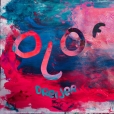
‘A new album of category-scrambling song-craft by the elusive and shape-shifting Thomas Bush; the latest stage in a wayward path between everything from murky dirges to head-nodding laments to crystalline synths that hang precariously in the air over your new-favourite bass line.
‘Critical responses along the way have focussed on a predilection for the folkey-dokey, but judging from releases like 2026’s guld, Bush’s definition of ‘folk’ has as much to do with A Guy Called Gerald as it does with Shirley Collins or John Martyn.
‘For all its diversity, what unites Bush’s ever-expanding body of work is its dual commitment to experimentation and a job well done.’
“Random Constraint Satisfaction Problems was recorded at Vista Studio 1, Malmö, between 2022 and 2025. After creating an account at academia.edu for the purpose of reading a text now forgotten, I began to get emails asking me questions such as ‘Thomas Bush, did you write Brucellosis and Sacroiliitis: A Common Presentation of an Uncommon Pathogen?’, and ‘Are you the Thomas Bush who wrote ATR-dependent Phosphorylation of FANCA on Serine 1449 after DNA Damage is Important for FA Pathway Function?’, which began to make me wonder if I was, or if I wasn’t, perhaps I should be.
“The resulting work is an attempt to find meaning in this, and other chaotic and ambiguous situations through analysis using materials and equipment to hand. Being sensitive to signs and following them up with enthusiasm. Both source material and evaluation are presented.”
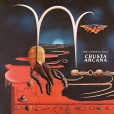
The early-eighties guitars-and-electronics breakthrough, by the Ash Ra guitarist.
A real game-changer: a momentous influence on Basic Channel, Carl Craig and so many others.
Perfect for zoning out.
With the original embossing to the cover.
It’s a must.
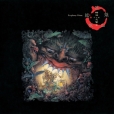
‘One of the most innovative and ambitious albums ever made; a sonic masterpiece featuring over two hundred musicians, which expanded the limits of music and sound, channeling Ōhashi’s thinking about mankind’s relationship with nature, and fundamental questions of life, death and rebirth… Pipe organ synths made from sampled Tibetan horns sit alongside field recordings from Central African forests, Buddhist mantras circle dummy head microphones, Javanese Jegog percussion ensembles pulse like verdant ecosystems, and the acoustics of temples, caves and landscapes are conveyed in the mix. Weaving together culture, nature and technology, it is a record that vibrates with the polyphony of life on Earth… But Ecophony Rinne was not only musically innovative. Noticing the difference between vinyl and CD versions of the album where digital reproduction limited the sound, Ōhashi developed a theory of Hypersonic Effect, determining that ultra-high frequencies above 20khz can impact human perception even if they are inaudible. At once a physical and a psychological experience, to listen to Ecophony Rinne is to feel music differently.’
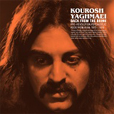
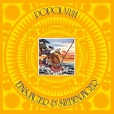
Pre-Revolution, psychedelic, funky prog from Iran, 1972-79. Loads of music, restored from K’s original master tapes; lavishly documented.
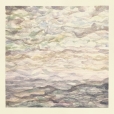
‘Richly harmonic explorations in just intonation, using a sparse but finely detailed palette of organic atmospheres, metallic shimmer and off-kilter rhythms. Sample-based hip-hop, the minimalism of Terry Riley and Jon Hassell, as well as dub techno and post-rock; all in the house. Glassy pads, gamelan metallophones, clarinet and guitar dissolve into fluid, dreamlike forms, suggesting vast coastal landscapes, charged air, the calm after a storm…’
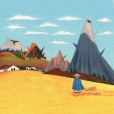
This is terrific.
Brimming with saudade, an atmospheric, engrossing, organic blend of the gorgeous folk music of northern Ecuador’s indigenous communities, and tentative, crafted, soulful electronica.
‘Mala Fama is a Kichwa sound-artist from Ibarra, Ecuador, inhabiting — and creating — multiple worlds at once, while being rooted in Indigenous pride and power. Jichushka is a Kichwa word meaning lonely, or abandoned. Here, grief is re-cast as a pathway to liberation.
‘The album was recorded between 2016-2022. Home studio sessions facilitated close collaboration with a network of artists drawn from Andean musical lineages such as marimba, vallenato, and cumbia — including Afro-Ecuadorian group Duo Anjoa, vocalist Catalina Ortiz from coastal Esmeraldas, Ibarra-based multi-instrumentalist Luis Lema, and Quixosis. The album builds on peaceful ambient compositions as much as heavy sequencing, inviting melancholic remembrances of times and spaces that no longer exist.’
Warmly recommended. Like nothing else. Check it out!

‘Queered allusions to Lutheran hymnals, almost unbearably tense passages of frenzied repetition, and explosions of melodic ecstasy,’ performed by the twenty-piece strings, horns, reeds, and pianos of the Wild Up ensemble.
According to musicologist and composer Luciano Chessa, ‘if all of Eastman’s music but this one were to disappear, Gay Guerrilla would still be enough to guarantee him a firm place in the history of twentieth-century music.’
We ship worldwide. The postage rates for your order are displayed before payment, which is processed using Paypal. You can pay using your Paypal account or any of the following cards. No need to join Paypal.
