



Your basket is empty

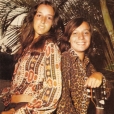
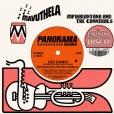
Irresistible tropical psych-funk by Colombian sisters Elia and Elizabeth Fleta.
Drawn from just a handful of recordings, between 1972 and 1973, accompanied by Jimmy Salcedo and his group La Onda Tres.

Tony Allen / Moritz von Oswald / Wareika Hill Sounds
Ole Remix / Reggae Land Dub
Honest Jon's Records
Deep Berlin steppers. Dubwise traces of our original Lagos recording — the percussion of Yinka Ogunye, the singing of fifties palmwine legend Rolling Dollar, Oscar Olimbi’s guitar lick — blend in with Moritz’ own warm Oberheim voicings, additional drumming, and cool-and-deadly rhythm track. It’s a tough, masterly dance record in fine Rhythm And Sound style (evoking vintage House, too) — which during its ten-and-a-half minutes seems to ponder time elapsed and journeys undertaken.
Reggae Land Dub is the thumping, pared-down dub of Wareika Hill Sounds’ rootical rework of Ise Nla. Magnificent trombone and percussion; expert, classical JA mixing. Brings to mind the versions of Black Man Stand Up Pan Foot.

This was the first in our series of Shangaan homages.
A metronomic, clicking beat to drive you crazy; a kind of Motorik lash — dubwise, midrange; moody strings.
Wry, driving, one-of-a-kind genius.
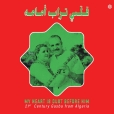
Gasba fire drawn from Ahlem Édition, the Oran-based label founded in 1992 by Abdelkader Haci.
Hypnotic flute melodies laced through hard-grooving, synth-led raï rhythms, heavy drum machine workouts, throbbing basslines, and slow-burning, hyper-soulful witness.
Hotly recommended.
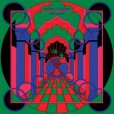
Transportingly sublime, dazzlingly virtuosic Carnatic chanting in Sanskrit about female divinity, accompanied by mridangam drums, bells and tambura drone. Beautifully recorded, in Chennai. The chorus singing is the coup de grace.
Ravishing, restorative music; hotly recommended.
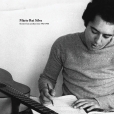
Lovely, rootsy, melancholic, multifarious music from Angola. Check the sublime, chugging proto-house of Kazum-zum-zum, to start, with its twist of Afrobeat; then the hypnotic Fourth World marimba of Kizomba Kya Kisanji; then the expressive soul of Dembita, flowering out of Baden Powell… Warmly recommended.
Norway’s finest hardanger fiddle player, performing traditional tunes from her native valley Hallingdal.
Wonderful.
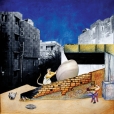
‘Oud-player with The Handover, Eissa was mentored by two legendary figures in Egyptian music: composer and multi-instrumentalist Abdo Dagher, and oud master Hazem Shahin. The music here is heavily rooted in both Egyptian classical music and a number of different folk music traditions, but it goes its own way, through expansive and intricate original compositions.
‘The epic title track, with Eissa playing oud exclusively, takes up two thirds of the album. It seamlessly transitions into heart-stopping recitation of the thirteenth century poet Baha´ al-din Zuhayr… serious, loving, tender and insistent, all at once. Visionary and virtuosic, but at the same time warm and close.
‘A future classic.’
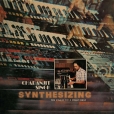
Astounding 1982 conjurations of ancient ragas on the Roland TB-303 and TR-808 synths which would define Acid. Pulsating, minimal grooves; a living Indian antecedent of House.
Released in cooperation with Singh’s estate. With a sixteen-page LP booklet containing previously-unpublished photos and two new essays. Remastered; luxuriating over four sides for maximum aural impact.
‘The mesmeric bass lines, the spare simplicity of the arrangements and the constant motion make the whole work a proper piece of electro history, akin to Manuel Gottsching’s E2-E4 for its understated visionary importance’ (Mojo).

This is terrific.
Brimming with saudade, an atmospheric, engrossing, organic blend of the gorgeous folk music of northern Ecuador’s indigenous communities, and tentative, crafted, soulful electronica.
‘Mala Fama is a Kichwa sound-artist from Ibarra, Ecuador, inhabiting — and creating — multiple worlds at once, while being rooted in Indigenous pride and power. Jichushka is a Kichwa word meaning lonely, or abandoned. Here, grief is re-cast as a pathway to liberation.
‘The album was recorded between 2016-2022. Home studio sessions facilitated close collaboration with a network of artists drawn from Andean musical lineages such as marimba, vallenato, and cumbia — including Afro-Ecuadorian group Duo Anjoa, vocalist Catalina Ortiz from coastal Esmeraldas, Ibarra-based multi-instrumentalist Luis Lema, and Quixosis. The album builds on peaceful ambient compositions as much as heavy sequencing, inviting melancholic remembrances of times and spaces that no longer exist.’
Warmly recommended. Like nothing else. Check it out!
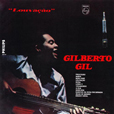
His first album; released in 1967 by Philips.
‘On the eve of the rise of Tropicalismo and electric guitars, the Bahian artist’s guitar is the star of the arrangements orchestrated by Carlos Monteiro e Souza, Dori Caymmi, and Leonardo Bruno. Social, political, and religious issues are transformed into sambas, bossa nova, and classic carnival song, as well as Northeastern rhythms. Gil calls for the people’s attention on the title track, a formidable collaboration with Torquato Neto, also co-author of A Rua, a precocious and bittersweet nostalgic baião. His passion for Bahia spreads like the waters in the lyrical Beira-Mar, composed with Caetano Veloso. Equally poetic is Gil’s vision of the Soviet spacecraft’s moon landing in Lunik 9: ‘Maybe there’s no more moonlight to illuminate my song.’. The young people are called to see truth prevail in a carnival filled with political significance in ‘Ensaio Geral.’ Ancient festivities are recalled in O Rancho da Rosa Vermelha, written with Torquato and Geraldo Vandré, while samba schools get a shout out in Mancada, a great samba full of bossa nova. Written with João Augusto, the brilliant Roda stands out for its rhythmic inventiveness and critical lyrics. A celebration of northeastern resistance, Viramundo is a collaboration with Capinan, as is the nostalgic Água dos Meninos. The simple Maria (Me Perdoa, Maria) is the album’s romantic moment. Sertanejo faith and its social contours are the theme of Procissão, one of Gilberto Gil’s most beautiful and important songs, which closes the album.’
We ship worldwide. The postage rates for your order are displayed before payment, which is processed using Paypal. You can pay using your Paypal account or any of the following cards. No need to join Paypal.
