
Your basket is empty

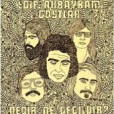
Oppositional Anatolian psych from 1977, drafting in members of Moğollar and Bariş Manço’s Kurtalan Ekspres. Pop-up gatefold sleeve, as originally.
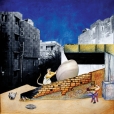
‘Oud-player with The Handover, Eissa was mentored by two legendary figures in Egyptian music: composer and multi-instrumentalist Abdo Dagher, and oud master Hazem Shahin. The music here is heavily rooted in both Egyptian classical music and a number of different folk music traditions, but it goes its own way, through expansive and intricate original compositions.
‘The epic title track, with Eissa playing oud exclusively, takes up two thirds of the album. It seamlessly transitions into heart-stopping recitation of the thirteenth century poet Baha´ al-din Zuhayr… serious, loving, tender and insistent, all at once. Visionary and virtuosic, but at the same time warm and close.
‘A future classic.’
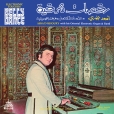
Al Ghaba!
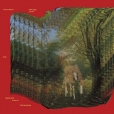
Yarghul player Atef Swaitat and singer Abu Ali are popular Bedouin wedding musicians extending long family traditions in Jenin and the north of historic Palestine. This stomping, swirling, surging, precious music was recorded at ceremonies across the Galilee throughout the 1970s.
It’s exhilarating, giddying, and immersive.
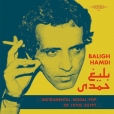
‘One of the most important Arabic composers of the twentieth century — writing for legends Umm Kalthum, Abdel Halim Hafez, Sabah, Warda, and many others — leading his own Diamond Orchestra, with Omar Khorshid on guitar, Magdi al-Husseini on organ, Samir Sourour on saxophone, and Faruq Salama on accordion. During this decade, Hamdi fully realized an international, hybrid music which incorporated beat-driven Eastern-tinged jazz, theremin-draped orchestral noir, Khorshid’s searing guitar solos, and a buzzing, sitar-based, Indo-Arabic psychedelic exotica… some of the hippest music of the era, anywhere.’
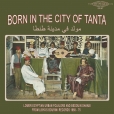
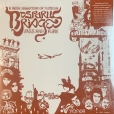
‘Egypt’s ‘official’ popular music throughout much of the twentieth century was a complex form of art song steeped in tradition, well-loved by the middle and upper classes. The music business was highly structured and professional; centred in Cairo. However, far from the metropolis, to the north and northwest, in towns like Tanta and Alexandria and extending across the Saharan Desert to the Libyan border, a raw, hybrid shaabi/al-musiqa al-shabiya style of music was springing up, supported by small, upstart labels.
‘This compilation covers the full range of styles presented by the short-lived but fecund Bourini Records, launched in the late 1960s in Benghazi, Libya. Gobsmacking moments include Basis Rahouma’s transformation into a growling, barking man-lion, and Reem Kamal’s onwards-and-upwards hand-clapping party banger, with a grooving nihilistic dissonance reminiscent of the Velvet Underground. The thorough-going contrast with mainstream Egyptian popular music is stark in Ana Mish Hafwatak, its vocal woven deftly through a constant accordion drone, and the sparse, slow-burning lament Al Bint al Libya. Whereas the mainstream was aspirational, projecting Egyptian culture at its most refined, the performances captured by Bourini were authentic expressions of ordinary, everyday life. More than half a century old, this music has lost none of its urgency, presence, or relevance.’
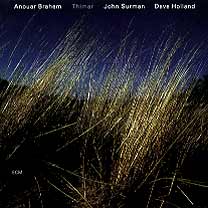
John Surman, bass clarinet and soprano saxophone; Dave Holland, double-bass.
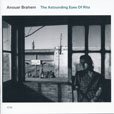
Crafted, swinging, soulful Middle Eastern jazz, led by oud and bass clarinet. Dedicated to the great Palestinian poet Mahmoud Darwish. (Why he didn’t win the Nobel Prize isn’t a mystery.)
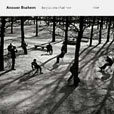
Ravishing, chilled interplay between oud, piano and accordion.
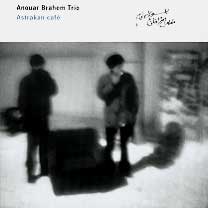
With Barbaros Erkose, clarinet; Lassad Hosni, bendir, darbouka.
From 1990 — a trio with oud, violin and percussion.
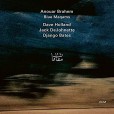
The master oudist with Jack DeJohnette, Django Bates and Dave Holland.
‘Not only one of the year’s best ECM releases; it’s a classic-in-the-making that should ultimately be considered one of the label’s very best recordings in its nearly fifty-year history’ (All About Jazz).
‘Megarbane finds a sonic through-line in his surrounding soundscapes as he draws on the chaotic energy of the crowded Beirut metropolis (Souk El Ahah), the warm atmosphere of the Lebanese countryside (Chez Mounir), or the lushness of a Mediterranean beach resort (Portemilio). In many ways, Marzipan is a cartographic feat — it travels and traces a journey across many dimensions, both sonic and physical. Megarbane’s instrumental catalogue is suitably wide-ranging: toy glockenspiel, harpsichord, pedal steel, a classic Wurlitzer et al are used liberally on the record. Free-ranging influences — beloved artists like Ahmed Malek and Issam Hajali, West African funk, European soundtracks — result in a record of somewhat unparalleled expansiveness. Floating melodies and frantic rhythmic interludes nestle together with psychedelia — fuzz-drenched guitar, sliding microtonal interludes, hypnotic rhythmic breakdowns. The resultant sound is as sprawling as the musician’s instrumental dexterity. The closer Bala 3anouan can be translated loosely to ‘without address’ — a fitting final word.’
We ship worldwide. The postage rates for your order are displayed before payment, which is processed using Paypal. You can pay using your Paypal account or any of the following cards. No need to join Paypal.
