

Honest Jons logo

Swaying, haunting tangos from Turkey, from the twenties to the fifties, drenched in tears and booze, regret and recrimination.

Stunningly beautiful, poignant music from Bilād al-Shām — ‘the countries of Damascus’, known nowadays as Syria, Lebanon and Palestine — including performances from the very first recording sessions in the region.
The legendary, moody Beirut singer Būlus Ṣulbān is here — some historians have him singing before Egypt’s Pasha Ibrāhīm Bāshā during his military campaign in Syria, in 1841 — and Ḥasība Moshēh, Jewish ‘nightingale of the Damascene gardens’. Thurayyā Qaddūra from Jerusalem; Yūsuf Tāj, a folk singer from Mount-Lebanon; Farjallāh Baiḍā, cousin to the founders of Baidaphon Records… Musical directors like the lutist Qāsim Abū Jamīl al-Durzī and the violinist Anṭūn al-Shawwā (followed by his son Sāmī); such virtuosi as the qanun-players Nakhleh Ilyās al-Maṭarjī and Ya‘qūb Ghazāla, and lutist Salīm ‘Awaḍ.
Even at the time, notwithstanding such brilliance, public music-making was frowned upon as morally demeaning, especially for women. Musical venues were generally dodgy. Ṣulbān once cut short a wedding performance for the Beiruti posh, after just one song, he was so disgusted with his audience.
‘If I had to tell you about the catcalls,’ one commentator wrote about the musical theatre of the time, ‘the stomping of feet, the sound of sticks hitting the ground, the noise of the water-pipes, the teeth cracking watermelon seeds and pistachio nuts, the screams of the waiters, and the clinking of arak glasses on the tables, I would need to go on and on and on…’

Tipped by the New York Times: ‘I have heard no more beautiful record this year… a righteous calm takes over the album like a spirit force.’

Utterly beautiful contemporary recordings.

Ceremonial music from villages in south-west Turkey, featuring a range of saz lutes, violin, and sipsi (a small oboe).

A liturgy and feast headquartered in the mountains of Antalya, with semah sacred dancing and sung poetry accompanied on the saz lute. Six instrumentalists, two vocal lineups here: from 2004 and 2011.

Two heart-breaking songs and a clutch of rug-cutters from the Taurus mountains in southern Turkey. With accompaniment by Hayri Dev on the uçtelli, or lute. Terrific.

Chris King from Dust To Digital giving a heap of Turkish 78s the pile-em-high, sell-em-cheap reissue treatment. Naff artwork and crap notes, but some marvellous music to wheedle out, no doubt.
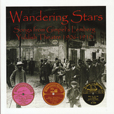
Knockout stuff. Superb restorations of original 78s — many original compositions, rare recordings of his violin-playing, ud solos; also his most famous improvisations, recorded when he was only nineteen.

Treasurable 78s about sex, booze, marriage — the original Yidl Mit Seine Fidl, a wild Simchas Torah — from the first Yiddish theatre in Europe. Patrons like Kafka, Joseph Roth and Chagall were knocked sideways.
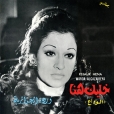
Warda Ftouki is one of the great Arab divas of the twentieth century.
Aka Warda Al-Jazairia, Warda the Algerian was forced to leave Algeria in 1956, when FLN guns were discovered in her dad’s nightclub. (Warda was a lifelong, unflinching supporter of independence.)
Aged twenty, now singing in Beirut cabarets, she became the protege of Mohammed Abdel Wahab. Returning to Algeria after independence in 1961, she took a ten year break from singing, because this was forbidden by her new husband. She left him in 1972, moving to Egypt, where she married Baligh Hamdi.
Here she is in 1973, singing a composition by Hamdi, backed by a full Egyptian orchestra, including electric guitar and organ, in front of a euphoric, adoring crowd.
Wonderful music — swirling and grooving with dazzling virtuosity; imperiously funky and giddily soulful.
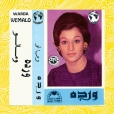
The great Algerian diva of Arab song — a Dilla favourite, incidentally — accompanied by a full-sized orchestra, augmented by electric guitar and organ, in a characteristically grooving, classy composition by her old man Baligh Hamdi. This reissue features newly remastered audio, the original cassette artwork, and a two-page insert with a new introduction by Mario Choueiry from the Institut du Monde Arabe
Classical themes of courtly love, nostalgia, absence, from sublime fourteenth-century texts, done the old-fashioned way, with fine qanbus (Yemenite, not Oriental lute), and copper plate percussion.