
Your basket is empty

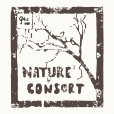
‘Pianist Bobby Naughton’s debut album was a DIY effort recorded on home equipment and featuring a hand-printed woodblock cover. Released in 1969, the album was distributed independently at concerts and by mail, receiving little attention initially, but over the years it gained a reputation as a rare, sought-after artifact of the period.
‘Nature’s Consort was a collective project, with bandmates Mark Whitecage, Mario Pavone, and Laurence Cook sharing equally in any profits. However, Naughton was the driving force behind the group’s creative direction. He composed much of the original material and selected pieces by Ornette Coleman and Carla Bley for the band’s repertoire. Though Nature’s Consort received little press at the time, it has since been recognized as a significant early document of the loft jazz era, representing Naughton’s disciplined, improvisational approach to music.’
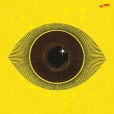
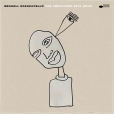
‘Ndegeocello’s second Blue Note pays homage to the great writer and activist James Baldwin. Her transformative music and collaborative spirit ignites this genre-bending work that is at once a musical experience, a church service, a celebration, a testimonial, and a call to action. Features frequent collaborators Justin Hicks, Kenita Miller, Abe Rounds, Jake Sherman, Jebin Bruni, and Julius Rodriguez, as well as powerful spoken word performances by Jamaican poet and activist Staceyann Chin.’
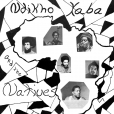
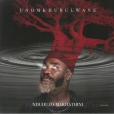
Ndikho Xaba was born in 1934 in Pietermaritzburg, KZN, South Africa: for thirty-four years — 1964 –1998 — he lived in exile in the US, Canada and Tanzania. Originally issued by Trilyte Records out of Oakland, California, this 1970 recording is bracing, freewheeling Now Thing, suffused with SA idioms, and focussed by a political urgency wiring together US Black Power, Black Aesthetics and the anti-apartheid front-line like nothing else. You can hear Trane from the off — ‘a spiritual offering to my ancestors’ — and plenty of Sun Ra, with whom The Natives several times shared double-bills. Freedom is a gutbucket-soul rendition of the people’s anthem; that’s Plunky from the Oneness Of Juju playing saxophone on Nomusa; the thunderous finale features drummer Keita from the West Indies, and Baba Duru, who studied percussion in India, before winding up with Xaba blowing eerily through a horn made from a giant piece of tubular seaweed.
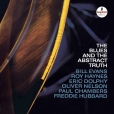
Kicking off with the sublime Stolen Moments, featuring stunningly beautiful solos by Freddie Hubbard and Eric Dolphy. Bill Evans is here, Roy Haynes, Paul Chambers…
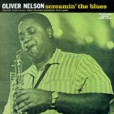
With Eric Dolphy, Richard Williams, Roy Haynes and George Duvivier in 1960, Van Gelder at the controls.
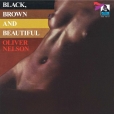
‘Originally released in 1970, Black, Brown and Beautiful saw legendary composer and arranger Oliver Nelson musically address the state of black America in the wake of the assassination of Martin Luther King. Tracks like Requiem, Lamb Of God and Martin Was A Man, A Real Man directly address the passing of King, whereas Self Help Is Needed and I Hope In Time A Change Will Come passionately ask questions still unanswered today.
“I have always felt that the Federal Government wasn’t going to do a damn thing and American Blacks were going to have to do it themselves. However, you can’t have a foot on your neck making it impossible for you to help yourself. That seems logical – doesn’t it?”
‘Musically, this is a sumptuous big band banquet with Nelson himself talking the soprano sax solo on the aching I Hope In Time A Change Will Come. Those who are fans of classic Nelson albums like The Blues And The Abstract Truth (1961) and the equally polemical The Mayor And The People (1971) will find much to enjoy here.’
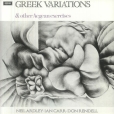
‘From the trios of pianists Kyle Shepherd, Bokani Dyer and Yonela Mnana, to the genre-defying exploits of guitarists Vuma Levin and Reza Khota; and from artists inspired by age-old traditions, like Lwanda Gogwana and Mandisi Dyantyis, to the cosmic explorations of Siya Makuzeni, Benjamin Jephta, Thandi Ntuli, Zoë Modiga and Shane Cooper’s Mabuta’ — Johannesburg label Afrosynth rounds up some of SA’s most talented young composers and bandleaders, as well as a wider cast of supporting musicians.
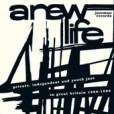
A fresh survey of post-bop, outsider British jazz labels and musicians: obscure gems, from the time-bending spirit music of London’s Lori Vambe to the psych-jazz of Birmingham’s Poliphony, via Spot The Zebra’s jazz dedication to David Attenborough and Indiana Highway’s modal Christmas carolling.
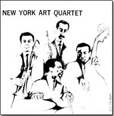
Milford Graves (percussion), Leroi Jones (vocals), Roswell Rudd (trombone), John Tchicai (alto saxophone), Lewis Worrell (bass).
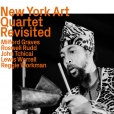
Strikingly original, still: open and untethered, dreamily ramshackle and provisional, dazzlingly polyphonic.
‘All that is solid melts into air,’ as Marx puts it; ‘all that is holy is profaned, and man is at last compelled to face with sober senses his real conditions of life, and his relations with his kind.’
Tracks 1-4 comprised the eponymous release on ESP in 1964: Roswell Rudd, John Tchicai, Lewis Worrell, Milford Graves, with a walk-on by Leroi Jones (reciting Black Dada Nihilismus).
Tracks 5-9 were released on Fontana the following year, as Mohawk: Roswell Rudd, John Tchicai, Reggie Workman, Milford Graves.
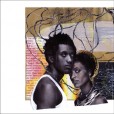
The return of the AACM flautist to the visionary, Afro-futurist science fiction of Octavia Butler, alongside theremin-player Harris, together with fellow Chicago luminaries like cellist Tomeka Reid and trumpeter Ben LaMar Gay.
Tumultuous, visceral musical reflections on Butler’s ideas about Apocalypse, power, hybridity-versus-identity, race and feminism. ‘Writing myself in,’ she called it.
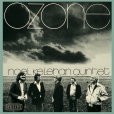
‘Stunning, moody, spiritual jazz from Ireland, recorded in 1979; featuring original compositions such as the deep collectors’ cut Spon Song, subtle Latin flavours on Spacer’s Delight, and a beautiful modal arrangement of the traditional Irish air Castle of Dromore.
‘A legendary recording in Ireland, Ozone reflects Kelehan’s keen appreciation of classic quintet-era Miles, with touches of the cerebral fusion of Ian Carr and the arranging genius of Neil Ardley. Not just a landmark Irish jazz set, Ozone is a lost classic of European jazz more widely.’
Licensed from producer John D’Ardis. Remastered at Abbey Road using the master-tapes; cut at D&M; pressed at Pallas. Presented with previously unseen photographs of the band, and their commentary.
A deadly trump card from Outernational. Essential, startling stuff. Bim bim bim.