



Your basket is empty

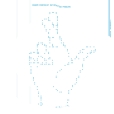
‘A new album of category-scrambling song-craft by the elusive and shape-shifting Thomas Bush; the latest stage in a wayward path between everything from murky dirges to head-nodding laments to crystalline synths that hang precariously in the air over your new-favourite bass line.
‘Critical responses along the way have focussed on a predilection for the folkey-dokey, but judging from releases like 2026’s guld, Bush’s definition of ‘folk’ has as much to do with A Guy Called Gerald as it does with Shirley Collins or John Martyn.
‘For all its diversity, what unites Bush’s ever-expanding body of work is its dual commitment to experimentation and a job well done.’
“Random Constraint Satisfaction Problems was recorded at Vista Studio 1, Malmö, between 2022 and 2025. After creating an account at academia.edu for the purpose of reading a text now forgotten, I began to get emails asking me questions such as ‘Thomas Bush, did you write Brucellosis and Sacroiliitis: A Common Presentation of an Uncommon Pathogen?’, and ‘Are you the Thomas Bush who wrote ATR-dependent Phosphorylation of FANCA on Serine 1449 after DNA Damage is Important for FA Pathway Function?’, which began to make me wonder if I was, or if I wasn’t, perhaps I should be.
“The resulting work is an attempt to find meaning in this, and other chaotic and ambiguous situations through analysis using materials and equipment to hand. Being sensitive to signs and following them up with enthusiasm. Both source material and evaluation are presented.”
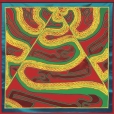
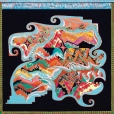
‘Back to the core formation of Lisa Alvarado on harmonium, Mikel Patrick Avery on drums, Jason Stein on bass clarinet, and composer/multi-instrumentalist Joshua Abrams on guimbri, for one continuous 37 minute composition across a single LP.
‘This time around, Abrams has pushed post production techniques found only sporadically on earlier NIS records deep into the heart of the music, distorting and reshaping instruments to mutate timbre and texture, color and time.
‘Refracting the band’s signature mesmerizing chains of overlapping rhythmic patterns through the sonic funhouse of dub makes Perseverance Flow the most formally experimental NIS album to date.’
“I imagine Perseverance Flow like a live extended realization of a Jaylib lost instrumental as remixed by Kevin Shields,” says Abrams. “Or vice versa. I also think it has sympathies with some of the more rhythmically intricate dance musics out of Chicago and Lisbon… Perseverance Flow is skipping rope in slo-mo. A dance of co-operation to rally guts and humors and keep marching through pouring tears.”
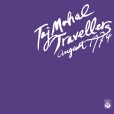
‘Their vividly definitive statement: haunting tones from an unusual combination of instruments, filtered through multiple layers of reverb and delay. Their music has strong stylistic affinities with the trippy ambience of cosmic and psychedelic rock, but the Taj Mahal Travellers were tuning in to other vibrations, drawing inspiration from the energies and rhythms of the world around them rather than projecting some alternative reality.
‘The electronic dimension of their collective improvising was coordinated, as usual, by Kinji Hayashi. Guest percussionist Hirokazu Sato joined long-term group members Ryo Koike, Seiji Nagai, Yukio Tsuchiya, Michihiro Kimura, Tokio Hasegawa, and the renowned, enigmatic electric violinist Takehisa Kosugi.
‘Films of rolling ocean waves often provided a highly appropriate backdrop for their lengthy improvised concerts. This is truly electric music for the mind and body.’
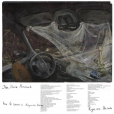
‘A kind of musical road movie, shifting gears through time, space, and reverie, with an itinerary and cast of characters looming in and out of focus. Post-punk chanson with an ear for micro-tonality. The balance of mutant music-boxes and dewy miniatures recalls otherworldly hits from Gareth Williams’ Flaming Tunes, The Residents, and the catchier corners of the Lovely Music catalogue.’
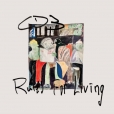
‘A kind of melted reconfiguration of popular (occasionally popular-on-the-fringes) styles. These familiar sounds are reconfigured and muddied. Hindsight frames the sources in an almost primordial light, to the extent that they feel like folk art.
‘Glyphted and Franzbranntwein sound like pop songs stripped to their bones and distorted, as if the styles they vaguely recall are as old as time. It’s a stunningly weird effect. Songs like The Duchess and Farmhand exacerbate this impression. The record comes to feel yearningly ahistorical. But in a way that feels pertinent?’

‘Documenting a 2023 West Coast tour, this double LP goes deep. On 2023-05-12 Set II, the rhythm section gives Collier plenty of space to develop long, soulful saxophone lines that are full of invention and dynamic variation, culminating in a climax of squawking multi phonics, woody bass runs and multi-directional drumming. Best of all is a riveting set dedicated to Don Cherry, where Collier vocalises freely through a megaphone, setting off its alarm at key points’ (The Wire).

‘Pianist Bobby Naughton’s debut album was a DIY effort recorded on home equipment and featuring a hand-printed woodblock cover. Released in 1969, the album was distributed independently at concerts and by mail, receiving little attention initially, but over the years it gained a reputation as a rare, sought-after artifact of the period.
‘Nature’s Consort was a collective project, with bandmates Mark Whitecage, Mario Pavone, and Laurence Cook sharing equally in any profits. However, Naughton was the driving force behind the group’s creative direction. He composed much of the original material and selected pieces by Ornette Coleman and Carla Bley for the band’s repertoire. Though Nature’s Consort received little press at the time, it has since been recognized as a significant early document of the loft jazz era, representing Naughton’s disciplined, improvisational approach to music.’
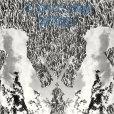
‘From 1971, the first LP the altoist self-produced for his own Altsax label; recorded in the Netherlands during Howard’s second stint in Europe, with an intriguing lineup including Misha Mengelberg and Han Bennink.
‘Howard’s saxophone work alternates between leading with passionate, lyrical lines and blending into the collective improvisation. The dynamic interplay, particularly between Mengelberg’s dissonant piano clusters and Bennink’s thunderous drumming, creates a vivid sound painting full of contrasting forms and colours. Patterns remains one of Howard’s most unique, visionary and celebrated recordings.’
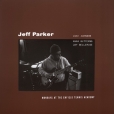
‘2 LPs of long-form, lyrical, groove-based free improv recorded live at a bar in LA’s Highland Park neighborhood with just enough space in the back for Parker, drummer Jay Bellerose, bassist Anna Butterss, & alto saxophonist Josh Johnson to convene in extraordinarily depth-full & exploratory music making. Gleaned for the stoniest side-length cuts from 10+ hours of vivid two-track recordings made between 2019 & 2021 by Bryce Gonzales, Mondays at The ETA is a darkly glowing séance of an album, brimming over with the hypnotic, the melodic, & patience & grace in its own beautiful strangeness. Room-tone, electric fields, environment, ceiling echo, live recording, Mondays, Los Angeles. It belongs in the lineage of such canonical live double albums recorded on the West Coast as Lee Morgan’s Live at the Lighthouse, Miles Davis’ Friday & Saturday Night at the Blackhawk & Black Beauty, & John Coltrane’s Live in Seattle.
‘While the IVtet sometimes plays standards &, including on this recording, original compositions, it is as previously stated largely a free improv group — just not in the genre meaning of the term. The music is more free composition than free improvisation, more blending than discordant. It’s tensile, yet spacious & relaxed. Clearly all four musicians have spent significant time in the planetary system known as jazz, but relationships to other musics, across many scenes & eras — dub & Dilla, primary source psychedelia, ambient & drone — suffuse the proceedings.’
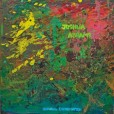
‘A rare and wonderful thing, a whirling, warm-blooded extension of the cosmic traveler’s inner consciousness, filled with surprise and steadiness instead of apprehension and fear. Fans of raga, psychedelic rock, jazz and world music are in for a real treat’ (Dusted).
‘Engaging, deliberately hypnotic music, its style ambiguously pitched between retro psychedelia, contemporary drone and timeless North African’ (All About Jazz).
‘One of the rough gems of the post-everything musical era’ (New York Times).
We ship worldwide. The postage rates for your order are displayed before payment, which is processed using Paypal. You can pay using your Paypal account or any of the following cards. No need to join Paypal.
