Your basket is empty

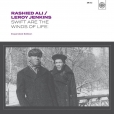
‘Part of Rashied Ali’s artistic strength involved turning improbable sound combinations into unchallenged masterpieces. After the pattern established by John Coltrane’s Interstellar Space, and Duo Exchange with Frank Lowe, the drummer stepped into this rather unlikely duet with violinist Leroy Jenkins. Five years with the Revolutionary Ensemble had established Jenkins as a composer; he designed all the pieces played on these 1975 duets with Ali.
‘The original LP is augmented by an informal phantom session in which Ali and Jenkins explore thoroughly other territories — standards, Coltrane’s music, and two untitled, unbridled improvisations.
‘Packaged in an old-school tip-on gatefold jacket that includes Stanley Crouch’s original 1975 essay along with new liner notes and excerpts from an interview with Jenkins.’

‘... sumptuous lyricism rich in improvisational detail… Quite simply it numbers among the best jazz albums of the last decade’ (Jazzwise).
The great Italian trumpeter’s homage to Michael Jackson, refreshingly focussing on the later work. Thriller’s here, but the History and Invincible albums are his favourites.
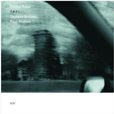
In lyrical homage to French filmmaker Jacques Tati, with pianist Stefano Bollani and drummer Paul Motian.
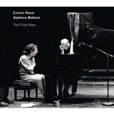
With the brilliant Italian pianist Stefano Bollani — a mixture of their own compositions, improvisation, and covers, including two versions of Jobim’s Retrato Em Branco Y Preteo.
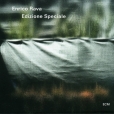
‘Recorded live at the Middelheim Festival in Antwerp, Edizione Speciale brings together a team of young improvisers who play Rava’s music with fire and élan, accompanying his fountain of melodic ideas, while also taking advantage of the free space that the extensive musical forms open up. The group’s repertoire includes material from the trumpeter/flugelhornist’s early recording Enrico Rava Quartet (1978), and Wild Dance (2015), plus a rendition of Once Upon A Summertime — the English version of Michel Legrand’s La valse des lilas — as well as the universally known Cuban song Quizás, Quizás, Quizás.’
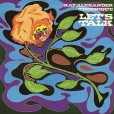
Legendary Harlem soul and funk from 1973 — the RAT was the house-band at the Apollo — with bags of lo-fi charm and sublimated Isaac Hayes to its ‘unabashedly sincere songs that perfectly encapsulate the era’s heady milieu of black pride and cultural awareness, and the plaintive emotion of struggling to realise dreams whilst navigating a city and neighbourhood in decline.’
Painstakingly prepared according to the remit of this series; with excellent notes.
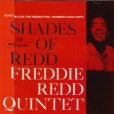
‘Classic Vinyl’ series.
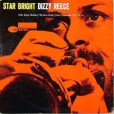
‘Classic Vinyl Series.’
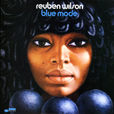
Funky soul jazz from 1969, featuring guitarist Melvin Sparks, and including covers of Knock On Wood and Twenty-Five Miles.
A terrific album by the Hen Ogledd conspirator, and collaborator with the likes of Derek Bailey, Bill Orcutt and Jon Butcher.
A telyn rawn is a harp strung with wound and pleated horse hair. (Tristram Shandy would have a field day.) It’s maybe a millennium old; passing into obscurity around two hundred years ago.
“All the music on this album is improvised. I designed and built a long forgotten instrument, engaged with historical texts and poetry, learnt the techniques and music from the Robert ap Huw manuscript and researched the importance of the horse and horse cults in Welsh culture. All these interventions were a means to improvise historically informed music and re-evaluate the legacy of the harp in Wales but ultimately served as a jumping off point so as to create new possibilities.”
The music is warmly compelling: polyphonic, convivial, rootsy, evocative, often mesmeric, sometimes banging.
Ancient Welsh folk veers into koto and kora, Appalachian dulcimer and Norwegian langeleik; the wheezing, wailing, rocking traditions of drones and sawing from Louisiana to Albania are streamed into the Valleys, and out again, changed.
Handsomely presented, too. Hotly recommended.
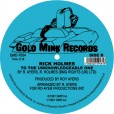
Terrific, grooving Black History from the Roy Ayers camp.
‘Remember to remember, to never forget. How long… how long… how long will it take?’