

Your basket is empty

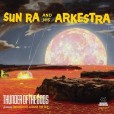
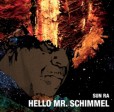
Three previously unreleased transmissions: two salvaged from the hallowed tapes of Strange Strings, his hardcore 1966 masterwork; whilst Calling Planet Earth / We’ll Wait For You — from the same time as Universe In Blue, five years later — is twenty-four minutes from a triumphant show at Slug’s, featuring June Tyson and heavy Ra synths on two Arkestra evergreens.
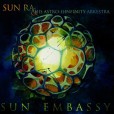
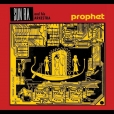
Late-sixties recordings from Sun Studios — chez Ra — in Philadelphia.
The first-ever release of six works; plus revivals of 1950s classics Sunology and Ancient Aiethiopia; and an early treatment of Why Go To The Moon.
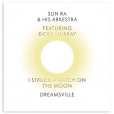
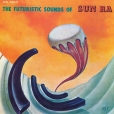
In 1961 Sun Ra took off from Chicago – where he had established the Arkestra, his dedicated ensemble and the vehicle for his mission to better the planet – and with a scaled-down version of the band he landed in NewYork. Their first recording session was in Newark in October of that year. The Futuristic Sounds Of Sun Ra, recorded for the Savoy label, is a beautiful document of the material they’d honed during a long residency at the Wonder Inn at the end of the Chicago period. Among tracks left in the vault from that day in the studio were these two great ballads sung by Ricky Murray, both of them redolent of the bright popcraft that had long been part of Ra’s repertoire, with classic Afrofuturist themes of navigating outer space and altered destiny cloaked in sweet songs with tart arrangements.
“Marshall Allen especially liked playing I Struck A Match On The Moon,” recalls Ricky, “because he got a chance to light up a cigarette while we were singing.”

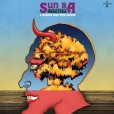
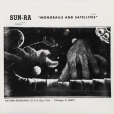
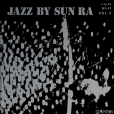
A triumphant edition of one of the most implacable, mysterious, rumbustiously creative albums in the entire Saturn catalogue.
The three tracks comprising the original LP are remastered from tape, doing away with the distortion which has dogged all previous issues. The four additional recordings here are previously unreleased, including two more from the first sessions, and a live performance circa 1967, with Ra leading strange strings on clavinet, and finally a demonstration by Ra of the ‘plaintive’ expressiveness of the Ukrainian bandura.
With excellent notes, including a new essay by David Toop.
‘When I say space music, I’m dealing with the void, because that is of space, too; but I’m dealing with the outer void rather than the inner void, because somehow man is trapped into playing roles into the haven or heaven of the inner void… the word space is a synonym for a multi-dimension of different things other than what people might at present think it means. So I leave the word space open, like space is supposed to be.’
‘If you play it right time, you’re wrong,’ Sun Ra once instructed his Arkestra. ‘I told you, it’s designed for sound.’
From the original Saturn Research publicity flyer for Strange Strings: ‘Too many people are following the past. In this new space age this is dangerous… It is no accident that those who die are said to have passed since those who have PASSED are PAST.’
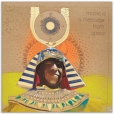
‘New and archival recordings all orbiting around the intergalactic soundscape introduced by Sun Ra. Ra’s own a capella I Don’t Believe in Love, recorded by Ra at home in Chicago during the 1950s, kicks the program off. This intimate private recording is followed by two intense new solo improvisations by French guitarist Raymond Boni, one acoustic and one electric, inspired by seeing the Arkestra preparing for a gig in Arles in 1976. The first side wraps up with Jason Adasiewicz’s riveting unaccompanied vibraphone workout on Ra’s Lanquidity and Where Pathways Meet. With a completely different take on Lanquidity, Side Two begins with four wild remixes by legendary Cologne techno pioneer Wolfgang Voigt, using layered samples from the LP. Hailing from the intersection of free jazz and out rock, Ken Vandermark’s band Spaceways Inc., with bassist Nate McBride and drummer Hamid Drake, continue with a Ra medley, in collaboration with the Italian band Zu. And where the program started in disbelief, love-skepticism, it concludes with Joe McPhee’s emphatic loving embrace on Cosmic Love, a classic tenor/synth sound-on-sound recording from 1970.’
With cover art by Emil Schult, who designed classic 1970s LPs for Kraftwerk. Very limited.
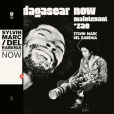
These two sharpened their musical skills in the celebrated seja-jazz band from La Réunion, Le Club Rythmique. In 1967 Sylvin Marc put out a terrific funk 45, saturated in James Brown. Later, he would play bass for Nina Simone on her album Fodder On My Wings, whilst Del Rabenja would work with Manu Dibango.
In these 1972 recordings for Jef Gilson’s Palme label, they are joined by their Madagascan compatriots Ange Japhet, Gérard Rakotoarivony and Frank Raholison — comprising the same group of five which lights up Funny Funky Rib Crib by Byard Lancaster and Soul Of Africa by Hal Singer & Jef Gilson.
The first side showcases the valiha harp-playing of Del Rabenja: three excursions in tribute to the great Rakotozafy, hypnotic and full of spirituality. The second side presents four compositions by Marc — free, grooving and cosmic.
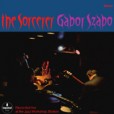
‘Verve By Request.’
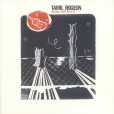
“I didn’t want to make a bebop record. I wanted to make a modal jazz record and there just aren’t that many on viola. I wanted to speak with a heavier voice, more akin to a tenor saxophone. The viola is darker and thicker. It speaks slower.”
‘Love that, kind of Miguel Atwood-Ferguson, big orchestrations with really low down dirty jazz music” (Gilles Peterson).
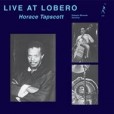
With bassist Roberto Miranda and drummer Sonship in 1981.
Featuring a tremendous, side-long reading of Dark Tree.