Honest Jons logo

‘We proceed along a musical timeline in the same time as we are all making it up, the musical references being around us both in the past and the present as we share what we are doing in a new situation with others who are doing the same but differently and thus continually modifying our own continuum.’

‘In August of 1961, the John Coltrane Quintet played an engagement at the legendary Village Gate in Greenwich Village, New York. Coltrane’s Classic Quartet was not as fully established as it would soon become and there was a meteoric fifth member of Coltrane’s group those nights — visionary multi-instrumentalist Eric Dolphy. Ninety minutes of never-before-heard music from this group were recently discovered at the New York Public Library for the Performing Arts, offering a glimpse into a powerful musical partnership that ended much too soon. In addition to some well-known Coltrane material (My Favorite Things, Impressions, Greensleeves), there is a breathtaking feature for Dolphy’s bass clarinet on When Lights Are Low, and the only known non-studio recording of Coltrane’s composition Africa, from the Africa/Brass album. This recording represents a very special moment in John Coltrane’s journey — the summer of 1961 — when his signature, ecstatic live sound, commonly associated his Classic Quartet of ‘62 to ‘65, was first maturing. He was drawing inspiration from deep, African sources, and experimenting with doubled-up basses both in the studio (Ole) and on stage. This truly rare recording of Africa captures his expansive vision at the time.’

Solo double-bass, recorded in Rio.
Versions of Nardis and Love Theme From Spartacus — two favourites from his time with Bill Evans — plus Eddie Harris’ Freedom Jazz Dance, alongside five Johnson originals.

With Amina Alaoui and Jon Hassell.

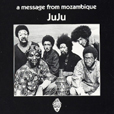
His Batagraf percussion project with Helge Norbakken from Jon Hassell’s group (playing djembe, talking drum, sabar, garong) — inspired by Wolof, Yoruba, Cuban, Arab music — with singing and poetry. Check it!

His own selection from two ECMs and an Emarcy — subverting the big-band tropes second-nature to a large improvising ensemble. ‘Inspired by Gil Evans, Claus Ogerman and Oum Khalsoum.’

The Siwan collective, with a new lead singer, Mona Boutchebak from Algeria, in settings of the poetry of Al Andalus, exploring the correspondences between Arabic music, Andalusian classical music and European baroque music.

Siwan, the transcultural, trans-idiomatic musical collective — an Algerian lead singer, a kemençe player from Turkey, an Iranian master of the tombak, an innovative Norwegian drummer, and an energetic string section of baroque specialists — setting verses by Ummayad princess Wallada bint al-Mustakfi (1010-1091) and contemporaries including Ibn Zaydun (1003-1071)  and Ibn Sara As-Santarini (1043-1123).

‘Strung between Cambien’s razor-sharp prepared piano, and drummer Andersen’s surgical pointillism, Nergaard grounds the music in fresh bass science. The trio transitions fluently from enveloping drones — drawing from British improv — to ecstatic grooves that nod towards free jazz.
‘Though a debut album, the sound is exceptionally well-balanced. An energised calm fills the music with nerve and momentum, combining contemplativeness and expressivity. An extraordinary sense of consonance and texture creates an inviting tactility; something you can dive deep inside. The music sounds mature, but not remotely complacent. Rough and direct, yet eloquent and generous; both patient and restless, it stands firm.’
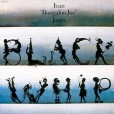
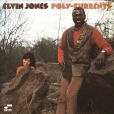
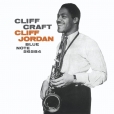
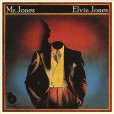
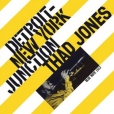
The title track is a pinnacle of funky soul jazz. No-nonsense chitlin manners, hard and tight, with none of the airs and graces of fusion. Sonny Phillips on electric piano, Ron Carter on bass. Jones nails it evilously. Ace drumming by Bud Kelly.
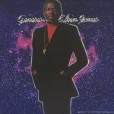
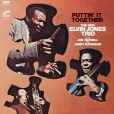
A brawny, no-piano, three-horn quintet — Dave Liebman, Joe Farrell, Frank Foster — including bassist Gene Perla. Questing, widescreen post-bop from 1971.