Your basket is empty


‘Documenting a 2023 West Coast tour, this double LP goes deep. On 2023-05-12 Set II, the rhythm section gives Collier plenty of space to develop long, soulful saxophone lines that are full of invention and dynamic variation, culminating in a climax of squawking multi phonics, woody bass runs and multi-directional drumming. Best of all is a riveting set dedicated to Don Cherry, where Collier vocalises freely through a megaphone, setting off its alarm at key points’ (The Wire).
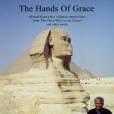
‘You’re never too old to learn something new. Reed credits bebop with keeping him and his friends out of reform school because they were too busy listening to records to get into trouble. Finding fame as a writer, he returned to music circuitously, eventually taking the plunge at aged 60 to study jazz piano. Diagnosed with prostate cancer in 2006 he hastily assembled a quintet to fulfil a lifelong ambition of recording an album. He made the record (and recovered). Cash-strapped during COVID, he became a composer to generate funds money for his plays, enlisting his daughter Tennessee as narrator.
‘These humble origins and a genuine love and natural talent for music are what underpins The Hands Of Grace. Consisting of works written for Reed’s play The Slave Who Loved Caviar alongside new original compositions, it brings in close friends and family to accompany his casual, unvarnished playing style that’s so genuinely heartfelt it feels as if you could be sat alongside in their living room. The music carries a lived-in simplicity yet it also holds something ambiguous that draws it away from the predictable. Music papers rustle, a living room chair is dragged up to the keys whilst Reed’s wife Carla contributes violin and daughter Tennessee recites her poetry on standout How High The Moon. This is a poignant family affair with no-one left out, ending on a touching tribute and voicemail from their late daughter Timothy.’
Brilliant piano-trio jazz; warmly recommended.
‘Break Stuff’: what happens after formal considerations… a time for action… breakdowns, breakbeats, break dancing…
Hood is a humbly bamboozled tribute to Robert Hood. Work is for Iyer’s beloved Thelonious Monk. Countdown sets Trane to a West African rhythm. Mystery Woman is driven by the compound pulses of South Indian drumming. There’s a desolate, barely-there solo version of Billy Strayhorn’s Blood Count…
A scorcher.
Rawly emotional, politically charged drums-saxophone duets, with a rough-and-ready, carnivalesque, spirited energy. McLean is in full flight.
The closer Deicomahleeah has been reissued by both Floating Points and Jazzman, in the last few years.
Carvin is the percussionist on Expansions; the drummer on Pharoah’s Elevation and Doug Carn’s Infant Eyes.
Reduced LP price, briefly.
Quintessential NYC loft action from 1977, with such a killer line-up: Julius Hemphill, Abdul Wadud, and Pheeroan aKLaff.
‘For those of us into the obscure, lively corners of free music, it’s an essential gem,’ says Foxy Digitalis.
“These guys are all heroes of mine. I’ve learned so much (still learning) from all of them. To hear them all together like this is a real gift. What a combo! I can’t believe this happened more than forty years ago. It sounds like the future. I’m so thankful the tape was running to document this extraordinary moment” (Bill Frisell).
‘Four years after a first album on the Futura label in 1971, Jacques Thollot returned, this time on the Palm label of Jef Gilson, still with just as much surrealist poetry in his jazz. In thirty-five minutes, the French composer and drummer, who had been on the scene since he was thirteen — recording Gilson LPs when he was just sixteen — established himself as a link between Arnold Schoenberg and Don Cherry. Resistant to any imposed framework and always excessive, Thollot allows himself to do anything and everything: suspended time of an extraordinary delicacy, a stealthy explosion of the brass section, hallucinatory improvisation of the synthesisers, tight writing, teetering on the classical, and in the middle of all that, a hit, the title-track — which Madlib would one day end up hearing and sampling.
‘In a career lasting half a century, centred on freedom, Jacques Thollot played with a roll-call of key experimental musicians (Don Cherry, Sonny Sharrock, Michel Roques, Barney Wilen, Steve Lacy, François Tusques, Michel Portal, Jac Berrocal, Noël Akchoté...) who all heard in him a pulsation coming from another world.’
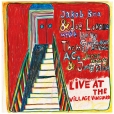
With Joe Lovano, Larry Grenadier, Thomas Morgan, AC, Jorge Rossy & Joey Baron.
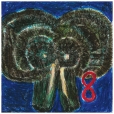
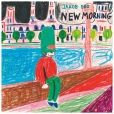
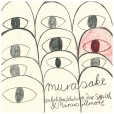
Jakob Bro, Brian Blade, Craig Taborn, Chris Cheek, Jesper Zeuthen, Anders Christensen, Larry Grenadier & Marcus Gilmore, playing compositions by Paul Motian and Jakob Bro.
The album was recorded in a single session at New York’s Power Station with engineer James Farber, following a week-long residency at the Village Vanguard.
‘Danish guitarist and composer Jakob Bro is celebrated for his pure reflective expression and penchant for celestial textures, effortlessly distilling and refining quiet sonics. At the Village Vanguard, he leads an impressive group – featuring two bassists and two drummers – for a nearly week-long residency.
‘The perfectly poised, ambient-leaning soundworld that characterizes Bro’s compositions was discomposed and distended by this octet, probing thrilling sounds and providing ample opportunity to create spontaneously. It was an exhilarating jazz night with some of the most esteemed players out there.’ (Jazztrail.net)
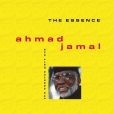
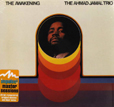
Recorded live in Paris in 1994 and New York City in 1995. The band includes Idris Muhammad, Manolo Badrena, and George Coleman. Beautifully constructed, grooving, percussive versions of a tasty mixture of standards and originals.
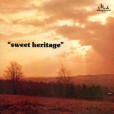
Pianist James Edward Manuel’s only release; amongst the deepest custom-press jazz recordings of them all.
Jaman studied under greats like Horace Parlan. Gigging on the Buffalo club scene, one of his early trios included the renowned bassist John Heard and drummer Clarence Becton, till both were poached one night by a visiting Jon Hendricks. Other sidemen include Sun Ra Arkestra bassist Juini Booth and Ahmad Jamal regular Sabu Adeyola.
Pressed in tiny quantities by the Mark Records custom service in 1974, and issued with a stock landscape cover, Sweet Heritage presents a soulful mixture of covers and originals. In particular, the flying, spiritual sound of Free Will and the upful, Latin-tinged In The Fall Of The Year — both Jaman compositions — have turned the LP into a legendary collector’s classic.