Your basket is empty


From 1979, and including UFO — rumbustious disco, Arkestra-style, featuring Marshall Allen on oboe, with solos from John Gilmore, Taylor Richardson and Michael Ray (who also mixed the album, layering in pre-recorded material).
Seductive Fantasy lines up John Gilmore, James Jacson’s bassoon, some fine baritone saxophone and some electric guitar and bass, Marshall Allen’s oboe and Eloe Omoe’s bass clarinet, with great piano-playing from Ra throughout, and towards the end some arco strings.

From the same 1979 recording sessions as Strange Celestial Road, this is one of Sun Ra’s best-loved, funkiest records, with John Gilmore in full flight, and a bigger Arkestra than had just played the Moers festival.
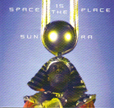
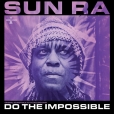
The LP is in the ‘Verve By Request’ series.
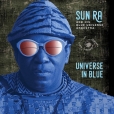
From 1972, with Ra on organ throughout — trading solos with Gilmore and trumpeter Kwame Hadi on the bluesy title cut; duetting with drummer Luqman Ali on In A Blue Mood. June Tyson stars on Blackman.
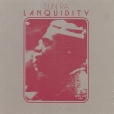
Recorded one long hot night in July 1978.
Sun Ra at the Rhodes, Disco Kid on guitar… Deadly funk, heady and grooving. A stone classic.
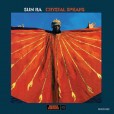
The new box set features the original LP alongside alternative mixes by Bob Blank first released in limited quantities for a 1978 Arkestra gig at Georgia Tech. Both versions of the album are cut loud at 45 rpm over 2LPs each.
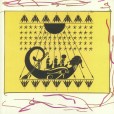
Housed in a silver foil box, as per the original issues the first LP comes in a foiled sleeve while the second features two yellow A4 sheets pasted onto a white sleeve. With a twelve-page booklet featuring previously unseen photos and various texts.
The CD version is housed in a foil digipak.
The single LP is a straightforward reissue of the original LP.
The title track was ‘one of Sun Ra’s on-the-spot compositions,’ recalls Danny Ray Thompson. ‘Almost like an Ancient Egyptian Stargazing Ceremony, mapping out the stars and the planets.’ Where Pathways Meet is his ‘funky version of an Egyptian march. Pharaoh is sending his troops off to fight and this is his pep-talk! The music seems to take different pathways but still converges.’ The loping groove of That’s How I Feel features the reflective trumpet lines of Eddie Gale, with solos by John Gilmore, and Marshall Allen on ‘snake charming oboe’. The funky Twin Stars Of Thence weaves around Richard Williams celebrated elastic bassline; the haunting closer There Are Other Worlds is pure ‘space music’.
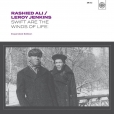
‘Part of Rashied Ali’s artistic strength involved turning improbable sound combinations into unchallenged masterpieces. After the pattern established by John Coltrane’s Interstellar Space, and Duo Exchange with Frank Lowe, the drummer stepped into this rather unlikely duet with violinist Leroy Jenkins. Five years with the Revolutionary Ensemble had established Jenkins as a composer; he designed all the pieces played on these 1975 duets with Ali.
‘The original LP is augmented by an informal phantom session in which Ali and Jenkins explore thoroughly other territories — standards, Coltrane’s music, and two untitled, unbridled improvisations.
‘Packaged in an old-school tip-on gatefold jacket that includes Stanley Crouch’s original 1975 essay along with new liner notes and excerpts from an interview with Jenkins.’
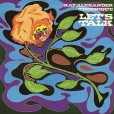
Legendary Harlem soul and funk from 1973 — the RAT was the house-band at the Apollo — with bags of lo-fi charm and sublimated Isaac Hayes to its ‘unabashedly sincere songs that perfectly encapsulate the era’s heady milieu of black pride and cultural awareness, and the plaintive emotion of struggling to realise dreams whilst navigating a city and neighbourhood in decline.’
Painstakingly prepared according to the remit of this series; with excellent notes.
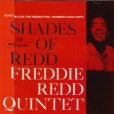
‘Classic Vinyl’ series.