
Your basket is empty

‘***** beautiful, deeply affecting… hard to beat as the year’s most worthwhile reissue’, The Guardian; ‘magnificent… wonderfully austere’, Time Out.

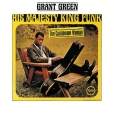
Dazzling music from 1969, way ahead of its time, by a nonet with Woody Shaw and Dizzy Reece on trumpets, Joe Farrell on reeds, woodwinds, and English horn, Bob Northern on French horn, Howard Johnson on tuba and bass clarinet, Ron Carter on bass. Fresh from Bitches Brew, Lenny White plays drums at just his second recording session; trombonist Julian Priester is a few months away from Mwandishi.
Sideways establishes Hill’s signature twist on Monk and Bud Powell, with its angular, sinewy restlessness, and Caribbean tang. The horns are crossly careering. The evocative title cut has classical, cinematic manners, but in the service of East of the River Nile mysticism. Plantation Bag is magnificent, delirious, epic funk, with Lenny White channelling Clyde Stubblefied, and Ron Carter dug in deep. Noon Tide tears way further eastwards, in the same urgent cohort as classics like Yusef Lateef’s Chang, Chang, Chang and Pete La Roca’s Dancing Girls. Cascade is precisely skittering and eruptive, with wonderful trumpet-playing. Yesterday’s Tomorrow is playful, both jaunty and rueful, undecided, to close.
The arrangements throughout are imperious; the playing is uniformly superb. “We had rehearsal time and a lot of studio time. Some of those songs, we did take 45 or take 50. We played them over and over and over, till we got a complete take just right.’‘
Knockout.
‘*****’, The Independent; ‘captivating… Q Recommends’; ‘there is no end of exhilarating music on this beguiling album’, The Sunday Times; ‘full of heartstopping musical twists and turns’, The Beat.
‘*****’, The Times, Independent On Sunday, Daily Telegraph, What’s On, Evening Standard, The Independent. ‘Marvellous pop — catchy, fun, young, effortless’, The Times; ‘one of the delights of the age’, Songlines.
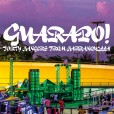
Rough, tough, tumping, bumping soundboy breakbeat from the Caribbean coast of Colombia.
Forty brand new buckaroos, tooled and primed by Jeanpi Perreo, Edwin Producciones and DJ Ander — all from local sound-systems — careering guarapo-style out of punches of vintage Nigerian highlife, waka and co, by legends like Steven Amechi, Sagbeni Aragbada and Cardinal Rex Jim Lawson.
Edited and mastered by CGB at D&M for maximum oomph and worries, and presented in a gatefold sleeve with cool and deadly varnishing. Plus a full-size booklet detailing the fascinating history of this music, seamed into the strange, tentacular byways of hand-to-hand vinyl distribution, record collecting and musical connoisseurship, and the soundclash traditions of the region, suffused with the politics and culture of the Black Atlantic, stretching back to the 1950s.
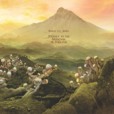
By themselves on the first record; for the second, joined by Evan Parker and Byron Wallen, harpist Tori Handsley and tabla player Sarathy Korwar, and drummer Yussef Dayes. Both sessions were recorded completely live, straight to tape, consolidating the ‘incandescent immediacy’ of the playing. The duo’s ‘soulful tenor sax sermons plus earthily funky drumming, fusing jazz, hip-hop and grime… winningly mix dark, classic Coltrane raptures, infectious hook-rooted rockers and Sonny Rollins-like calypsos. The larger group sets up thrilling rhythm textures merged from Parker’s seamless soprano lines and a chatter of snare drums and tablas; there are atmospheric guitar-like harp figures, and dramatically spontaneous two-tenor tussles’ (The Guardian).
‘CD of the year so far’ (London Jazz News).
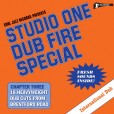
Studio One Dub Fire Special
Chapter 3: 18 Heavyweight Dub Cuts From Brentford Road
Studio One / Soul Jazz
An expert sampling of the original Studio One dub LPs, plus a couple of wild cards.
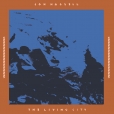
A September 1989 performance at the World Financial Center Winter Garden in New York City, with Brian Eno mixing live.
‘During this period Hassell was inspired by the increasingly innovative production techniques being used in hip-hop, in particular the hyper-collaged sampledelic barrage of the Bomb Squad’s work with Public Enemy, hearing it as a kind of extension of the tape splicing that Teo Macero brought to his work with Miles Davis. He began to incorporate more of this aesthetic into his own music, playing over loops of his own performances and riffing on angular juxtapositions of noise, rhythm and melody.’
First time on vinyl.
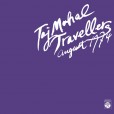
‘Their vividly definitive statement: haunting tones from an unusual combination of instruments, filtered through multiple layers of reverb and delay. Their music has strong stylistic affinities with the trippy ambience of cosmic and psychedelic rock, but the Taj Mahal Travellers were tuning in to other vibrations, drawing inspiration from the energies and rhythms of the world around them rather than projecting some alternative reality.
‘The electronic dimension of their collective improvising was coordinated, as usual, by Kinji Hayashi. Guest percussionist Hirokazu Sato joined long-term group members Ryo Koike, Seiji Nagai, Yukio Tsuchiya, Michihiro Kimura, Tokio Hasegawa, and the renowned, enigmatic electric violinist Takehisa Kosugi.
‘Films of rolling ocean waves often provided a highly appropriate backdrop for their lengthy improvised concerts. This is truly electric music for the mind and body.’
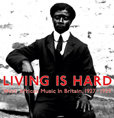
‘So it is that Honest Jon’s has (again) unearthed an episode of black music history in Britain: these are tough cuts — in no way easy listening, but absolutely essential’ (**** The Observer).
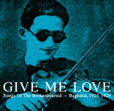
‘Beautiful, haunting… spiritual reflection is sung with carnal force, songs of romance are rendered like hymns. For a few moments, on these ancient records, Baghdad sounds like paradise’ (Rolling Stone).