

Your basket is empty

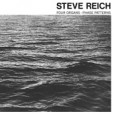
‘If it is the radical edge of uncompromising hardcore minimalism that you are after, this reissue of Four Organs and Phase Patterns delivers two key examples.
‘‘I am interested in perceptible processes’ Reich had written in 1968. ‘I want to be able to hear the processes happening throughout the sounding music.’ Four Organs is a radical realisation of this goal. Against the steady rattle of maracas, individual tones within a single chord are gradually lengthened. No changes of pitch or timbre occur, and the drawn out nature of the process provoked outrage at some early performances, when audiences found themselves caught up in a decelerating loop, being dragged towards stasis. Phase Patterns, composed a month later, relies on a phasing technique developed during Reich’s earlier experiments with magnetic tape recordings, which he allowed to drift out of sync. Identical figures initially in unison shift out of phase, generating unexpected patterns.’
‘Obviously music should put all within listening range into a state of ecstasy’ (Steve Reich).
Vinyl from Aguirre.
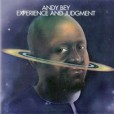
Slower and funkier than the Gary Bartz excursion a few years earlier — with Bad Wilbur Bascomb popping away on electric bass, not Ron Carter — this unmissable 1974 version of Celestial Blues was a game-changing revive in the early nineties, a cosmic crossing of Bill Withers, Sly and Brian Jackson, threading trip hop and Jazz Dance through to Madlib.
‘C’mon meditate! Let’s contemplate!’
The debut LP of David Jahson and Jerry Baxter, from 1978 (featuring the classic, parping Black On Black, from four years earlier).
The CD adds the Love Train album.
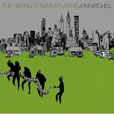
Her mid-seventies turn to jazz, bringing in the Drummers of Burundi. Prince loved it.
The LP is newly remastered by Bernie Grundman under the supervision of Joni Mitchell.
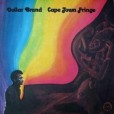
The towering jazz landmark originally issued in South Africa in 1974 under the title Mannenberg Is Where It’s Happening. Recorded with Basil Coetzee, Robbie Jansen, Monty Weber and Morris Goldberg, the music protested the evictions underway from District Six, whereby ‘coloureds’ were murderously booted out to Mannenberg township (where Coetzee was from). The LP sold by the thousands within weeks, becoming South Africans’ unofficial national anthem.
“I’d had the experience of playing dance bands, African dance bands like the Tuxedo Slickers, and we played xhosa, American swing music, mbaqanga… I also played with coloured dance bands — waltzes, quick-steps, squares, paso doble, then also the traditional Cape music…”
An upfully ravishing, hypnotically danceable, rootsily syncretic, universal call to resistance.
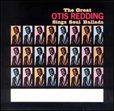
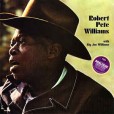
Mr Pitiful at his most powerful, with the MGs in 1965.
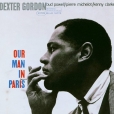
‘Classic Vinyl’ series.

Of all his albums, this was Stan Getz’ favourite. Ours, too.
Freed from the formal orthodoxies of small-group bebop, and revelling in the freedoms opened up by Eddie Sauter’s thrilling strings-based arrangements, lyrical improvisation pours out of the saxophonist (with Lester Young coursing through as per). The music shimmies devil-may-care through jazz, classical, soundtrack, show-tune, and the rest.
Try the dazzling opener. A theme from Béla Bartók’s Music for Strings, Percussion and Celesta is mashed into skittering, paranoid funk, with a killer spot for Roy Haynes. And next up, something quite different, a quiet, complexly tender tribute to Getz’s mum, exquisitely proffered. Just a shame Bill Evans wasn’t sitting in.
Original, knockout; very warmly recommended.

‘Twelve frenetic bursts of scrapyard detournement, meticulously stitched together with dubbed-out vocals and disjointed drum machines, at the limits of bedroom electronica and DIY. Originally released in 1982 on his own Record Sluts label, in a single run of five hundred copies. Recommended to fans of Suicide, 20 Jazz Funk Greats and early Cabaret Voltaire.’
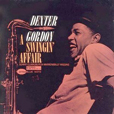
Kicks off with the rollicking samba Soy Califa; then a ravishing, bittersweet ballad.
Key Dexter.
Recorded the same week as Go!, with the same crew, including Sonny Clark on top form throughout.
Don’t miss Don’t Explain.
In the Blue Note 80 Vinyl series.
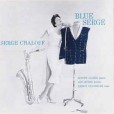
A true lost classic of jazz; heart-stopping turns on baritone saxophone.
‘Chaloff’s masterpiece is both vigorous and moving… Thanks For The Memory is overpoweringly beautiful as Chaloff creates a series of melodic variations which match the improviser’s ideal of fashioning an entirely new song. Stairway To The Stars is almost as fine… This important session has retained all its power’ (The Penguin Guide To Jazz On CD).
Killer band, too — Sonny Clark, Philly Joe Jones, and Leroy Vinnegar.
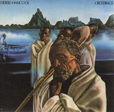
‘Herbie took the basic instrumental tracks of Quasar and Water Torture to Patrick
Gleeson’s Different Fur Studios, hoping to learn how to play the Moog synthesizer. Instead, Hancock let Gleeson contribute layers of sound to both pieces: on Quasar extending the horn playing of Bennie Maupin, Julian Priester and Eddie Henderson through electronic accents; on Water Torture providing a ghostly counter melody on the Mellotron (using samples from string instruments). These studio enhancements give Crossings an
otherworldly dimension, making the album feel bigger and more fantastical, yet the Sextet’s playing — recorded without much in way of edits or overdubs — keeps everything grounded. Indeed, Gleason’s additions are often so natural that it is hard to pick out what’s acoustic and what’s synthesized.’
The second LP by the sextet aka the Mwandishi Band, and Herbie’s last for Warner Brothers, clearing the way for the Headunters.
LP from Music On Vinyl.