
Your basket is empty

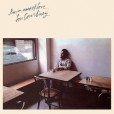
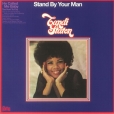
From 1974, featuring knockout rare groove like I Don’t Need Nobody Else and What Do You Want Me To Do.
Limber, feeling and introspective, with full horns and strings setting fine songs and frankly soulful singing.
Lou came through in Detroit as a writer and producer with Barbara Lewis, before signing in his own right to Epic, via the Rags label run by legendary producer Jerry Ragovoy. Hereafter he was briefly a member of The Fifth Dimension.
One of the greatest of all modern soul albums.
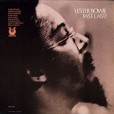
Characteristically brilliant ebullience from the Art Ensemble trumpeter in 1974, with John Hicks (doing Hello Dolly as a duet), John Stubblefield, bro Joseph Bowie from Defunkt, Julius Hemphill (on Ornette’s Lonely Woman), Bob Stewart, Cecil McBee, Jerome Cooper, Charles Shaw and Phillip Wilson.
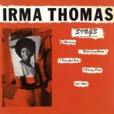
A selection of her Minit and Bandy sevens, from 1960-63.
Unmissable New Orleans soul, killers galore, with Aaron Neville shining through the compositions, and superb, rawly emotional singing.
Somebody Told You, Cry On, Breakaway, It’s Raining, Ruler Of My Heart, How I Wish Someone Would Care…
Reissued for the first time since its initial 1969 release.
Side one was recorded earlier that year at the gallery of Heiner Friedrich in Munich, where Young and Zazeela premiered their Dream House sound and light installation. Running their voices against a sine wave drone, the composition has its roots in The Tortoise, His Dreams and Journeys, begun in 1964 with The Theatre of Eternal Music. According to Young, the raga-like melodic phrases of his voice were heavily influenced by his future teacher, the Hindustani singer Pandit Pran Nath.
Side two was recorded in Young and Zazeela’s NYC studio in 1964. A section of the longer composition Studies in the Bowed Disc, this is an extended, highly abstract noise piece for bowed gong. The liner notes explain that the record can be played at 33 and 1/3 rpm as usual, but also at any slower speed down to 8 and 1/3 RPM on turntables with this capacity.
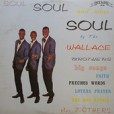
Sanctified, southern soul — lost, crying, frank harmonising, and swaying horns and organ — recorded at FAME, Muscle Shoals, in 1964, by cousins Johnny Simon and Ervin Wallace from Atlanta. Lover’s Prayer is a scorcher.
The vinyl is a facsimile of the original LP (on Russell Sims’ Nashville label); the ‘Complete Sims Recordings’ CD from Kent adds ten more sides.
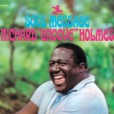
RH came through with Les McCann and Gerald Wilson. Prestige tried him out with Gene Ammons and Joe Pass, before this trio debut as leader, in 1965.
Top-notch, archetypal soul jazz — the opener states the case, the closer sums up — hard-swinging, blues-saturated, lots of chords, propulsive bass, open and gritty.
Nicely Latinized version of Song For My Father.
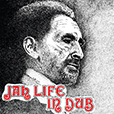
Ten killer dubs of Barrington Levy, mixed at Tubby’s, mostly unreleased. (The album was shelved in late 1980.)
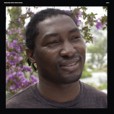
‘SK Kakraba is a master of the gyil xylophone — fourteen wooden slats strung across calabash resonators. The silk walls of spiders’ egg sacs — ‘paapieye’ in the Lobi language — are stretched across holes in the gourds, giving each note a buzzy rattle. SK learned as a child from elders in his Lobi community in the far northwest reaches of Ghana.’
Beautiful, spare, mesmeric recordings — song cycles, dirges, improvisations based on traditional songs, original compositions — newly made.
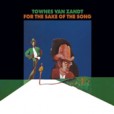
His debut LP, a little over-produced by Jack Clement for Poppy in 1965; including precious first goes at songs like Tecumseh Valley and Waiting ‘Round to Die.
‘It seems a lot of people in Nashville write by phrase, or by the line. As opposed to writing by the word. A lot of my best songs are where every single word is where it’s supposed to be… For the Sake of the Song was written by the word. I once sat down and wrote out the rhyme scheme for that song, and it was amazing. Pretty complex. But it didn’t seem that complex when I was writing it.’
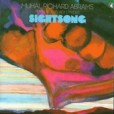
Perhaps the great pianist’s best record — duets with the Arts Ensemble bassist Malachi Favors, in 1975.

Mostly from two cassettes, Douce Torture and Aut Aut, each limited to twenty-five copies, originally self-released in the early 2000s by Vincent E.F. from Turin. ‘A mixture of hardware electronics, guitar and musique concrete-style sampling techniques, recorded on everything from minidisc to VHS tape. With its roots in vintage dub, Krautrock and Italo-Industrial artists like Maurizio Bianchi and Mauthausen Orchestra… and yet strikingly original.’
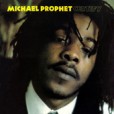
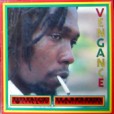
Superb recordings for Delroy Wright’s Live & Learn label, originally released as Jah Love in 1983. Post-Yabby You, post-Gunman.
Laid down at Channel One, with the Roots Radics and High Times bands, and The Tamlins on backing vocals; mixed by Scientist.