




Your basket is empty

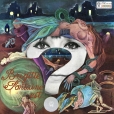
Her 1968 masterwork, arranged by Jean-Claude Vannier, originally released on Saravah. Approved by Brigitte, this expanded edition features the original album, newly remastered from the original tapes, along with a second album of demos, instrumentals, and a live rendition of Il Pleut recorded for France Inter/ORTF. With a twenty-page bilingual booklet, including an introduction by Laetitia Sadier, plus full lyrics and rare archival photos.
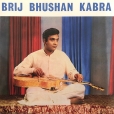
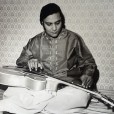
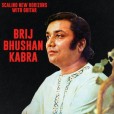
Brilliant, game-changing re-deployments of the lap-slide Hawaiian steel guitar — in this case a Gibson Super 400, modified with a drone string and a high nut to raise the strings off the fretboard like a lap steel — away from Indian popular music, into the service of ragas.
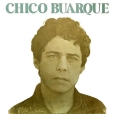
‘At 36 years old, in exuberant form, revisiting songs of his which hit for other artists, like Bastidores (which revived Cauby Peixoto’s career) and Morena de Angola (a smash for Clara Nunes). Released in December 1980, when Brazil was rehearsing its redemocratization even in the throes of continuing political violence, Vida dicloses an artist emerging from censorship. In the irresistible dancehall samba Deixa a Menina, he relishes a feminist response to Geraldo Pereira’s syncopated classic Sem Compromisso: ‘Behind a sad man, there’s always a happy woman / And behind that woman, a thousand men, always so kind.’ The Cubano title track spotlights a character near death, looking back with bittersweet ambivalence, and tightly holding on. ‘Light, I want light,’ sings Chico, threading Goethe’s famous last words into the sublime orchestration of Francis Hime, who creates the masterful arrangements on ten of the twelve songs, elucidating the delicacy of classics like Mar e Lua and Qualquer Canção, and lending the appropriate grandeur to Fantasia. Tom Jobim contributes the arrangement and piano of the masterpiece Eu Te Amo, co-written with Buarque. Another triumph is the bolero-style Bye Bye, Brasil, co-written with Roberto Menescal, humorously reviewing the profound transformation of Brazil during the previous decade.’
A bonafide MPB classic.
Proper socialist to the bone. Great novelist, too.
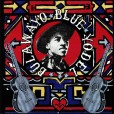
‘Lovely country & western-inspired music from 1950s Zimbabwe, South Africa and Kenya. Fingerpicking ‘omasiganda’ troubadours, train-car yodels, raw slide guitar and haunting travel-weary ballads, from rare 78s all reissued here for the first time. A heavy duty document of a nearly lost scene, and all the songs are stunners to boot. George Sibanda, Josaya Hadebe, Sabelo Mathe, Petrus Mntambo… In old-school tip-on covers, with a 12” booklet of deep research and full lyrics. Co-released with Olvido.’
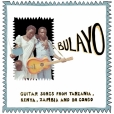
Beautifully relaxed, intimate recordings of fingerstyle guitar masterpieces by stars like Jean-Bosco Mwenda, Losta Abelo, and Emmanuel Mulemena, and brilliant but previously under-recorded artists like Tanzania’s Francis Kitime and Kenya’s Mtonga Wanganangu. From 1979-80, the sessions were set up in homes, village squares, and watering holes; you can hear laughter, children playing, and glasses clinking.
Lovely stuff.

‘Psychedelia, Afro-Roots & Champeta In 1980s Barranquilla.’
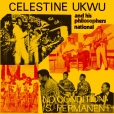
A compilation of the deepest and most affecting songs by The Philosophers National from Nigeria, beginning in the 1970s. Lilting, multi-layered, pulsing music, with muted trumpet solos, mesmerising guitar runs, driving percussion, and concise and clear-eyed lyrics sung so beautifully by Celestine Ukwu.
‘Celestine ditched the jaunty dance rhythms and relatively facile lyrics typical of the reigning highlife tunes, and ignoring the soul music tropes most of the highlife bandleaders were appropriating in an effort to inject new life to their ailing format. Instead Celestine concocted a new highlife style that was more contemplative and lumbering; with the layering of Afro-Cuban ostinato basslines and repetitive rhythm patterns that interlocked to create an effect that was hypnotic, virtually transcendental. Meanwhile, Celestine himself sang as he stood coolly onstage in a black turtleneck and a sportscoat, looking like a university professor. The message was clear: this was not necessarily music for dancing—even though the rhythms were compelling enough. This was music for the thinkers’ (Uchenna Ikonne).

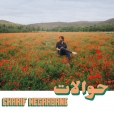
‘Megarbane finds a sonic through-line in his surrounding soundscapes as he draws on the chaotic energy of the crowded Beirut metropolis (Souk El Ahah), the warm atmosphere of the Lebanese countryside (Chez Mounir), or the lushness of a Mediterranean beach resort (Portemilio). In many ways, Marzipan is a cartographic feat — it travels and traces a journey across many dimensions, both sonic and physical. Megarbane’s instrumental catalogue is suitably wide-ranging: toy glockenspiel, harpsichord, pedal steel, a classic Wurlitzer et al are used liberally on the record. Free-ranging influences — beloved artists like Ahmed Malek and Issam Hajali, West African funk, European soundtracks — result in a record of somewhat unparalleled expansiveness. Floating melodies and frantic rhythmic interludes nestle together with psychedelia — fuzz-drenched guitar, sliding microtonal interludes, hypnotic rhythmic breakdowns. The resultant sound is as sprawling as the musician’s instrumental dexterity. The closer Bala 3anouan can be translated loosely to ‘without address’ — a fitting final word.’
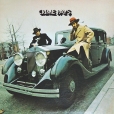
Nine killer selections from his first four LPs, stuffed with smash hits. Proper salsa; loads of trombone. Featuring the brilliant, legendary singer Hector Lavoe.
‘Crime Pays’ is Colon being ironic about the successful marketing of his archly bad-boy persona during this period.
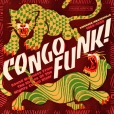
Also sub-titled ‘Kinshasa/Brazzaville 1969-1982’.
‘These new sounds emerged at a time when the Congolese record industry – previously dominated by European major labels – was experiencing a period of decline due to rising production costs.The void was filled by dozens of entrepreneurs willing to take chances on smaller scale releases. It was the beginning of a golden age for Congolese independent record labels, and the best of them – Cover N°1, Mondenge, Editions Moninga, Super Contact – preserved the work of some of the region’s finest artists, while launching a generation of younger musicians into the spotlight.
‘Congo Funk! is the story of these sounds and labels, but also it is the story of two cities, separated by water but united by an indestructible groove. The fourteen songs on this album showcase the many facets of the Congolese capitals, and highlight the bands and artists, famous and obscure, who pushed Rumba to new heights and ultimately influenced the musical landscape of the entire continent and beyond.’