Your basket is empty

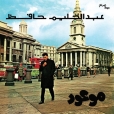
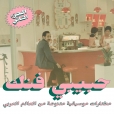
An all-time classic of contemporary Egyptian music, recorded in 1971. The composition is by Baligh Hamdi, for a full orchestra, featuring Omar Khorshid on guitar.
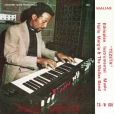
Taking a break from cabbing duties back home in Washington DC, for his first LP in fifteen years. Ethiopian standards and originals; his unmistakable melodica, accordion and keys, in the same double-bass-and-drums setting as recent live shows.
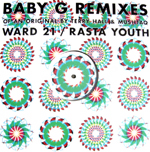
The second son of King Jammy, Trevor James aka Baby G is at the cutting edge of the new wave of dancehall producers. Jammy’s stalwarts Ward 21 and newcomers Rasta Youth on the mic.
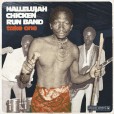
‘In 1972, the country of Rhodesia — as Zimbabwe was then known — was in the middle of a long-simmering struggle for independence from British colonial rule. In the hotels and nightclubs of the capital, bands could make a living playing a mix of Afro-Rock, Cha-Cha-Cha and Congolese Rumba. But as the desire for independence grew stronger, a number of Zimbabwean musicians began to look to their own culture for inspiration. They began to emulate the staccato sound and looping melodies of the mbira (thumb piano) on their electric guitars, and to replicate the insistent shaker rhythms on the hi-hat; they also started to sing in the Shona language and to add overtly political messages to their lyrics (safe in the knowledge that the predominantly white minority government wouldn’t understand them). From this collision of electric instruments and indigenous traditions, a new style of Zimbabwean popular music — later known as Chimurenga, from the Shona word for ‘struggle’ — was born. And there were few bands more essential to the development of this music than the Hallelujah Chicken Run Band…’
Their biggest hits — along with several rare tracks — recorded between 1974 and 1979.
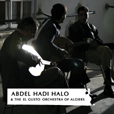
Chaabi — ‘of the people’ — has its roots in the Andalusian music of Moorish Spain, spreading to North Africa with exiled Jewish and Moorish communities; but it really took off in post-WWII Algiers…
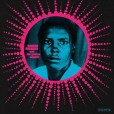
Raw, bustling, parping afro-funk from northern Cameroon.
The complete works: three sevens.

‘As with many other ethnic groups of the area, a traditional singing pattern is used with each singer adapting words to context. Many of these songs express intimate, strong emotions that bring tears to the performers while they are singing. The cascading mournful feel of this music is beautifully transcendent. You’ve never heard anything like it.
‘Instruments used by the ensemble include the babi (single tree leaf ) and mepa (tree leaf rolled up into the shape of a horn or mirliton), a chiwo (three-stringed bowed instrument), a labi (six-holed bamboo flute), a lahe (three-stringed small lute) and a meba (vertical reed instrument).’
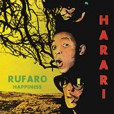
The Beaters changed their name in tribute to the Rhodesian township which hosted their Damascene cultural and political awakening. One year after the LP entitled Harari came out in 1975, they were back in the studio, deepening the African sensibilities of their music, but also trying out influences like jazz, fusion and prog, which would carry them forward.
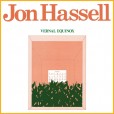
With a freshness, simplicity and directness missing from his estimable later work, this 1977 inauguration of Fourth World still retains its magic. Microtonality and the other lessons of his three years with Pandit Pran Nath articulate a blend of electric-era Miles, Terry Riley and raga, featuring processed trumpet over a bed of mbira, talking drum, kanjul and tabla, and recordings of the sea, barking dogs, tropical birds and night creatures. From Don Cherry’s imminent, like-minded Codona project, Nana Vasconcelos is in full effect.
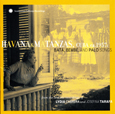
Havana And Matanzas, Cuba
Bata, Bembe, And Palo Songs From The Historic Recordings Of Lydia Cabrera And Jo
Folkways
Songs and ceremonies of the Yoruba, Dahomean, and Kongo-Angolan religions, performed by Marcus Portillo Dominguez, Candido Martinez and others, recorded in Cuba in the late 1950s by Lydia Cabrera.
New recordings invoking the grand traditions of Turkish psych with passionate recastings of tripped-out surf, Cambodian rock, Saharan guitar, electric Thai; even a little Sun City Girls post-punk.
Beginning in 1967 with El Malo, Lavoe was the vocalist on ten legendary studio albums by the Willie Colón Orchestra, before going solo in the mid-70s. Produced by Colón, this hallowed third album under his own name is a stone classic.
It kicks off with his career-defining hit El Cantante, written by Rubén Blades, taking the point of view of a star performer reflecting on his humanity and vulnerabilities when he steps off the stage. It closes with another smash: a joyful, mambo-inspired reimagining of the 1930s Cuban anthem Songoro Cosongo.
Rolling Stone magazine recently ranked Comedia number three of the 50 Greatest Salsa Albums of All Time, declaring that it transformed the genre into ‘high art… a spiritual experience.’

Norway’s finest hardanger fiddle player, performing traditional tunes from her native valley Hallingdal.
Wonderful.
‘Eighteen dedications, each hybrid and different, but driven by an utterly personal approach to bebop, Brazilian jazz, Africa and Brazilian roots; thronged with his signature battery of whistles, screams, scales, keyboard, kettles, spoons, squeeze toys, children’s voices, prepared piano and geese calls; with the band adding native instruments like pandeiro, surdo, caixa, apitos, bonecos and agogos, besides saxophones, flute, electric piano, electric bass and so on. Musicians and genres such as Terry Riley, Frank Zappa and Weather Report, Javanese gamelan and Indonesian kulintang come to mind, but there is no real overlap: Pascoal has his own special brew.’
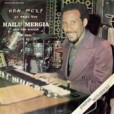
His first recording with his band in fifteen years. “My music is not commercial; it’s not like selling bananas or soap. I’m not in a hurry to record.”