
Your basket is empty

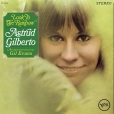
‘Verve By Request.’
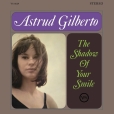
Astrud’s second Verve, branching out into jazz and American vocal staples, thankfully interwoven with five songs by Luiz Bonfá. Her signature emotional discretion and understated musical cool are played against the fluttering flutes and shaded strings of broad orchestral arrangements by Don Sebesky, Claus Ogerman, and João Donato. Produced by Creed Taylor;
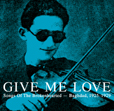
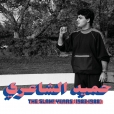
‘Beautiful, haunting… spiritual reflection is sung with carnal force, songs of romance are rendered like hymns. For a few moments, on these ancient records, Baghdad sounds like paradise’ (Rolling Stone).
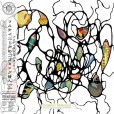
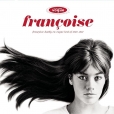
Creole poetry, rootical mysticism and heavy-grooving synths illuminate this survey of the Martiniquan’s first four albums, recorded in France in the late seventies and early nineties, but inspired by the ‘smells and colours… subliminal noises… fruity notes, the memories of funeral wakes, the bombastic organ of the cathedral and the gasps of the drums’ of home.
‘Midonet’s musical world is cosmic, mystical and he has created his own idiosyncratic style around it: not plain folk, not bélé, chouval bwa, beguine or gwoka, but rather a transcendental fusion of all these and a true reflection of his personality.’
Ka-boom! The legendary digger re-ignites the Lagos Disco Inferno and kicks off his very own mouth-watering imprint with two sides of boogie-down bliss.
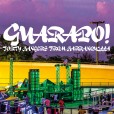
Rough, tough, tumping, bumping soundboy breakbeat from the Caribbean coast of Colombia.
Forty brand new buckaroos, tooled and primed by Jeanpi Perreo, Edwin Producciones and DJ Ander — all from local sound-systems — careering guarapo-style out of punches of vintage Nigerian highlife, waka and co, by legends like Steven Amechi, Sagbeni Aragbada and Cardinal Rex Jim Lawson.
Edited and mastered by CGB at D&M for maximum oomph and worries, and presented in a gatefold sleeve with cool and deadly varnishing. Plus a full-size booklet detailing the fascinating history of this music, seamed into the strange, tentacular byways of hand-to-hand vinyl distribution, record collecting and musical connoisseurship, and the soundclash traditions of the region, suffused with the politics and culture of the Black Atlantic, stretching back to the 1950s.
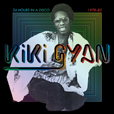
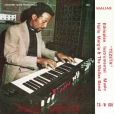
Grooving Ghanaian boogie from the wizz keyboardist.
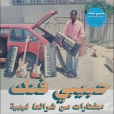
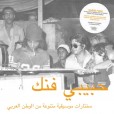
A mix of overlooked gems and local boomshots from the cassette tape scene in Libya, during the late 80s to early 2000, when independent artists relied on makeshift home studios or travelled abroad to record in Tunisia and Egypt. A judicious mash-up of boundary-pushing sounds which reflects this precariousness and nascency; also the political and cultural crossroads at which Libya found itself. North African rhythms meet Arab melodies and deep African roots. Disco and house run into gritty pop. Reggae courses through, with an unmistakable Libyan twist — not just musically, in the slowed-down cadence of traditional shaabi beats, but also culturally, taking to heart its outernational message of proud, defiant self-awareness.
Assembled by Habibi Funk with personality and love, as per; with a 32-page booklet. Another winner.
Last few box sets!
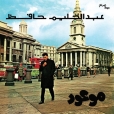
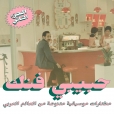
An all-time classic of contemporary Egyptian music, recorded in 1971. The composition is by Baligh Hamdi, for a full orchestra, featuring Omar Khorshid on guitar.
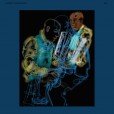
Taking a break from cabbing duties back home in Washington DC, for his first LP in fifteen years. Ethiopian standards and originals; his unmistakable melodica, accordion and keys, in the same double-bass-and-drums setting as recent live shows.
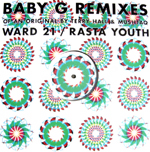
The second son of King Jammy, Trevor James aka Baby G is at the cutting edge of the new wave of dancehall producers. Jammy’s stalwarts Ward 21 and newcomers Rasta Youth on the mic.

‘As with many other ethnic groups of the area, a traditional singing pattern is used with each singer adapting words to context. Many of these songs express intimate, strong emotions that bring tears to the performers while they are singing. The cascading mournful feel of this music is beautifully transcendent. You’ve never heard anything like it.
‘Instruments used by the ensemble include the babi (single tree leaf ) and mepa (tree leaf rolled up into the shape of a horn or mirliton), a chiwo (three-stringed bowed instrument), a labi (six-holed bamboo flute), a lahe (three-stringed small lute) and a meba (vertical reed instrument).’
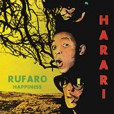
The Beaters changed their name in tribute to the Rhodesian township which hosted their Damascene cultural and political awakening. One year after the LP entitled Harari came out in 1975, they were back in the studio, deepening the African sensibilities of their music, but also trying out influences like jazz, fusion and prog, which would carry them forward.
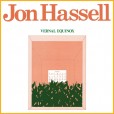
With a freshness, simplicity and directness missing from his estimable later work, this 1977 inauguration of Fourth World still retains its magic. Microtonality and the other lessons of his three years with Pandit Pran Nath articulate a blend of electric-era Miles, Terry Riley and raga, featuring processed trumpet over a bed of mbira, talking drum, kanjul and tabla, and recordings of the sea, barking dogs, tropical birds and night creatures. From Don Cherry’s imminent, like-minded Codona project, Nana Vasconcelos is in full effect.