
Your basket is empty

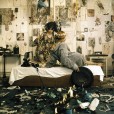
Jarvis Cocker’s thrilled to bits — ‘Here, at last, is the the soundtrack to maybe THE underground film of all time in all its crazy daisy glory’. A mental cut & paste of Czech orchestras, folk, jazz and experimental sounds.
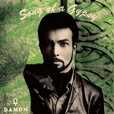
Intensely sought-after, highly-considered, late-60s psych rock — homespun, funky, introspective — privately pressed in the dark, hazy twilight of flower power. Plus D’s back pages, expertly restored.
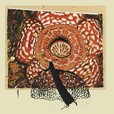
‘Experimental jazz, chanson, bluesy folk and various strains of outsider music permeate a rich layering of music boxes, walkie-talkies and plastic straws, plucked charrango and banjo, kazoos, flutes and snake-charming ocarina, accordion and melodica, found percussion and traditional tuned drums. The moods switch from child-like and epiphanic (Tarzan en Tasmanie, Madrigal for Lola) to babbling (Pocarina), mysterious and dark (Septième Ciel, Rugit Le Coeur) to tender and simple (Rainbow de Nuit, Chevalier Gambette); from murky, suspenseful melancholy (Levy Attend, Eno Ennio) to pensive psychedelia (Un Cercueil à Deux Places). A world of echoes. A tale of tales. You’ll be whistling and humming along on first listen.’
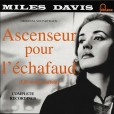
The CD is from Fontana / Decca France; with a sixty-page booklet.
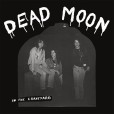
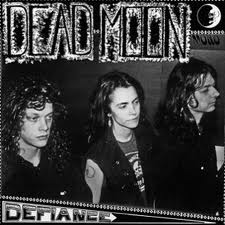
Dead Moon’s first record, originally released in 1988.
‘An authentic mix of psychedelic rock, punk, blues, country & every other American music worth a damn,’ writes Mississippi, questionably. ‘This LP features all-time classics such as Graveyard (a 13th Floor Elevators type vibrating psychedelic song), Don’t Burn The Fires & I Hate The Blues. Lo-fi as hell.’
Old records of solo dulcimer, fairground mechanical pianos and music boxes, re-rendered via a slowed-down, pitch-modified turntable, with tape delay, EQ-fiddling and distortion.
Strange, atmospheric, poignant, folky dokey. Well worth checking.
Wow!
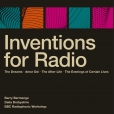
‘The BBC’s Third Programme aired four radio broadcasts between January 1964 and September 1965, collectively known as Inventions for Radio. Conceived by playwright Barry Bermange they consisted of the voices of the general public answering questions on four themes, one for each programme: dreams, the existence of God, life after death, and ageing. The Dreams, Amor Dei, The After-Life, The Evenings of Certain Lives. Delia Derbyshire was assigned by the Radiophonic Workshop to edit and add electronic music/ effects. The collaborative result is dreamlike and mesmerizing.’
Including one LP for each broadcast, and two further LPs of additional material, together with a twenty-page booklet, housed in a lidded box.
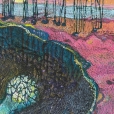
‘Dora’s signature, sublime, open-hearted refinement of modern classical, folk and ambient is at its most colourful and rhythmic in this suite of keyboard instrumentals; an aural mille-feuille, in dramatic contrast with her previous, melancholic vocal works.
‘Atmospheric drone miniatures underpin flowing, cyclical arpeggios, spiralling into an unpredictable dream space of melodic polyphony. Drawing on an essay by Hartmut Rosa, the music mulls over conceptions of the acceleration of time and the experience of alienation. It reveals the inescapable pulsation of time as at once mesmerizing and unsettling.’