












Your basket is empty

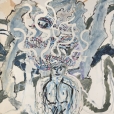
‘Recordings from early 2025, while Johnny was bed-bound in an assisted living facility with multiple sclerosis. He speaks into an iPhone laid gently on his chest, in remarkably tender and emotive form. Love in all its permutations. The tangled, but caring nature of familial love, to the anguish and euphoria of romantic connection. Johnny has a remarkable ability to pose questions, and answers, that reflect the truest of realities, without cliche.
‘Joel Nelson nimbly helms the nearly entirely electronic backdrop, with Buchla Music Easel bubbling up between Johnny’s stream of consciousness. At times, Broadcast’s fuzzed out ballads come to mind, while at others, early Oneohtrix Point Never’s gauzy, distant drones cast anchor beneath the slippery syntax.’
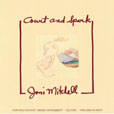
The beloved 1974 hit with Help Me, Free Man In Paris and co.
Folk-rock with jazzy flavours — Joe Sample and Wilton Felder alongside Graham Nash and David Crosby…
The LP is newly remastered by Bernie Grundman under the supervision of Joni Mitchell.
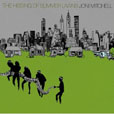
Her mid-seventies turn to jazz, bringing in the Drummers of Burundi. Prince loved it.
The LP is newly remastered by Bernie Grundman under the supervision of Joni Mitchell.

Her third, 1970 album, the brilliant summation of her folky start — with favourites like Woodstock, Big Yellow Taxi and The Circle Game.
The LP is newly remastered by Bernie Grundman under the supervision of Joni Mitchell.

Newly remastered by Bernie Grundman under the supervision of Joni Mitchell.
‘The culmination of all his efforts thus far to mimic a synthesizer and drum machine. This seemingly impossible feat challenges Julian to experiment and develop a musical language that bridges the gap between organic timbres and electronic music. When listening to Mux, one might simply forget that the seemingly electronic sounds are only constructed organically via hand movements.
‘This is Julian’s second outing for Marionette, following Sulla Pelle with Valentina Magaletti in 2019.’

‘Queered allusions to Lutheran hymnals, almost unbearably tense passages of frenzied repetition, and explosions of melodic ecstasy,’ performed by the twenty-piece strings, horns, reeds, and pianos of the Wild Up ensemble.
According to musicologist and composer Luciano Chessa, ‘if all of Eastman’s music but this one were to disappear, Gay Guerrilla would still be enough to guarantee him a firm place in the history of twentieth-century music.’

‘Twelve pieces, scored for choir, brass and pipe organ…
‘The pieces for organ slowly shift and evolve as textures and harmonic patterns reappear across the album alongside moments of dissonance, although the latter are more fleeting and less extreme than in Malone’s previous work. She frequently resolves into one long, sustained chord, as on the trance-inducing No Sun to Burn.
‘The tracks using brass force you to consider the nature of the instruments themselves. The music is no less mournful in tone than the organ pieces but somehow feels more declamatory: the ghost of a fanfare clings to it despite everything.
‘Despite its minimalism, this is not music that feels dry or emotionally austere. There’s a genuinely affecting melancholy about Prisoned on Watery Shore, while Moving Forward invokes a kind of contemplative calm. It’s also music that feels strangely malleable. Listened to on headphones, at volume, the organ pieces can feel overwhelming and transportive, the slow motion at which they move sucking you in and temporarily obliterating the world outside. But played on speakers at a lower volume, they act as hugely effective ambient music, lending a contemplative chill to your surroundings’ (Alexis Petridis, The Guardian).

An imperiously fuck-you, stoned, fuzzed-out garage stomper; first issued on the Dot label in 1965.
Produced by Dave Hassinger, guiding force behind the Electric Prunes; arranged by Jack Nitzsche; written by Donovan (for Dana Gillespie). Karen nails it.
This is the slightly longer of the two Dot issues. The instrumental on the flip adds freakbeat guitar.

‘Composed during one of London’s endless dark and locked down winters, Fever Dreams is a fantastical, speculative take on high density living. From dark, mouldy rooms, subterranean depths, symbiosis and multi-species entanglements, it cloaks itself in the claustrophobia, excitement and despair of living in a metropolis. It is a work which both celebrates and fears the weeds, spores, vermin and grime of London. The dark fantasies, frustrations, and utopian aspirations of its urban survivors. Frozen plastic bags, cramped living quarters, the kindness of strangers, the desperate unfairness of who gets what and when. Almost getting there but not quite. Being overcome by emotion for no reason. Unexpectedly moved, inexplicably destroyed. The never still, forever unfolding moments which comprise living on top of each other. Sinking and swimming; together/apart.’