






Your basket is empty

‘Luminous meshes of colours and textures, vaulting between free jazz, dub, raga, ambient, and ritual music. Riveting polyrhythms underpin towering arrangements for flutes, synths, and processed acoustic instruments. The drumming and psychoactive, ceremonial melodies evoke the fourth world of Don Cherry, Jon Hassell, Popol Vuh et al. An alchemical, Buddhist/Taoist/Hindu slant guides the narrative.’
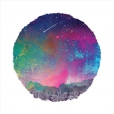
Brand new interpretations of their debut album, ten years on.
‘The Universe Smiles Upon You ii was recorded on January 4-6, 2025, in the same family barn of guitarist Mark Speer, across the same dates where TUSUY was first conceived ten years earlier. Though the conditions were the same — dirt floor, brutally cold, minimal sound isolation, all takes live — the songs aren’t. They’re re-approached, some changed more than others, harnessing the lightning-in-a-bottle energy of TUSUY while discovering what would be unique this time around, in this stage of the band’s life.
‘The result moves like ripples on the water across ten hypnotizing tracks, the barn creating a sense of spaciousness, serenity and creative freedom, nearby wildlife (listen out for the birds on August Twelve ii), rattles and creaks of the barn and all. It’s a tapestry of small movements in nuanced arrangements, slowly revealing the new life, stories and character of someone you’ve met again for the first time in ten years.’
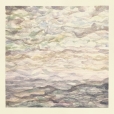
‘Richly harmonic explorations in just intonation, using a sparse but finely detailed palette of organic atmospheres, metallic shimmer and off-kilter rhythms. Sample-based hip-hop, the minimalism of Terry Riley and Jon Hassell, as well as dub techno and post-rock; all in the house. Glassy pads, gamelan metallophones, clarinet and guitar dissolve into fluid, dreamlike forms, suggesting vast coastal landscapes, charged air, the calm after a storm…’
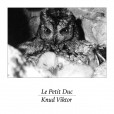
Recordings of an owls nest throughout a nesting season in the spring and summer of 1978, with Viktor himself telling the story of an owl family. Originally planned to fit on a 7” record, but never released till now. The booklet includes Danish and English translations of the original French narration, illustrated with a series of Viktor’s own photographs of the owls.
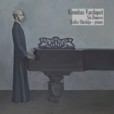
Wonderful recordings of Armenian piano music composed in 1906 — featuring imitations of the ‘dap’ tambourine, plucked tar, shiv reed-pipe and dhol drum — performed last year by Keiko Shichijo on a Steinweg Nachf piano, built in 1880.
Lovely thing, warmly recommended.
Reissued for the first time since its initial 1969 release.
Side one was recorded earlier that year at the gallery of Heiner Friedrich in Munich, where Young and Zazeela premiered their Dream House sound and light installation. Running their voices against a sine wave drone, the composition has its roots in The Tortoise, His Dreams and Journeys, begun in 1964 with The Theatre of Eternal Music. According to Young, the raga-like melodic phrases of his voice were heavily influenced by his future teacher, the Hindustani singer Pandit Pran Nath.
Side two was recorded in Young and Zazeela’s NYC studio in 1964. A section of the longer composition Studies in the Bowed Disc, this is an extended, highly abstract noise piece for bowed gong. The liner notes explain that the record can be played at 33 and 1/3 rpm as usual, but also at any slower speed down to 8 and 1/3 RPM on turntables with this capacity.

Scintillating, alchemical kosmische; visionary, deep, and luminous; and beautifully sleeved, with gold foiling and silver ink.
Works In Metal fans out a set of acid treatments and finely sharpened blades — cutting, shaping, suspending form. Sounds are melted down and forged as if liquid metal.
The works are paired. Arc’s Blue Flame previews the smoking volatility at the album’s core. Echoes and resonance soften the dissonant, bright textures; all overlaid with Fofana’s signature, percussive kick drums. Welding drills into the discordant thrills and spills of metamorphosis. Sparks fly and the bittersweet arc of change unfolds.
Fofana discreetly folds in text, poetry, and field recordings, spooring their decomposition and recomposition with a prismatic point of view. The coupling Obscure Light (Decomposition) and Obscure Light (Recomposition) marks something new in his music. The pulse is brightly honed, cascading beyond the dancefloor, exultingly eluding musical genre.
Works in Metal is perhaps Fofana’s most narrative album. At its heart is the killer, extended Lure of the Fragment / So Another Sound Suggests Itself. Melodies circle in call-and-response patterns, balancing proximity and distance, signalling the inward gravity required to work with metal. A nested story-line, with birds flying in; an album within an album. Dredging up memories and associations, Fofana filters in selections from his sound-archives. Layered with synths, field recordings become instruments in their own right. The last three minutes proffer precious clarity — a memory, in miniature, flashed onto molten metal.
In 1943 Suzanne Césaire declared that ‘our surrealism will then supply them the leaven from their very depths. It will be time finally to transcend the sordid contemporary antinomies: Whites-Blacks, Europeans-Africans, civilized-savage: the powerful magic of the mahoulis will be recovered, drawn from the very wellsprings of life. Colonial idiocies will be purified by the welding arc’s blue flame. The mettle of our metal, our cutting edge of steel, our unique communions — all will be recovered’. Works in Metal is a tribute to her prophecy; its enactment, sculpted in sound.