Honest Jons logo

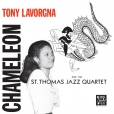
Her funky, spiritual jazz masterpiece; our favourite of her albums.
This LP is a facsimile edition of the original release on Mary Records.

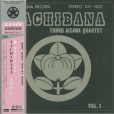
Hippie dippy Indo-Jazz, aka Take Off Your Clothes To Feel The Setting Sun, complete with fuzz guitar and sitar courtesy of Siegfried ‘Vampyros Lesbos’ Schwab, and reverbed chant-along vocal chorus. Plus a reined-in, blues-rock cover of The Beatles’ A Day In The Life.
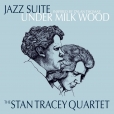
From 1969, with Eberhard Weber playing bass and electric cello.
New transfers from the master tapes; cut at Abbey Road; pressed at Pallas; handsomely sleeved.

With the arrival of clarinettist-saxophonist Louis Sclavis in 1973 (and the departure of trumpeter Jean Mereu in 1975), the Workshop De Lyon was born of the Free Jazz Workshop.
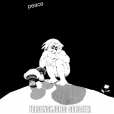
A warmly accessible, beautifully performed, joyous mixture of wailing improv and propulsive, rootical preparations, this second album derives its upful, digressive theatricality from the Arts Ensemble Of Chicago, and its urgent sublimification of vernacular rhythms and melodies from Albert Ayler. Wild and free, but grounded in stuff like Bechet, Monk and George Russell.
Terrific.

His 1966 debut (with Henry Grimes on bass), after ESP founder Bernard Stollman saw him play as John Coltrane’s guest at the Village Vanguard.
Clifford Allen commented in All About Jazz: ‘Wright was one of the forerunners of the multiphonics-driven school of saxophonists to follow the direction pointed by Ayler, but with a more pronounced bar-walking influence than most of his contemporaries. Whereas Ayler’s high-pitched wails, wide vibrato and guttural honks all belied an R&B pedigree, his solos still contained the breakneck tempos and facility of bebop… Wright, on the other hand, offers his honks and squawks with a phraseology derived from the slower, earthier funk of R&B and gospel music… The opening The Earth starts with a brief vibrato-heavy and bluesy slow theme on unaccompanied tenor that quickly erupts into a frantic screamer of a solo, a mix of buzzing upper-register cries and low bleating honks, occasional recognizable stock R&B phrases making their way into the melange… Unlike Ayler, there is not a significant amount of solo construction, for it appears Wright was throwing together ideas in a spirit of jubilation.’

His second ESP, one year after the Trio date, offering ‘passionate explorations of four of his originals, plus Jones’ The Lady. Rather intense at times, these emotional performances still sound groundbreaking three decades later. One of Frank Wright’s finest recordings’ (AllMusic).
Intriguing quartet, with Jacques Coursil and FW’s Cleveland homie Arthur Jones — two BYG mainstays in the making — and bassist Steve Tintweiss and Muhammad Ali both on fire.

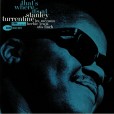
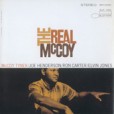
The jazz organist’s masterpiece — with Woody Shaw, Joe Henderson and Elvin Jones in 1965.
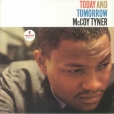
Young’s playing is steeped in the new thing — especially JC — but pulsating, intense, and sparking with a restless, propulsive creativity which would lead him to collaborations with Jimi Hendrix, Carlos Santana, Bitches-Brew Miles and co, in just a few years time.
Three brilliant compositions by Shaw — including The Moontrane, and an arrangement of Kodaly — a Joe Henderson, a Monk, and Hammerstein and Romberg’s Softly As A Morning Sunrise.

‘With a new lineup including multi-instrumentalists Kwake Bass and Wu-Lu, who are also the producers and arrangers. Horns, played by Soothsayers’ founders saxophonist Idris Rahman and trumpeter Robin Hopcraft, are included on just two of the ten tracks…
‘McFarlane’s spellbinding, crystalline voice continues to be acoustically recorded and reproduced and the primary focus of attention. Her lyrics, as before, are strong on message and relate to the experience of being a black person in Britain, touching on race, identity and the legacy of colonialism.
‘McFarlane’s performances aside, what binds Arise and Songs of An Unknown Tongue together is her embrace of her Jamaican heritage. What makes them distinct from each other is how that heritage is referenced in the material, lyrically and instrumentally. Born and brought up in London, McFarlane made an extended trip to Jamaica in 2018, when she penetrated further into the country’s folk culture and spiritual traditions than she had been able to do on previous, shorter visits. She devoted much of her time to researching the African-derived rhythms that shape the country’s folk music. On her return to London she worked with Wu-Lu and Kwake Bass to present them in a modern electro-acoustic context…
‘It looks forward to a brighter future while acknowleding the past and confronting present. It is deep, immaculately crafted and beautiful.’
(Chris May, All About Jazz).

From 1964, a fresh, invigorating, up-for-it, personal take on happening US jazz — Coltrane in particular — blending in themes from Polish folk music. Try the rollicking Piatawka, with its evocation of highlander bagpipes. Scorcher!

Multi-instrumentalist Namyslowski was an alumnus of Krystof Komeda’s ground-breaking quintet. In the early sixties, he formed the Jazz Rockers with Micha Urbaniak, and in 1962 both joined The Wreckers, playing the Newport Jazz Festival. In 1964 his own Modern Jazz Quartet toured throughout England, Scotland, and Wales. “We had songs like Piatawka in the programme, inspired by Polish mountain folklore… These were the forms that had never been heard there before… Not only was I a musician from behind the ‘Iron Curtain’, but it also turned out that this musician had his own voice and showed something innovatory.”
Pianist Wlodzimierz Gulgowski plays a blinder, too; nodding to both Chopin and Mal Waldron. (A decade later he hooked up with Urbaniak, for the LPs Fusion III and Funk Factory.)
Lola was recorded in London; produced by Mike Vernon, who founded the Blue Horizon label, and produced Fleetwood Mac and David Bowie, amongst others. For the cover shot, Decca commissioned the same photographer as for the first Rolling Stones LP, to follow suit. “We are in the same sweaters from Marks & Spencers, only each in a different colour.”

‘In an age when any old modal groove with a tambura drone pasted on is marketed as spiritual jazz, Kingsport, Tennessee born Zoh Amba is the real deal…
‘Opening track Fruit Gathering is a brief aubade to the Holy Spirit, weeping with a tremulous vulnerability recalling Ayler at his most tender and melodic… On the album’s more expansive tunes, her quartet plugs into the tumultuous swells and raging energy of late 1960s US free jazz exemplified by players such as Frank Wright and Noah Howard, which built on the intensity of John Coltrane’s later, spiritually driven exhortations. Here, Amba pushes past low, guttural blasts to altissimo shrieks and the screaming multiphonics pioneered by Pharaoh Sanders during his tenure with Coltrane.
‘On Champa Flower, Amba connects with her Tennessee roots, picking and strumming at an acoustic guitar while cymbals shimmer and bass throbs. Joining the dots between folk, American primitive, pastoral psychedelia and 2000s free folk, she proposes an alternative living continuum of American devotional music. Most affecting, though, are the three solo meditations on which she plays piano with her right hand and sax with her left. Captured in lo-fi on a Zoom recorder, and ending abruptly as though suddenly out of batteries, they’re intimate glimpses of a soul in motion’ (Daniel Spicer, The Wire).