





Your basket is empty

Scorcher!
The double LP is an anniversary edition, with extras, and new artwork.
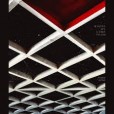
Recent collaborations in London with Nubya Garcia, Joe Armon-Jones, Soweto Kinch, Ashley Henry, Daniel Casimir and Kamaal Williams… remixed live the next weekend by LeFtO, Ben LaMar Gay, Quiet Dawn, Earl Jeffers & Don Leisure of the Darkhouse Family, and later by Emma-Jean Thackray and Lexus Blondin… finally chopped-up and re-assembled back at Makaya’s home studio in Chicago, into two continuous side-long suites.
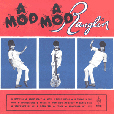
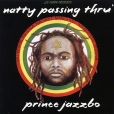
Instrumentals in ska, mento and other Caribbean styles recorded in 1966, at the threshold of rocksteady. The only one of his eight Federal albums to feature ska. Super-fine LP from Dub Store.
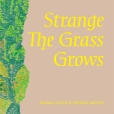
‘Their ability to harmonize together is stunning, their reedy voices coming together and pulling apart amid delicate fingerstyle guitar and concertina deployed in just intonation, which imparts a deeply resonant, almost glowing harmonic presence. It’s all quite subtle, and if you only listen to the way the voices of Cater and Rasten blend you might even miss it—but the full sonic spectrum is what distinguishes and, in certain ways, connects it to traditional practice… Although the album is pure balladry, unfolding with exquisite patience, each song contains nifty little flourishes or instrumental elements that set them apart, such as the slide guitar and wheezy bass harmonica on For the Ear That is No More, or the slow peal of trumpet on Death and the Lady, courtesy of Rasten’s partner in Pip and Oker, Torstein Lavik Larsen. (Peter Margasak, Nowhere Street).
‘All done with such grace and elegance, without a note wasted or any required. Wonderful… faultless and deeply considered’ (Glenn Kimpton, KLOF).
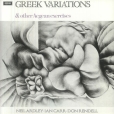
Three high English and Scottish ballads, and three original settings of European folk tales.
Matt gatefold cover; gloss spot varnish.
Check it out!
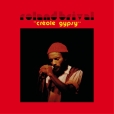
‘Musician, poet and painter Roland Brival’s 1980 album is a lost classic of Caribbean spiritual jazz. Recorded with a group of Martinique’s top musicians, and combining the bèlè percussion traditions of the island with free flowing saxophone, rhodes flourishes and languorous bass, the album was rejected by Roland’s label of the time, and was ultimately self released in miniscule quantities to a small local audience. Themes of créole identity and colonial injustice combined with universal ideas of love and longing sung in Créole, English and French sound like an Antillean answer to Gary Bartz and Jon Lucien, underpinned with the insistent rhythms of the ti bois percussion. Long unheralded in the English-speaking world, Créole Gypsy is a key piece of the jigsaw of Caribbean music.’
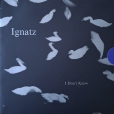
Ignatz is the alter-ego of Belgian musician Bram Devens, who has released a string of albums for labels like (K-RAA-K)³, Ultra Eczema, Fonal, Mort aux Vaches, and Okraïna, over the last twenty years.
Devens recorded this wonderful, haunted music at home in Landen, on the family piano.
There is pervasive, ambient Dub, mesmerically shifting; sometimes aghast. Somewhere in the swirling mist are the guitarist Hans Reichel, and blues pianists like Jimmy Yancey, amongst other ghosts. Time Well Spent even musters a kind of motorik energy, determinedly mis-firing.
It is quite unlike any other piano record.
Beautifully presented, too, to the customary high standards of this label.
Check it out!
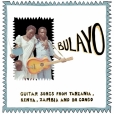
Beautifully relaxed, intimate recordings of fingerstyle guitar masterpieces by stars like Jean-Bosco Mwenda, Losta Abelo, and Emmanuel Mulemena, and brilliant but previously under-recorded artists like Tanzania’s Francis Kitime and Kenya’s Mtonga Wanganangu. From 1979-80, the sessions were set up in homes, village squares, and watering holes; you can hear laughter, children playing, and glasses clinking.
Lovely stuff.

‘Dissonant, ghostly, and otherworldly, summoning complex emotions with sparse tools…
‘The songs are nested in tape hiss and arranged with vocal harmonies she layers like falling snowflakes and drones that fill up the crevices of your lungs. It has the tactile intimacy of 1970s folk musicians like Vashti Bunyan and Karen Dalton, music that feels tied to the natural world it dreams of…
‘This out-of-time music comes to us when the natural world is deteriorating and the ever-present internet is a tool of mass surveillance and a lens to witness multiple global atrocities at once. In her endeavor to exalt such a bleak world, Zuniga seems to be battling herself. She acknowledges that “memory always sees the loved one smaller” and then also shares “why I remember,” citing “white ripe strawberry bruise / beats in the heart” as her reason. She lays bare her pain but ends the record with a wordless composition of stormy static and crystalline piano notes titled To Live Happily. Zuniga allows these disparate perspectives to coexist without overexplaining. A star can be shining now and gone tomorrow, a memory beautiful and still insufficient. Her comfort with dissonance creates a sense of expansiveness and richness to songs that often only feature a handful of instruments at a time’ (Pitchfork).
Something special. Very warmly recommended if psych-folk from the same amphora as Joanne Robertson is your poison.