





Your basket is empty

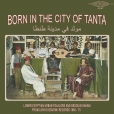
‘Egypt’s ‘official’ popular music throughout much of the twentieth century was a complex form of art song steeped in tradition, well-loved by the middle and upper classes. The music business was highly structured and professional; centred in Cairo. However, far from the metropolis, to the north and northwest, in towns like Tanta and Alexandria and extending across the Saharan Desert to the Libyan border, a raw, hybrid shaabi/al-musiqa al-shabiya style of music was springing up, supported by small, upstart labels.
‘This compilation covers the full range of styles presented by the short-lived but fecund Bourini Records, launched in the late 1960s in Benghazi, Libya. Gobsmacking moments include Basis Rahouma’s transformation into a growling, barking man-lion, and Reem Kamal’s onwards-and-upwards hand-clapping party banger, with a grooving nihilistic dissonance reminiscent of the Velvet Underground. The thorough-going contrast with mainstream Egyptian popular music is stark in Ana Mish Hafwatak, its vocal woven deftly through a constant accordion drone, and the sparse, slow-burning lament Al Bint al Libya. Whereas the mainstream was aspirational, projecting Egyptian culture at its most refined, the performances captured by Bourini were authentic expressions of ordinary, everyday life. More than half a century old, this music has lost none of its urgency, presence, or relevance.’

Excellent dub set originally released in 1988, based around Tetrack’s classic Let’s Get Started LP, from nearly a decade before. Roomy and reverberating, with synths preferred to melodica.
It was intended that one of Hudson’s teenage sons would voice the dubs. In the event the Love Joys, Wayne Jarrett, and most inimitably Hudson himself featured at the microphone. Like Wackies, Hudson was a Studio One devotee — ‘I used to hold Don Drummond’s trombone for him so I can be in the studio’ — and the album follows Coxsone’s recent strategy of overdubbing signature rhythms.
The Studio One sides were aimed at the dancefloor; Hudson’s reworks of tracks like Melody Maker are more psychological. Heavy Barrett Brothers rhythms are pitched down and remixed deeper still with reverb, filters and other distortion, and overlaid with new recordings of guitar, percussion, keyboard, voice, often crazily treated.
Originally released in 1981 on the Joint International label, in NYC.
Legendary, strange, compelling music.

Outstanding Tubbys.
At the turn of the sixties, pushing at the soul-jazz envelope (and tripping out on Eleanor Rigby) — with Lee Morgan, Julian Priester, Bennie Maupin, Melvin Sparks, and Leo Morris.
Whoa this record is totally killer.
Intensely concentrated, but with a fresh spontaneity; super-charged with expressivity.
The singing is riveting, diva-esque; the mbalax rhythms are dazzling.
At every turn there are sensational, thrilling injections of Basic Channel and Rhythm & Sound.
Hotly recommended; it’s a must.
Khadim is a stunning reconfiguration of the Ndagga Rhythm Force sound. The instrumentation is radically pared down. The guitar is gone; the concatenation of sabars; the drum-kit. Each of the four tracks hones in on just one or two drummers; otherwise the sole recorded element is the singing; everything else is programmed. Synths are dialogically locked into the drumming. Tellingly, Ernestus has reached for his beloved Prophet-5, a signature go-to since Basic Channel days, thirty years ago. Texturally, the sound is more dubwise; prickling with effects. There is a new spaciousness, announced at the start by the ambient sounds of Dakar street-life. At the microphone, Mbene Diatta Seck revels in this new openness: mbalax diva, she feelingly turns each of the four songs into a discrete dramatic episode, using different sets of rhetorical techniques. The music throughout is taut, grooving, complex, like before; but more volatile, intuitive and reaching, with turbulent emotional and spiritual expressivity.
Not that Khadim represents any kind of break. Its transformativeness is rooted in the hundreds upon hundreds of hours the Rhythm Force has played together. Nearly a decade has passed since Yermande, the unit’s previous album. Every year throughout that period — barring lockdowns — the group has toured extensively, in Europe, the US, and Japan. With improvisation at the core of its music-making, each performance has been evolutionary, as it turns out heading towards Khadim. “I didn’t want to simply continue with the same formula,” says Ernestus. “I preferred to wait for a new approach. Playing live so many times, I wanted to capture some of the energy and freedom of those performances.” Though several members of the touring ensemble sit out this recording — sabar drummers, kit-drummer, synth-player — their presence abides in the structure and swing of the music here…
‘Classic Vinyl Series.’

From the same 1979 recording sessions as Strange Celestial Road, this is one of Sun Ra’s best-loved, funkiest records, with John Gilmore in full flight, and a bigger Arkestra than had just played the Moers festival.