
Your basket is empty

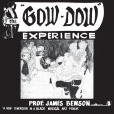
‘I was a music teacher. I wasn’t trying to make a record to compete, I was trying to make a record so the students would have something to remember the experience that we had… I was doing it for the kids.’
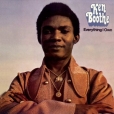
The reissue of a private pressing in 1973 by Prof James Benson and his students at Cal Poly, California, inspired by their recent trip to Africa, blending in the radical jazz idioms of early-seventies black America.
Insurgent music; full of life. Jazzman strikes again.
As originally, in a heavyweight tip-on sleeve.
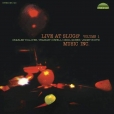
The great trumpeter with Cecil McBee, Stanley Cowell, and Jimmy Hopps, at Slugs’ nightclub in New York City, on May 1 1970.
‘Tolliver, McBee and Cowell (in that order) each contribute a composition to this superb, compelling set; though very much distinct, each is equally strong. Drought is the kind of dark-hued, well-honed burner which Tolliver routinely produced in his fertile years. Felicite is a more contemplative affair, a deeply felt and empathically performed piece. The unit here is in particularly sublime form, merging considerable skill with a staggering emotion. Orientale falls somewhere in between the pace of the two, with Cowell’s Eastern scales establishing an austere, industrious tone throughout its seventeen-and-a-half minutes.’
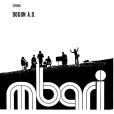
A thrilling, uncompromising blend of free jazz, funk, and blues.
JH is at his most intensely wake-the-dead and crying, on alto saxophone, with Baikida Carroll on trumpet, Phillip Wilson on danceable tuned drums, and Abdul Wadud playing a blinder on cello.
“So the great names, Johnny Coltrane and stuff like that? Most all of them were extraordinary blues players. This music is blues-driven. In terms of what has gone on before. Now where it goes from here — where it is going from here — may not be the same thing, ’cause it has to change, or it’ll die in my opinion. You know what I mean? The traditions keep on turning over! People keep looking rearward for the tradition. The tradition in this music is forward! Forward! Not what you did last week, but this week! You see what I’m saying? Now… that’s a hard road.”
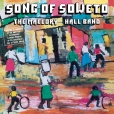
Like The Last Special, this was recorded at Johannesburg’s Video Sounds Studios in December 1974, in the depths of the apartheid era, by a twelve-piece touring band from California which immediately moved beyond the segregated hotels and ballrooms to build links with local South African players and audiences.
Featuring pianist Kirk ‘Habiba’ Lightsey, Rudolph Johnson from Black Jazz, and Billy Brooks, both records are superbly arranged slabs of peak 1970s funky big-band soul jazz, with tasteful Latin inflections and more than a nod to South Africa’s upful township jazz sound.
Try Hamba Samba!
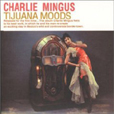
LP from Speakers Corner.
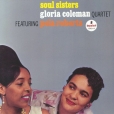
Featuring Grant Green, and engineered by Rudy van Gelder, in the manner of classic Blue Note organ jazz, this is an ‘underappreciated gem’, according to AllMusic. Leo Wright plays a blinder.
Here is a lovely photo of drummer Pola Roberts performing in the fifties. Nice name, the Pixie Bongo 4 Jewel’s.
Pola and Gloria had an all-women band together in the early sixties. George Coleman is Gloria’s old man.
‘Verve by Request’.
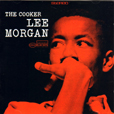
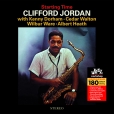
Aged just 19, with Pepper Adams, Bobby Timmons, Paul Chambers and Philly Joe Jones. Though so early, this is a crucial set, kicking off with a scorching, fresh A Night in Tunisia.
Timmons plays a blinder.
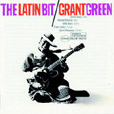
From 1963 — with Wendell Marshall (bass), Willie Bobo (drums), Johnny Acea (piano), Carlos ‘Patato’ Valdes (congas), Gavin Masseaux (chekere); and on the last two Ike Quebec and Sonny Clark.
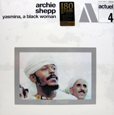
The LP is a facsimile of the original BYG release; the CD is from Charly.
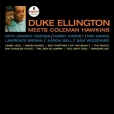
Released in the same few months as Money Jungle and Duke Ellington Meets John Coltrane, this is equally unmissable.
The opening calypso establishes the joyful, extravagant mastery of the date. Apparently the musicians were unaware that they were being recorded (by Van Gelder), and — thinking it was just a warm-up — drummer Sam Woodyard rhythm-a-nings, burbles, and scats away to himself, happy as Larry, and the Hawk doesn’t show up till two-thirds of the way through… nailing it, of course. Then a rapturous version of Mood Indigo, with more sublime Hawkins… a kicking Ray Charles tribute… Wanderlust, the Johnny Hodges classic from the thirties…
‘One of the great Ellington albums, one of the great Hawkins albums and one of the great albums of the 1960s,’ according to the New York Times.
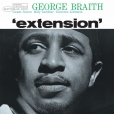
His best, most adventurous LP — reaching but carnivalesque — with George reining in his inner Roland Kirk, Grant Green keeping it real, and underrated organist Billy Gardner pushing the boat out into more unpredictable waters.
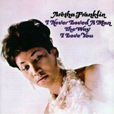
The single LP via Rhino is in lovely mono.
The double LP is newly transferred from the master tapes, remastered, and cut at 45rpm, in an all-analogue process.
Presented in a gorgeous gatefold sleeve by Analogue Productions, as part of its Atlantic 75 audiophile series.
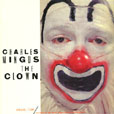
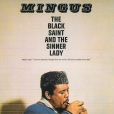
‘I am trying to play the truth of what I am. The reason it’s difficult is because I’m changing all the time.’ From 1957, hard on the heels of Pithecanthropus Erectus — hotter fire, and another masterpiece, featuring killer soloing from CM. On Haitian Fight Song: ‘I can’t play it right unless I’m thinking about prejudice and persecution, and how unfair is it. There’s sadness and cries in it, but also determination. And it usually ends with my feeling ‘I told them! I hope somebody heard me!’’ Reincarnation Of A Lovebird is here, too.
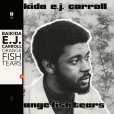
Encouraged by the Art Ensemble of Chicago, the trumpeter Baikida Carroll upped sticks in 1972, moving from Missouri to Paris. He travelled with several colleagues from the Black Artists Group: saxophonist/flutist Oliver Lake, trombonist Joseph Bowie, drummer Charles ‘Bobo’ Shaw, and trumpeter Floyd LeFlore. Inevitably, they soon crossed paths with Jef Gilson, who invited Carroll to record for his young Palm label, in June 1974. Carroll brought along Lake, and the Franco-Chilean pianist Manuel Villaroel, from the group Matchi-Oul, which had already appeared on Futura in 1971. The lineup was completed by the great Brazilian percussionist Naná Vasconcelos, fresh from the triumph of his own debut LP as leader — the terrific Africadeus, for Saravah.
The first side is knockout: everybody plays a range of percussion and bells on the opener — its own iteration of space jungle love — embedding stately interventions by woodwind and brass; before the wildly funky free-jazz of Forest Scorpio, with raging saxophone and keyboard, and monster groove. The second half is thrillingly hybrid and one-of-a-kind: more reflective, intimate, and spaced-out — increasingly hallucinatory — with an improvisatory feel for dissonance and repetition which beckons Terry Riley and György Ligeti into the mix.
The original Palm artwork is scrupulously reproduced, and an eight-page booklet contains rare and previously unpublished photos. The more expensive LP is from an edition of just 175 copies, with see-through vinyl, and a silk-screened wraparound sleeve, numbered and signed by the artist Stefan Thanneur.
Hotly recommended.