

Your basket is empty

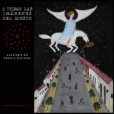
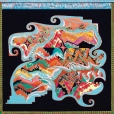
‘The sacred music of peasants in Chile’s remote Central Valley: a communal form of worship and reflection, played in packed rooms throughout the night when work is done. The Canto has persisted for centuries in the voices of hundreds of men and women who conjure vivid visions of apocalypse, the divine, and angelitos (very young children who have died). But the verses are also rooted in the daily life in the valley — labour and drought, family, animals, and the life cycles of plants. To hypnotic accompaniment by guitar and the celestial, 25-string guitarron, countless entonaciones or melodies range across the 10-line rhyming decimas, in an ancient song form originating in Spain and found from South America to the Mississippi Delta. The combination is entrancing and transporting, cosmic and earthly at once.
‘The handsome gatefold jacket presents the visionary, apocalyptic art of Frederico Lohse, a baker from the village of Los Vilos, who painted on old flour sacks; with an eight-page booklet containing lyrics, photos, and extensive notes about the Canto tradition.’
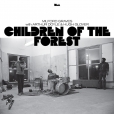
Milford Graves with Arthur Doyle and Hugh Glover, in the weeks leading up to their March 1976 recording of Bäbi.
Graves recorded these sessions himself in his legendary Queens basement laboratory and workshop. Outstandingly, the first two sides feature Graves on drums alongside Glover on klaxon and a Haitian one-note trumpet called a vaccine — “it’s important to keep that tribal possession-state feel… as in the Divine Horsemen of Haiti,” he says in the sleevenotes — and especially riveting, scorching tenor playing by Doyle, even by his own standards.

Reviewing and trailering the series, with contributions from MED, Guilty Simpson, Strong Arm Steady, Karriem Riggins, and AG; and a Jaylib-era track earmarked for the not-to-be second album.
TTT TTT TTT TTT TTT TTT TTT TTT TTT TTT TTT TTT TTT TTT TTT TTT TTT TTT TTT TTT TTT TTT TTT TTT TTT TTT TTT TTT TTT TTT TTT TTT TTT TTT TTT TTT TTT TTT TTT TTT TTT TTT TTT TTT TTT TTT TTT TTT TTT TTT TTT TTT TTT TTT TTT TTT TTT TTT TTT TTT TTT TTT TTT TTT TTT TTT TTT TTT TTT TTT TTT TTT TTT TTT TTT TTT TTT TTT TTT TTT TTT TTT TTT TTT TTT TTT TTT TTT TTT TTT TTT TTT TTT TTT TTT TTT TTT TTT TTT TTT
The one-hundredth Trilogy!
Hats off to an amazing, uncompromising run of killer music and lavishly brilliant artwork. Bangers and magic like dirt.
21 gun salute.
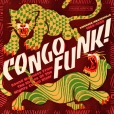
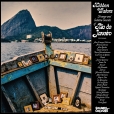
Also sub-titled ‘Kinshasa/Brazzaville 1969-1982’.
‘These new sounds emerged at a time when the Congolese record industry – previously dominated by European major labels – was experiencing a period of decline due to rising production costs.The void was filled by dozens of entrepreneurs willing to take chances on smaller scale releases. It was the beginning of a golden age for Congolese independent record labels, and the best of them – Cover N°1, Mondenge, Editions Moninga, Super Contact – preserved the work of some of the region’s finest artists, while launching a generation of younger musicians into the spotlight.
‘Congo Funk! is the story of these sounds and labels, but also it is the story of two cities, separated by water but united by an indestructible groove. The fourteen songs on this album showcase the many facets of the Congolese capitals, and highlight the bands and artists, famous and obscure, who pushed Rumba to new heights and ultimately influenced the musical landscape of the entire continent and beyond.’

At its most open, shifting and expressive to date. For all the music’s complexity and deep coherence, freedom is the key. At times it grooves hard; at others it’s lush, romantic.
With Tikiman and Marc Muellbauer.
A handful of LPs signed by Moritz!
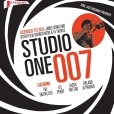
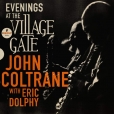
‘In August of 1961, the John Coltrane Quintet played an engagement at the legendary Village Gate in Greenwich Village, New York. Coltrane’s Classic Quartet was not as fully established as it would soon become and there was a meteoric fifth member of Coltrane’s group those nights — visionary multi-instrumentalist Eric Dolphy. Ninety minutes of never-before-heard music from this group were recently discovered at the New York Public Library for the Performing Arts, offering a glimpse into a powerful musical partnership that ended much too soon. In addition to some well-known Coltrane material (My Favorite Things, Impressions, Greensleeves), there is a breathtaking feature for Dolphy’s bass clarinet on When Lights Are Low, and the only known non-studio recording of Coltrane’s composition Africa, from the Africa/Brass album. This recording represents a very special moment in John Coltrane’s journey — the summer of 1961 — when his signature, ecstatic live sound, commonly associated his Classic Quartet of ‘62 to ‘65, was first maturing. He was drawing inspiration from deep, African sources, and experimenting with doubled-up basses both in the studio (Ole) and on stage. This truly rare recording of Africa captures his expansive vision at the time.’
‘Perhaps the first time he has chosen to showcase the full range of his skills. The set is intoxicatingly rich and, with a couple of exceptions, largely downbeat… Sonically there’s much more variation — if not in the pace of the riddims, then certainly the instrumentation and textures — making it St. Hilaire’s most approachable album for non-dub-techno aficionados… A modern master whose importance and influence can now — though long overdue — be fully recognised’ ((Steve Barker, The Wire).
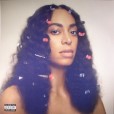
Multi-layered, expansive, reflective, feelingly political, musically expert. Dev Hynes, Kelani and How To Dress Well all in the mix; Q-Tip, Tweet, Lil Wayne… and old man Knowles, most tellingly of all. Knockout singing.
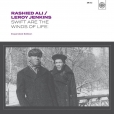
‘Part of Rashied Ali’s artistic strength involved turning improbable sound combinations into unchallenged masterpieces. After the pattern established by John Coltrane’s Interstellar Space, and Duo Exchange with Frank Lowe, the drummer stepped into this rather unlikely duet with violinist Leroy Jenkins. Five years with the Revolutionary Ensemble had established Jenkins as a composer; he designed all the pieces played on these 1975 duets with Ali.
‘The original LP is augmented by an informal phantom session in which Ali and Jenkins explore thoroughly other territories — standards, Coltrane’s music, and two untitled, unbridled improvisations.
‘Packaged in an old-school tip-on gatefold jacket that includes Stanley Crouch’s original 1975 essay along with new liner notes and excerpts from an interview with Jenkins.’
Male folk singers mithering and dithering all the way from 1970 to 1983: very introspective, sombre, spare and intimate, most of it originally pressed privately, plenty of it beautiful and haunting.