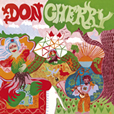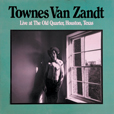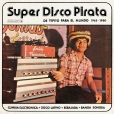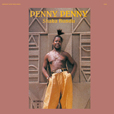
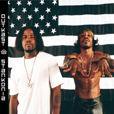
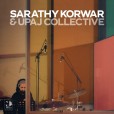

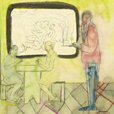
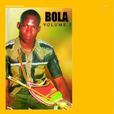

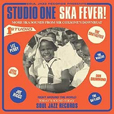
‘The twentieth volume of our flagship series has all the boxes checked: gun-toting record producers, child stars, rip-offs, ‘The World’s Greatest Bail Bondsman’, soaring falsettos, and a dwindling rust-belt cityscape offering mere glimpses of hope before the record industry escaped for the coasts. Helmed by the O’Jays Bobby Massey, Saru was a creative vortex pulling into Cleveland the best talent in Cuyahoga County — the Out of Sights, the Elements, Pandella Kelly, David Peoples, Sir Stanley, the Ponderosa Twins + 1, Ba-Roz, Bobby Dukes and — of course — The O’Jays.’
Some words from Dynamo Dreesen…
“Have you ever heard of the Eva EP by Web on Fat Cat Records? A few years ago it was my introduction to Web. I knew Fat Cat Records was interesting and diverse, they were known for releasing mainly experimental electronica and psychedelic folk music. The Eva EP by Web was Fat Cat’s start with their label mission from their record shop in central London in 1996. This EP has it all for me! A fusion of jazzy, bouncy, cosmic balearic, warped synth techno.
“Takuya Sugimoto aka Web while an art student in Osaka around 1993 began recording Detroit Techno, Chicago House, Electro and Electronica. He was helped by Ken Inaoka of Syzygy records, one of the first independent techno record labels in Japan, by releasing his first productions. Takuya then continued to release under several aliases, such as COLOGNe, Dja-zz, Gana, Ura Ura and Sammansa.
“While in Japan in 2019, on a 12 day Dresvn tour I was curious to know what had happened to Web. I asked Saito of Newtone Records in Osaka if he knew anything of him?
“Magically a month later Takuya sent me 16 unreleased tracks produced in 1994/95 stored on dat cassettes and forgotten about until now. Of those 16 tracks, eight became The Sound There.”
The classic set of Scientist / Jammy / Roots Radics dubs, originally out on Starlight Records in 1982, now matched with its vocal counterparts, including previously unreleased cuts by Hell & Fire, Sister Nancy and Papa Tullo. The vinyl comes with a two-feet-square colour poster of Tony McDermott’s cover art.
‘Eighteen dedications, each hybrid and different, but driven by an utterly personal approach to bebop, Brazilian jazz, Africa and Brazilian roots; thronged with his signature battery of whistles, screams, scales, keyboard, kettles, spoons, squeeze toys, children’s voices, prepared piano and geese calls; with the band adding native instruments like pandeiro, surdo, caixa, apitos, bonecos and agogos, besides saxophones, flute, electric piano, electric bass and so on. Musicians and genres such as Terry Riley, Frank Zappa and Weather Report, Javanese gamelan and Indonesian kulintang come to mind, but there is no real overlap: Pascoal has his own special brew.’
His first recording with his band in fifteen years. “My music is not commercial; it’s not like selling bananas or soap. I’m not in a hurry to record.”
At last, the vinyl reissue of this masterwork, adding two hitherto unreleased gems recorded solo for Charles Fox’s Radio 3 programme Jazz in Britain, in the same few months of 1980 as the stunning Aida performances.
The phrase ‘in the moment’ is often bandied about with reference to free improvisation, and indeed there’s no better way to describe Derek Bailey’s playing. The acoustic guitar is notoriously lacking in natural reverberation — notes barely hang in the air for a couple of seconds before they disappear — which explains the almost non-stop flow of new material in these stellar performances. Bailey knew from one split-second to the next exactly where to find the same pitch on different strings, either as a stopped tone or a ringing harmonic, and there’s never a note out of place. ‘He who kisses the joy as it flies,’ in the words of William Blake, ‘Lives in eternity’s sunrise’ — and this music is forever in the moment, constantly active but never gabby, kissing the joy.
One of the special pleasures of the BBC set is the guitarist’s own laconic commentary, a deliciously deadpan description of what he’s doing while he’s doing it — “I like to think of it… as a kind of music” — and the interaction between words and music is a particular delight. “You may have noticed a certain lack of variety,” he quips, while unleashing a furiously complex volley. Is it a coincidence that the final seconds recall the famous cycling fifths of the coda to Thelonious Monk’s Round Midnight? Surely not — for Bailey, like Monk, was a note man par excellence. And they’re both still alive and well in eternity’s sunrise.
The first proper compilation of her singular, unguarded, teenage dream pop, from eighties upstate New York. A kind of correspondent of Kate Bush in both composition and performance, on synthesizer and acoustic guitar, and in her otherworldly singing over four octaves, about dreamers, outsiders and lovers.
A throbbing, spiritual hymn to life itself, in commemoration of the great AACM bassist Fred Hopkins, who died in January 1999. Kahil El’Zabar, Ari Brown, Malachi Favors and Archie Shepp, coursing through ballads, hard bop and improvisation, swirling with the genies of McCoy Tyner, John Coltrane and Malcolm X, and ancient questions about what it means to be free.
The saxophonist Jesse Sharps took over from Arthur Blythe as leader of Horace Tapscott’s Pan-Afrikan People’s Arkestra. ‘He became the Ark leader…he was hardcore,’ the pianist recalls. ‘They’d all be quiet and listen to him when he talked.’
This was the period of such classic PAPA recordings as Flight 17, Live At IUCC and The Call; lit up by the funky, deep spirituality of Sharps compositions like Desert Fairy Princess, Macramé and Peyote Song II.
His own Sharps And Flats album was recorded in 1985 for Tom Albach’s legendary Nimbus West imprint, adding a stunning sixteen-minute bonus cut by the Pan-Afrikan Peoples Arkestra, featuring Horace Tapscott, recorded in 1979.
A lost classic of the Los Angeles jazz underground, on wax at last!
Multi-reedist Tony Coe was born in 1934, four years after guitarist Derek Bailey. He cut his teeth as a career jazzman with Humphrey Lyttleton, before an extended stint with the Kenny Clarke/Francy Boland Big Band. On this rare 1979 duo outing, he sticks to clarinet. And though that instrument has an illustrious jazz pedigree, Coe’s playing here is something else.
It’s worth noting that the clarinettist has also played under the baton of arch-modernist Pierre Boulez, the kind of composer Derek Bailey enjoyed taking to task in his book Improvisation. You might think the Frenchman’s uncompromising serialism and the free playing Bailey defended with such passion all his life would have little in common, yet both men were hugely influenced by Anton Webern. It’s an influence you can hear right through Bailey’s career in his obsessive exploration of tight parcels of registrally-fixed pitches, notably those trademark ringing harmonics. Meanwhile, Coe’s meandering semitones and sinuous arabesques here recall both Boulez’s clarinet writing in Domaines, and the harmonic world of Boulez’s own teacher Olivier Messiaen.
Still, no traditional classical musical notation could ever render the extraordinary rhythmic subtlety and timbral complexity of this music. It’s at one and the same time dazzlingly virtuosic — Coe and Bailey are on stellar form throughout, and have enough sense to, yes, accompany each other where needs be — and supremely lyrical and spacious.
An absolute delight.
‘In 1969, the Art Ensemble of Chicago arrived at the Théâtre du Vieux Colombier in Paris and a new fuse was lit. Their multi-instrumentalism made use of a varied multiplicity of ‘little instruments’ (including bicycle bells, wind chimes, steel drums, vibraphone and djembe: they left no stone unturned), which they employed according to their inspirations. The group’s stage appearance shocked as well. They wore boubous (traditional African robes) and war paint to venerate the power of their free, hypnotic music, directly linked to their African roots. They were predestined to meet up with the Saravah record label (founded in 1965 by Pierre Barouh), already at the vanguard of as-yet unnamed world music. Brigitte Fontaine’s album Comme à la Radio, recorded in 1970 after a series of concerts at the Théâtre du Vieux Colombier, substantiated the union of this heiress to the poetic and politically committed chanson francaise (Magny, Ferré, Barbara) together with the Art Ensemble of Chicago’s voodoo jazz and the Arab tradition perpetuated by her companion Areski Belkacem…’
When Cyro Baptista moved to New York in 1980 from his home city of São Paulo, he brought with him an arsenal of percussion instruments, including the cuica (friction drum), surdo (the booming bass drum associated with samba), berimbau (single-string bow with resonating gourd), and cabasas galore, in the next few years deploying them most notably in numerous ensembles curated by John Zorn, who helped set up this studio session in 1982.
As you might expect from someone whose infectious grooves have graced the work of Herbie Hancock, Astrud Gilberto and Cassandra Wilson, Baptista expertly fires off cunning polyrhythms, even traces of thumping samba, with restless fluency. Bailey the wily old fox skirts and eschews the bait, which is quickly conjured away and newly fashioned. The guitarist homes in on the delicious squeaks of the cuica and the twanging drones of the berimbau with truly awesome tonal precision. You could sing along if you wanted, after a caipirinha or two. And he gets almost as many different sounds from his instrument as Baptista can from his kit – check out the stratospheric plings and string-length fret-sweeps of Tonto, which sound more like a prepared piano than an acoustic guitar.
Wonders abound, from the berimbau/bent-string exchanges that open Quanto Tempo to the delightful collision of howling cuica and spiky bebop on Polvo, and the spare, preposterous Webernian samba of Improvisation 3.
These days, ‘improvisation’ often appears without its customary qualifier ‘free’. If there were ever a case to be made for its reinstatement, this album is the best supporting evidence. Freedom means you’re free to get into the groove, free not to, free to play with each other, free to play against each other. Sometimes frustrating, even scary, but more often than not in the hands of these two great masters it’s hilarious, exhilarating and utterly irresistible.