


Your basket is empty


This was the first in our series of Shangaan homages.
A metronomic, clicking beat to drive you crazy; a kind of Motorik lash — dubwise, midrange; moody strings.
Wry, driving, one-of-a-kind genius.
Lovely, rootsy, melancholic, multifarious music from Angola. Check the sublime, chugging proto-house of Kazum-zum-zum, to start, with its twist of Afrobeat; then the hypnotic Fourth World marimba of Kizomba Kya Kisanji; then the expressive soul of Dembita, flowering out of Baden Powell… Warmly recommended.
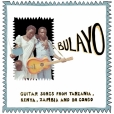
Beautifully relaxed, intimate recordings of fingerstyle guitar masterpieces by stars like Jean-Bosco Mwenda, Losta Abelo, and Emmanuel Mulemena, and brilliant but previously under-recorded artists like Tanzania’s Francis Kitime and Kenya’s Mtonga Wanganangu. From 1979-80, the sessions were set up in homes, village squares, and watering holes; you can hear laughter, children playing, and glasses clinking.
Lovely stuff.
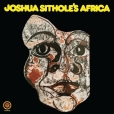
‘Masterful arrangements, inventive rhythms, rich harmonies, and a perfect balance of flute and saxophone interplay. Funk, Jazz, Gospel, Afro, and traditional elements all merge seamlessly into something unique and timeless.’
“South African spiritual funk gem. slick guitar, banks of horns” - Chris Albertyn (Matsuli).
“Dynamic South African funk. An album that will make you want to dance from start to finish” - Franck Descollonges (Heavenly Sweetness).
Bringing together two generations of South African guitar mastery: Madala Kunene, ‘King of the Zulu Guitar’, now in his mid-seventies, and his protege Sibusile Xaba, whose playing interweaves multiple South African guitar lineages in an original, spiritualised fusion.
Recorded in Zululand in the town of Utrecht, at a cultural centre called Kwantu Village. “It’s such a broad word, but the elders teach us that Ntu is basically an energy, almost chi, an energy, a force that all living beings have within them. It’s a living energy, so kwaNTU is almost the place of this energy.”
‘A beautifully expansive collection of interweaving, finger-picked melody, husky vocalisations from elder Kunene and thrumming hand percussion’ (The Guardian).
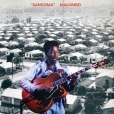
‘In 1978, SA guitar genius Tabane stood at a crossroads. Fresh from three years’ touring in the United States, where he graced the Newport Jazz Festival alongside Miles, Herbie, Pharoah and co, and with a newly signed international distribution deal, he harnessed this momentum to a new, larger band setting, capturing a rare intensity.
‘Sangoma — ‘spiritual healer — bridges contradictions: expansive yet intimate, celebratory yet haunted by exile and return. Tracks like Sangoma, Hi Congo and Keya Bereka are not simply recordings but living testaments, songs that would remain in Tabane’s repertoire for decades. Unlike the moody, immersive character of much of his work, here Tabane is on the move — urgent, restless, uncontainable. ‘Maskanta wa tsamaya’, ‘ass-kicking’.
‘More than four decades on, Sangoma is both an historical document and a timeless invocation. A landmark in SA musical history. From his home in Mamelodi to the world and back again, Tabane’s spiritual healing endures — raw, electric, and unbowed.’
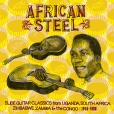
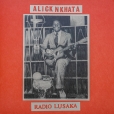
A beguiling, one-of-a-kind blend of country, township jazz, and pop, from the heart of Zambia’s freedom movement, by ‘the first African voice on the radio for many Central Africans and the first kind of pop star for many Central Africans.’
Vocalist, guitarist, and bandleader Alick Nkhata moved effortlessly between lonesome country slide, big band pop, and air-tight vocal harmonies, all with roots in Bemba and other African traditional songs and rhythms. It’s a dizzying, inclusive, expansive blend from an artist and music archivist who became the voice of his nation’s fight for freedom. The lyrics and music represent the times — lonesome country laments like Nafwaya Fwaya and Fosta Kayi drift along the railways to urban centers and copper mines. Nalikwebele Sonka (I Told You Sonka) pairs honey-soaked yodels with a warning about the downward spiral of unemployment in townships, while Mayo Na Bwalya (Mother of Bwalya) is a mother’s plea to a traditional songbird for guidance of her wayward son. Songs like Shalapo, Kalindawalo Na Mfumwa, and his biggest hit, Imbote, infuse piano, big band horns, and even early electronic instruments into stunning syncretic pop masterpieces.’
‘It’s great that Zamrock is so well known for its incredible story and music, but that intense focus has a way of flattening the diversity of Zambian music and its history. So maybe we can’t necessarily say that Alick Nkhata led to Zamrock, but that rich history of mixing influences and creating new sounds in the copper belt started with Alick in lots of ways. All of that stuff is what people appreciate about Zamrock — that it was mixing sounds and that it was political in its own way. There’s a long history of that approach in the region, and it starts with Alick.’
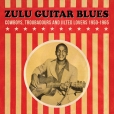
‘Amazing! Like stumbling on a treasure-trove of unheard Charlie Patton and Blind Willie McTell 78s, but imbued with the spirit of Mahlathini and Ladysmith Black Mambazo,’ says Joe Boyd.
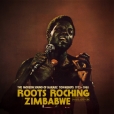
An insurgent blend of rock, rumba, soul and traditional grooves.
Including never-before-released recordings by legends like Thomas Mapfumo and Oliver
Mtukudzi, amongst many others.
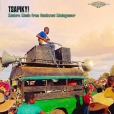
‘Wild ecstatic vocals, distorted electric guitars, rocket bass, and an amphetamine beat! Unlike anything else, this is THE high life music you’ve always wanted — ceremonial music played with abandon and extreme intent, honoring the living and dead alike.
‘In Toliara and its surrounding region, funerals, weddings, circumcisions and other rites of passage have been celebrated for decades in ceremonies called mandriampototse. During three and seven days, cigarettes, beer and toaky gasy (artisanal rum) are passed around while electric orchestras play on the same dirt floor as the dancing crowds and zebus. Locally and even nationally renowned bands play their own songs on makeshift instruments, blaring through patched-up amps and horn speakers hung in tamarind trees, projecting the music kilometers away. Lead guitarists and female lead singers are the central figures of tsapiky.
‘What results during these ceremonies is unclassifiable music of astonishing intensity and creativity, played by artists carving out their own path, indifferent to the standards of any other music industry: Malagasy, African or global.’

‘From 1972, the third and last album by this group formed in Johannesburg’s Alexandra township in 1968, announcing a shift away from early Memphis soul influences towards a pioneering African-driven jazz sound, and laying the foundations for the afro-fusion scene spearheaded by groups like Batsumi, The Drive, and Harari.
‘Black Soul features a who’s who of musicians from great South African bands over the decades: Zacks Nkosi, the renowned bandleader of the Jazz Maniacs and long-time member of the African Swingsters in the 1940s and 50s; kwela star Little Kid Lex Hendricks, known for his Columbia recordings of the late 1950s; Zack’s son Jabu Nkosi, who would go on to play with The Drive, Roots and Sakhile; and Banza Kgasoane later a member of The Beaters, Harari, and then Mango Groove.’
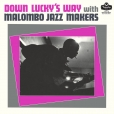
‘Malombo music is an indigenous kind of music,’ says Lucky Ranku. ‘If you listen to it, you can feel that it can heal you, if you’ve got something wrong. It’s healing music.’
Lucky was one of the greatest African guitarists of his generation. The deep and hypnotic Down Lucky’s Way was the Jazz Makers’ third album. Recorded in 1969, it was the first to feature additional instruments, and the first to feature Abbey Cindi on soprano saxophone as well as flute. But more than anything else, Down Lucky’s Way is a transfixing showcase for Lucky Ranku’s sui generis guitar virtuosity.
Quite different from their previous recordings, the album shifted the Jazz Makers’ sound toward mesmerising, extended compositions, layered by organ bass and guitar overdubs. Of all the Malombo Jazz Makers recordings, Down Lucky’s Way is the deepest of mood, and the richest of vision.
The most rare, too: it may not ever have been properly issued. Original copies are outrageously scarce — only a few are known among collectors. Prior to this reissue, Lucky was unaware it had ever been released, and had never seen a copy.
We ship worldwide. The postage rates for your order are displayed before payment, which is processed using Paypal. You can pay using your Paypal account or any of the following cards. No need to join Paypal.
