








Your basket is empty


Impatiently returning to the golden age of Ecuadorian musica national, this second round of retrievals is more of a selectors’ affair: less reverent, more free-flowing, with more twists and turns. There is no let-up in the quality of the music, maintaining the same judicious, heart-piercing balance between emotional desolation and dignified endurance, the same bitter-sweet play between affective excess and formal sublimity.
This time around, the woman steal the show. Laura and Mercedes Suasti were child stars, with an exclusive Radio Quito contract. Unlike nearly all the men here, they lived long and prospered: Mercedes died last year, at the age of 93. Gladys Viera and Olga Gutierrez both came to Ecuador from Argentina. To start, Gladys plugged the scandalous new Monokini swimwear; Olga performed for visiting British royalty in 1962. Olga was glamorous but tough. She would make little of the amputation of one of her legs: ‘I don’t sing with my leg.’ She is accompanied on our opener by quintessentially reeling, sultry musica national: haunted-house organ, twinkling xylophone, Guillermo Rodriguez’ heart-plucking guitar-playing, and lilting, dance-to-keep-from-crying double-bass. ‘Sometimes I think that you will leave me with no memories,’ she sings, ‘that you hold only disappointments in store for me… In the future your love will search me out, full of regret. By then it will be too late, there will be no consolation, only disappointment awaiting you.’
Other highlights include the two contributions of Orquesta Nacional: Ponchito Al Hombro, like an off-the-wall forerunner of the Love Unlimited Orchestra, beamed into the tropics from an unknowable time and space; and the tone poem Atahualpa, a mystical yumbo invoking Quito’s most ancient inhabitants, the Kichwa. Also the tremulous, gypsy-flavoured violin-playing of Raul Emiliani, who arrived in Quito from Italy, suffering PTSD from the Second World War; the inscrutable, sardonic experimentalism of organist Lucho Munoz; and the mooing and whistling of Toro Barroso — cow-thief school of Lee Perry — in which a muddy bull dashes home to his darling chola, fearless, full of desire.
Lavishly presented, with a full-size, full-colour booklet, with transporting art-work and expert notes. Luminous sound, by way of Abbey Road, D&M and Pallas.
Truly spell-binding music.
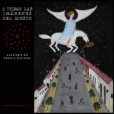
‘The sacred music of peasants in Chile’s remote Central Valley: a communal form of worship and reflection, played in packed rooms throughout the night when work is done. The Canto has persisted for centuries in the voices of hundreds of men and women who conjure vivid visions of apocalypse, the divine, and angelitos (very young children who have died). But the verses are also rooted in the daily life in the valley — labour and drought, family, animals, and the life cycles of plants. To hypnotic accompaniment by guitar and the celestial, 25-string guitarron, countless entonaciones or melodies range across the 10-line rhyming decimas, in an ancient song form originating in Spain and found from South America to the Mississippi Delta. The combination is entrancing and transporting, cosmic and earthly at once.
‘The handsome gatefold jacket presents the visionary, apocalyptic art of Frederico Lohse, a baker from the village of Los Vilos, who painted on old flour sacks; with an eight-page booklet containing lyrics, photos, and extensive notes about the Canto tradition.’
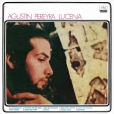
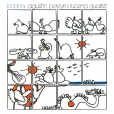
The dazzling 1970 debut of this Argentinian guitarist, featuring several of his own mystically beautiful bossa and samba jazz compositions, besides sensational versions of songs by Baden Powell, Vinicius De Moraes, and A.C. Jobim.
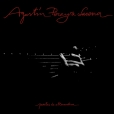
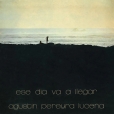
The first-ever vinyl reissue of this ravishingly beautiful private press album from 1988; Agustín’s most sought-after LP.
‘By now, Agustín had established himself as one of Argentina’s foremost interpreters of Brazilian music. The seventies brought success with his group Candeias, and recognition in Brazil, where he formed friendships and collaborations with luminaries such as Vinicius de Moraes, Baden Powell, Dorival Caymmi, Toquinho, and Maria Bethania. Following the era of dictatorship in South America, Agustín spent the late seventies and early eighties living and touring in Norway, during European travels with his quartet.
‘Recorded after returning to his native Buenos Aires — and featuring a team of crack Argentinian musicians, including drummer Osvaldo Avena, flautist Rubén Izarrualde, and saxophonist Bernardo Baraj — Puertos de Alternativa emerged from this confluence of diverse experiences, contexts, and influences. It begins rooted deeply in South American soil, drawing clear inspiration from Brazilian guitar masters like Heitor Villa Lobos, Garoto, and Baden Powell. But a sense of journey unfolds, evoking new landscapes and horizons — from the crystalline beauty of glacial Norway to the gentle currents of the Rio de la Plata.’

The delirious title cut is unmissable. A massive Dingwalls favourite back in the day, with stupendous, irresistible drumming, and dazzling keyboards by Jorge Dalto.

From the north-eastern provinces, mixing Spanish, African and Guarani influences (and long derided for it), a distant cousin of tango. Guitar and six-string guitarron, accordion and bandoneon, double bass, singing.
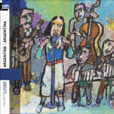
Haydee Alba’s 1990 debut album — emotional and poetic from the off, already steeped in tradition — following the evolution of the form over its nineteen tracks. ‘An artist’s job is to make her public dream.’
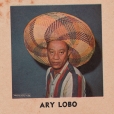
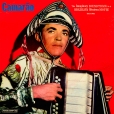
Ary was the most celebrated of those singers and songwriters emerging from Belem do Para in the 1950s, with deep Afro-Brazilian roots. He kick-started the sixties with his best LP Aqui Mora O Ritmo, The Rhythm Is Here. One year later his album Cheguei Na Lua (I Landed On The Moon) revealed his passion for space travelling and for the moon in particular. He released one LP per year till he left RCA in 1966. He made a ton of money and lived notoriously large.
The sleeve-notes of his 1958 debut Forro Con Ary Lobo are quick to nail his accomplishment: ‘An absolute master of Baiao, Coco, Batuque and other related musical genres, and the owner of an art one hundred percent his own, Ary Lobo is the ideal
interpreter of northeastern songs.’

‘On every track the frenetic energy in the studio is palpable, giving the recordings a beautifully personal feel and a sense of the phenomenally creative vision Bertrami, Malheiros and Conti were realising at the time. Fifty years on, Azymuth’s earliest recorded music retains an ineffable, futuristic quality, standing amongst their most captivating and moving work.’

Gonzalo Benitez and Luis Alberto Valencia were kingpins of the musica nacional movement in Ecuador. Check them out on the cover, on a rooftop in Quito’s Old Town, surveying their dominion.
In 1970, when Valencia collapsed onstage during a performance of the yaravi Desesperacion — ‘My heart is already in ashes’ — and died four days later, aged 52, his coffin was carried through those city streets on the shoulders of a throng of his fans.
They began singing as a duo in their mid-teens. During twenty-eight years together they recorded more than six hundred songs, for Discos Ecuador, Nacional, Granja, Ortiz, Rondador, Onix, Fuente, Real, Tropical, Fadisa, RCA Victor — and of course CAIFE.
Their exquisitely romantic harmonising is a sublime blend of collected forbearance and abject self-annihilation, underpinned and elaborated by the heart-piercing, improvisatory guitar-playing of Bolivar Ortiz. Effectively the third member of the group. ‘El Pollo’ sets the tone and intensity for everything that follows: listen to his soloing at the start of our opener, Lamparilla.
Musically a pasillo — a cross between a Viennese waltz and the indigenous yaravi rhythm — Lamparilla draws its verses from a poem by Luz Martinez from Riobamba, written in 1918 when she was 15, under the influence of Baudelaire and Mallarme. Another pasillo here, Sombras (‘Shadows’) is one of the best-loved songs in the musica nacional canon, setting poetry about undercover sex and lost love by the Mexican poet Maria Pren, which was considered pornographic on publication in 1911. ‘When oblivion comes / I will lose you to the shadows / To the hazy gloom / Where one warm afternoon I laid bare my unbridled feelings for you / Never again will I search out your eyes / Or kiss your mouth.’
And Benitez & Valencia looked back still further, to the indigenous roots of Ecuadorian music, as the key to its future. Carnaval de Guaranda is their take on a song dating back to the era of the Mitimaes, a broad group of Bolivian tribes conquered by the Incas and displaced to Ecuador. ‘Impossible love of mine / I love you for being impossible / Who loves what is impossible / Is the truest lover.’
Fiercely beautiful, desolate music from the shadowy mists of time, the lip of oblivion, for anyone who had a heart, for anyone who ever dreamed.
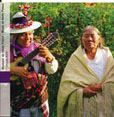
The dignified, expressive music of Andean Indians — the huayno, the slower tonado, the syncopated pascua — sung and played on charangos and guitarrillas by the Alvis Family, including Barbara, aged eighty-six.

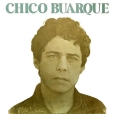
‘At 36 years old, in exuberant form, revisiting songs of his which hit for other artists, like Bastidores (which revived Cauby Peixoto’s career) and Morena de Angola (a smash for Clara Nunes). Released in December 1980, when Brazil was rehearsing its redemocratization even in the throes of continuing political violence, Vida dicloses an artist emerging from censorship. In the irresistible dancehall samba Deixa a Menina, he relishes a feminist response to Geraldo Pereira’s syncopated classic Sem Compromisso: ‘Behind a sad man, there’s always a happy woman / And behind that woman, a thousand men, always so kind.’ The Cubano title track spotlights a character near death, looking back with bittersweet ambivalence, and tightly holding on. ‘Light, I want light,’ sings Chico, threading Goethe’s famous last words into the sublime orchestration of Francis Hime, who creates the masterful arrangements on ten of the twelve songs, elucidating the delicacy of classics like Mar e Lua and Qualquer Canção, and lending the appropriate grandeur to Fantasia. Tom Jobim contributes the arrangement and piano of the masterpiece Eu Te Amo, co-written with Buarque. Another triumph is the bolero-style Bye Bye, Brasil, co-written with Roberto Menescal, humorously reviewing the profound transformation of Brazil during the previous decade.’
A bonafide MPB classic.
Proper socialist to the bone. Great novelist, too.
We ship worldwide. The postage rates for your order are displayed before payment, which is processed using Paypal. You can pay using your Paypal account or any of the following cards. No need to join Paypal.
