



Your basket is empty

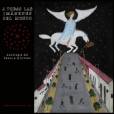
‘The sacred music of peasants in Chile’s remote Central Valley: a communal form of worship and reflection, played in packed rooms throughout the night when work is done. The Canto has persisted for centuries in the voices of hundreds of men and women who conjure vivid visions of apocalypse, the divine, and angelitos (very young children who have died). But the verses are also rooted in the daily life in the valley — labour and drought, family, animals, and the life cycles of plants. To hypnotic accompaniment by guitar and the celestial, 25-string guitarron, countless entonaciones or melodies range across the 10-line rhyming decimas, in an ancient song form originating in Spain and found from South America to the Mississippi Delta. The combination is entrancing and transporting, cosmic and earthly at once.
‘The handsome gatefold jacket presents the visionary, apocalyptic art of Frederico Lohse, a baker from the village of Los Vilos, who painted on old flour sacks; with an eight-page booklet containing lyrics, photos, and extensive notes about the Canto tradition.’
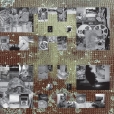
Astounding, deeply exploratory, previously unreleased work by the legendary Brazilian percussionist and composer.
A wild and unsettling collage, implacably original and startlingly intense — from the electroacoustic opener, which channels ancestral African inspirations into cosmogony, through the proto-mixtape Exemplo de Sintetizadores, which transitions from transcendental drones to astral cha-cha-chas, to a musical consideration of dripping water, in Suite Contagotas.
Djalma is best known for his studio work on benchmark albums, including numerous classics by Caetano Veloso, Gilberto Gil, and Jorge Ben, and for his own polyrhythmic opus Baiafro; and the finale here was first performed at the 1964 Nós, Por Exemplo concert, an event often cited as the inauguration of the Tropicalia movement. Djalma brings the electronics — medical oscillators, for example — to beef up his percussion. It’s eye-opening.
Corrêa called it ‘spontaneous music’; sonic adventures ranging audaciously across an array of genres, from jazz to deep funk to complete abstraction, all imbued with his signature DIY ethic.
Drawn from the original master-tapes, guided by Corrêa himself, just prior to his death.
Intriguing, immersive music. Dazzling, engrossing artwork, too.
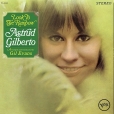
‘Verve By Request.’
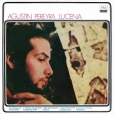
The dazzling 1970 debut of this Argentinian guitarist, featuring several of his own mystically beautiful bossa and samba jazz compositions, besides sensational versions of songs by Baden Powell, Vinicius De Moraes, and A.C. Jobim.
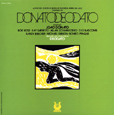
Their legendary 1969 collaboration — featuring Whistle Stop, and Airto in full flight.
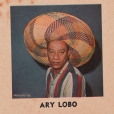
Ary was the most celebrated of those singers and songwriters emerging from Belem do Para in the 1950s, with deep Afro-Brazilian roots. He kick-started the sixties with his best LP Aqui Mora O Ritmo, The Rhythm Is Here. One year later his album Cheguei Na Lua (I Landed On The Moon) revealed his passion for space travelling and for the moon in particular. He released one LP per year till he left RCA in 1966. He made a ton of money and lived notoriously large.
The sleeve-notes of his 1958 debut Forro Con Ary Lobo are quick to nail his accomplishment: ‘An absolute master of Baiao, Coco, Batuque and other related musical genres, and the owner of an art one hundred percent his own, Ary Lobo is the ideal
interpreter of northeastern songs.’

‘Essential Vinyl Series.’

Their third LP; generally considered their best. From 1970, with the military crackdown in full swing, and Caetano Veloso and Gilberto Gil already in exile.

Deep, vibesing, rootical excursions in Brazilian percussion, especially berimbau; originally released by Saravah in 1973.
Newly remastered from the master tapes; gatefold sleeve.
Fabulous.
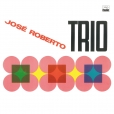
A year after Os Tatuís, José Bertrami returned to the studio, this time stripping back to a trio. Again featuring Claudio Henrique Bertrami on double bass, and with Jovito Coluna on drums, the José Roberto Trio recorded their one and only album in 1966, featuring compositions by Baden Powell, Manfredo Fest, and Marcos Valle. The LP also featured three of Betrami’s own compositions: the wistful Lilos Watts, the groovy Kebar, and the dazzling Talhuama.
Another jewel from the golden age of the Brazilian bossa jazz trio — Bossa Três, Milton Banana Trio, Tenório Jr,, Bertrami’s own Bossa Jazz Trio — ushered in by the Tamba Trio, and nourished along the way by jazz greats from Nat King Cole to Bill Evans,