



Your basket is empty


Reigakusha
Gagaku Suites
Black Sweat
‘Japanese classical music and dance, traditionally performed by families of musicians linked to the ancient Imperial court, and later passed down in Buddhist temple ceremonies and Shinto shrines, Gagaku is the oldest of the Japanese performing arts, with a history more than a thousand years old. Founder and director of the Reigakusha ensemble, Shiba Sukeyasu descends from the Koma clan, dating back to the end of the 10th century. The recordings partly reflect repertoires borrowed from Chinese music between the 5th and 9th centuries.
‘The eternal breath of the flutes (ryuteki and hichiriki) creates a sort of suspension of time, together with the hypnotic and hallucinatory atmosphere of the mouth organs (shō). The meditative tone of the string instruments (bika and koto) that punctuate the voids and silences is impressive, as is the enigmatic percussion section, with the tolling of the gong (shōko) and the calibrated beats of the drums (taiko and kakko).’
‘New, cool, melodic, funky pop from Japan. Six irresistible new songs from veteran members of 90s Tokyo underground pop bands like Love Tambourines, Arch and Bridge, with roots in 80s dance music, the funkier elements of post-punk and the Factory Records roster, and groups like Young Marble Giants and Weekend.’

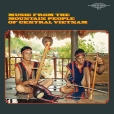
‘As with many other ethnic groups of the area, a traditional singing pattern is used with each singer adapting words to context. Many of these songs express intimate, strong emotions that bring tears to the performers while they are singing. The cascading mournful feel of this music is beautifully transcendent. You’ve never heard anything like it.
‘Instruments used by the ensemble include the babi (single tree leaf ) and mepa (tree leaf rolled up into the shape of a horn or mirliton), a chiwo (three-stringed bowed instrument), a labi (six-holed bamboo flute), a lahe (three-stringed small lute) and a meba (vertical reed instrument).’

Haunting, ravishing blends of western art song, blues and jazz with traditional and classical Japanese music. Wonderful.
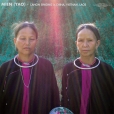
Rawly ethereal, other-worldly singing by members of hill tribes in China, Vietnam, and Laos.
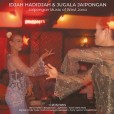
‘Mind-melting West Javanese gong pop, recorded in 2007 at Jugala studios in Bandung, based on a Javanese secular village music and dance tradition known as ketuk-tila, which was transformed into a popular studio music in the early 1960s by the producer Gugum Gumbira, founder of Jugala. With vocals by Idjah Hadidjah, one of the key historic voices of jaipongan, the situation here is disorientatingly heavy, low bpm gong pressure coming straight from the originators. It is a much less dainty affair than classical Javanese gamelan, and less febrile than the fully automatic Balinese variant. Hadidjah’s golden voice sews together shifting polyrhythms that would baffle a watchmaker; the whole is embroidered by rehab and underpinned by Mariana Trench level bass drops. A second disc features a set of thoughtful electronic reworkings’ (Frances Gooding, The Wire).
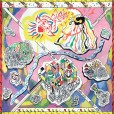
Seven songs by Rully Shabara and Wukir Suryadi, rootsily mystical and vividly al fresco, spiralling from peripheral sites beside rubbish dumps and rice fields, into a busy market at the heart of Yogyakarta, from dawn till dusk.
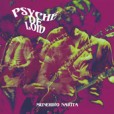
The king of acid-fuzz guitar presents a barbed bouquet of classic psych covers — The Stooges, Hendrix, Pink Floyd, MC5, Jefferson Airplane and co — with killer, piercing fuzz-wah guitar and bizarre software-generated vocals. ‘One of the finest acid-punk shredders to ever walk the planet, Munehiro Narita gives these time-honored psych rock classics a serious kick in the ass, in the most bizarre and Japanese of musical settings’ (Steve Krakow, Galactic Zoo). ‘Munehiro Narita (High Rise et al) bleeds all over a series of massively re-wired cover versions of classic psych while computer generated little girl vocals relocate the whole damn thing in another future altogether’ (David Keenan).
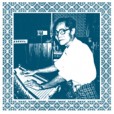
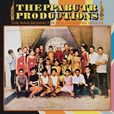
Profiling producer Theppabutr Satirodchompu — the first in a series of albums celebrating the key-players of modern molam music, from Northeast Thailand. Limited vinyl from Light In The Attic.
We ship worldwide. The postage rates for your order are displayed before payment, which is processed using Paypal. You can pay using your Paypal account or any of the following cards. No need to join Paypal.
