

Your basket is empty

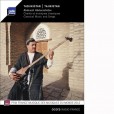
A master of the sato (a bowed tambur or long-necked lute held vertically) joined by Tajik singer Ozoda Ashurova in this beautiful, haunting, little-known court music. Plus doyra drum and dotar lute.
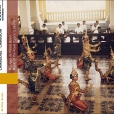
Pinpeat and mohori music — courtly and abstract versus nocturnal and soulful — performed by a female choir and the orchestra of the Royal Palace.
Differently pitched xylophones with bamboo blades suspended above a sound-box; sets of horizontal gongs; oboes; two big buffalo-skin kettledrums.
A stunning survey of the 1970s heyday of this great Japanese singer and countercultural icon.
Deep-indigo, dead-of-night enka, folk and blues, inhaling Billie Holiday and Nina Simone down to the bone.
A traditional waltz abuts Nico-style incantation; defamiliarised versions of Oscar Brown Jr and Bessie Smith collide with big-band experiments alongside Shuji Terayama; a sitar-led psychedelic wig-out runs into a killer excursion in modal, spiritual jazz.
Existentialism and noir, mystery and allure, hurt and hauteur.
With excellent notes by Alan Cummings and the fabulous photographs of Hitoshi Jin Tamura.
Hotly recommended.
Six deeply spiritual pieces from the Kinko School, developed in eighteenth century Japan by wandering zen monks for whom this flute music was a pathway to enlightenment.
The out-of-this world, near-extinct tones and effects of copper plate, balanced on either thumb, with left-hand fingers playing ornamentally, the melody with the right, as accompaniment to singing in the Sanaan style, setting courtly poetry in classical Arabic.
Intense, virtuosic singing in this ancient tradition, accompanied by Qasimov himself playing the daf frame drum and the brothers Mansurov on the tar lute and kamancha fiddle.
‘Simply one of the greatest singers alive, with a searing spontaneity that conjures passion and devotion, contemplation and incantation’ (New York Times).
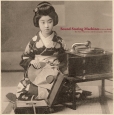
A miraculous bouquet of gagaku, shakuhachi, shamisen, storytelling, folksong and more, including the first commercial recordings in Asia.
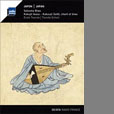
The medieval story of the Heike clan — combining drama and heroics with Buddhist reflection on the ephemerality of existence — sung by Kakujo Iwasa and Kakuryu Saito, with lute accompaniment.
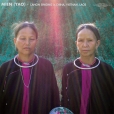
Rawly ethereal, other-worldly singing by members of hill tribes in China, Vietnam, and Laos.