


Your basket is empty


The son of the world-renowned tar and setar virtuoso Hossein Alizadeh; a true master of the Iranian spike fiddle, or kamancheh; and a key voice in contemporary Iranian music, blending classical Persian traditions with avantgarde experimentation.
The two Rituals presented here are deeply immersive, epic, meditative soundscapes, charged with memory, emotion, and the spirit of resistance.

A thought-provoking, deeply enjoyable consideration of displacement and dislocation, and abiding but adaptive cultural memory, this fourth collaboration mashes expert, haunting samples of the classical Iranian pop of greats like Andy, Hayedeh, and Fereydoun Farrokhzad into tough, quick-fire beat-downs.

Joyful rug-cutters and sweet soul-uplifters from the town of Morogoro, in early-1960s Tanzania: muziki wa dansi, inspired by Cuban 78s, and dance crazes like the twist and cha cha cha, but making them its own. Here is the cream of over a hundred recordings by Salum, mostly for Mzuri Records of Kenya; pretty much lost till now.
In an old-school tip-on cover, with lyrics in Swahili and English on the inner sleeve.
Lovely stuff.

Classic Latin soul, following up Watermelon Man, co-written by Pat Patrick from the Arkestra. (Subsequently a massive UK hit for Georgie Fame, using Jon Hendricks’ lyrics, arranged by Tubby Hayes.) Both sides, failsafe boogaloo destroyers.
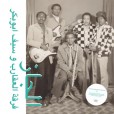
A thrilling, Sudanese, seventies blend of funk and soul jazz, with hot brass and organ, breaks and beats, even a shot of highlife. Nile Waves is knockout — as if the JBs fetched up in Khartoum.

Seven songs by Rully Shabara and Wukir Suryadi, rootsily mystical and vividly al fresco, spiralling from peripheral sites beside rubbish dumps and rice fields, into a busy market at the heart of Yogyakarta, from dawn till dusk.

An astounding compilation of the breakneck Shangaan dance output of the Nozinja studio in Soweto, recorded between 2006 and 2009.

Eleven exuberantly swinging, startlingly fresh jazz ragas by an ensemble combining hard-core Bombay jazz messengers, Bollywood royalty, and sitar master Ustad Rais Khan.
This is indo-jazz fusion direct from the source: an extremely rare glimpse of the same Bombay jazz scene that gave us Amancio D’Silva. Nothing kitsch here: by turns rollicking and lyrical, this is edgily committed and heartfelt music-making.
Never reissued since its 1968 release by EMI India, Raga Jazz Style is a collectors’ holy grail of Indian jazz; and this is a highly impressive inaugural salvo by Outernational Sounds, using original masters and beautifully rendered facsimile artwork, with 180g vinyl pressed at Pallas, in Germany.
Very warmly recommended.
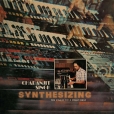
Astounding 1982 conjurations of ancient ragas on the Roland TB-303 and TR-808 synths which would define Acid. Pulsating, minimal grooves; a living Indian antecedent of House.
Released in cooperation with Singh’s estate. With a sixteen-page LP booklet containing previously-unpublished photos and two new essays. Remastered; luxuriating over four sides for maximum aural impact.
‘The mesmeric bass lines, the spare simplicity of the arrangements and the constant motion make the whole work a proper piece of electro history, akin to Manuel Gottsching’s E2-E4 for its understated visionary importance’ (Mojo).

‘SK Kakraba is a master of the gyil xylophone — fourteen wooden slats strung across calabash resonators. The silk walls of spiders’ egg sacs — ‘paapieye’ in the Lobi language — are stretched across holes in the gourds, giving each note a buzzy rattle. SK learned as a child from elders in his Lobi community in the far northwest reaches of Ghana.’
Beautiful, spare, mesmeric recordings — song cycles, dirges, improvisations based on traditional songs, original compositions — newly made.
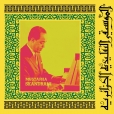
Improvisatory solo piano from 1965 — a trans-Mediterranean crossover based on traditional Algerian song, with roots in Spanish Islamic culture.
Spare, pellucid, and meditative; testing out variations with madcap ivories tickler Johnny Bach at his shoulder.
Hotly recommended.

The second half of the CD.