
Honest Jons logo

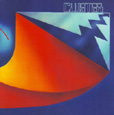
Originally released by Kuckuck in 1973, Princess Of Dawn ranges library-style from ceremonial, meditative mantra drones (Triad, Deep Sea, Gothic Velvet, Evening), through sun-worship (Tom Bombaddils Dance), to playful, pulsating forays in analog synth (Desert Rock, Synth Effect, Flea Dance, Laser), by way of the traditional music of the Middle East, India and Europe (Arabia, Reed, Phoenix).
Twenty-six fragments of electronica by the Krautrock mystic, like stepping stones between the phase of music-making which culminated in Aum the previous year, and his imminent departure for Bhagwan Shree Rajneesh’s ashram in Poona, home to key-works like Celebration, Haleakala, Ecstasy and Silence Is The Answer.

Astounding, deeply exploratory, previously unreleased work by the legendary Brazilian percussionist and composer.
A wild and unsettling collage, implacably original and startlingly intense — from the electroacoustic opener, which channels ancestral African inspirations into cosmogony, through the proto-mixtape Exemplo de Sintetizadores, which transitions from transcendental drones to astral cha-cha-chas, to a musical consideration of dripping water, in Suite Contagotas.
Djalma is best known for his studio work on benchmark albums, including numerous classics by Caetano Veloso, Gilberto Gil, and Jorge Ben, and for his own polyrhythmic opus Baiafro; and the finale here was first performed at the 1964 Nós, Por Exemplo concert, an event often cited as the inauguration of the Tropicalia movement. Djalma brings the electronics — medical oscillators, for example — to beef up his percussion. It’s eye-opening.
Corrêa called it ‘spontaneous music’; sonic adventures ranging audaciously across an array of genres, from jazz to deep funk to complete abstraction, all imbued with his signature DIY ethic.
Drawn from the original master-tapes, guided by Corrêa himself, just prior to his death.
Intriguing, immersive music. Dazzling, engrossing artwork, too.

“360 degrees of freedom is overwhelming in music, and you need not truly begin to find freedom until you put yourself under extremely narrow constraints.”
‘Slepian’s work draws equally from the harmonic terrain he explored while performing with a Javanese gamelan ensemble, as well as time spent building and modifying electronic audio equipment for studios and fellow musicians. Gravitating towards improvisation and experimentation, he built a breathtaking sound-world that stretched the briefest of moments into an eternity of detail and depth.’
In 1980, Slepian consolidated his vision with a series of cassette albums. His ‘New Music For Digital Orchestra’ was actually performed by instruments, tools and recording techniques which are entirely analogue, and captured live with no overdubs.

‘A new twist to the Don’t DJ sound. Leftfield tribalism at its best, with a pinch of Zoviet France fourth world voodoo for the 5am crew that wants to get hazy in the dance. A drum ritual of epic proportions.
‘Then Morgan Buckley — from the mighty Wah Wah Wino crew — takes up this deep and intense trip…  and goes ballistic. He peppers the original with some live Bodhran drumming to invoke the ancient Celtic spirits. If the essence of a remix is to keep the original vibe of the tune and add a different flavour to it, Morgan Buckley nailed it in a big way.’

You can hear their stage experience in ‘the sizzle and swing of the percussive highlights here, programmed with a serious depth and wriggle that reflect both an extension of and return to form. Considerations of the machine-human interface, neurological realities and physical probabilities dominate. But these tracks are economical and precise, glittering with emotional depth and cinematic effects. The album’s core, a three-act movement of symphonic uncertainty and revelation, marks one of the pair’s most evocative compositions in a career full of them.’

One of the best-kept secrets of the Belgian free jazz and improvisation scene; formed in the early 2000’s, when trumpeter Joachim Devillé and saxophonist Thomas Olbrechts were in their twenties, and drummer Dirk Wauters — their teacher at the art school in Brussels — in his fifties.

‘Too often we describe music using classifications; genres like ‘jazz’, ‘experimental’, ‘avantgarde’ are an easy shorthand to relay the rough parameters of the music to another person who may not have heard it. But these words are useful because they’re so vague, and they are most often used when the impression the music makes is equally vague. But when a group makes sounds that move the listener, these terms don’t hold up.
‘Dry Speed has released a record that is, at turns, futuristic and organic. It feels alien and
new, like plastic or titanium, but at the same time as if it is shrouded in the natural, growing
like moss or amplifying the sound of a great tree’s roots. Indium gives the listener multiple
entry points into the trio’s music: from a broad soundscape to a densely knitted series of
minute and exacting musical gestures’ (Nate Wooley).

‘Further adventures in Organic Electronic Music by this rigorous magician of vaporous, oscillating patterns, sidereal frequencies, nebulous dust; explorer of inter-zonal paths, new dreamlike dimensions, undiscovered planets. Marrying the momentum of Kraut-Kosmische with a personal, gentle minimalism, DSR Lines specialises in rare atmospheres of rhythmic pulsation, with enveloping, spiralling sounds, luminous and radiant in their hypnotic aura, or magnificently ecstatic and ascending.’

Thirteen feeling, liquid synth explorations, rooted in ambient, Balearic and Kosmische; melodic, tremolo waves and rhythmic, organic vibrations, attuned to the more blissed-out, ambient fall-out from E2-E4… and of course to Ruscha’s own paintings.
“I really love when music forces you to forget,” he says. “There’s this beautiful moment where everything coalesces, and you just don’t think about anything.”
Refreshing, transporting music.

An anti-war collage of words and sounds from August 6, 1966, including contributions from a plastic clock-radio, The Velvet Underground, Gerard Malanga, Marion Brown, Allen Ginsberg, Ishmael Reed, Andy Warhol (standing around silently) and Ed Sanders.

‘Venomous Tex-Mex R&B and early rock n’roll from San Antonio’s West Side scene. From 1961-67, Bexar county kingmaker Abe Epstein cut every teen combo to grace the Patio Andaluz stage, launching the careers of Doug Sahm, The Royal Jesters, Sonny Ace, The Dreamliners, and hundreds more throughout the decade.’

Ed Sanders founded a magazine called Fuck You (in 1962), a radical bookshop on the Lower East Side of NYC, named Peace Eye, and The Fugs.
This is a kind of incantatory left-anarchist history lesson, with interjections on a small keyboard called a pulse lyre, which he invented and built himself. It’s droll, epic, engaging, stirring; warmly recommended.
Presented in a beautiful gatefold sleeve, with lyric sheet.

‘Many mayhemic forces were set against the socialist zone…’

Created in collaboration with Walter Branchi from the Gruppo di Improvvisazione Nuova Consonanza, this soundtrack to Mino Guerrini’s 1968 film is among the most strikingly experimental of all Macchi’s music for cinema. A suspenseful, jet-propelled fresh mix of
psychedelia, jazz, and improv, threaded with beautiful melodies.
The first time out; from the master tapes.

Crucial, preposterous David Axelrod!
Composed and arranged by the maestro, a psychedelic garage-rock opera, sung in Latin, with Gregorian chant, pipe organ, lashings of fuzz guitar, strings and horns.
A version of the opener Kyrie Eleison famously featured in the soundtrack for Easy Rider, accompanying several scenes.
This definitive reissue was mastered by Kevin Gray using the original tapes.

‘These recordings are traces of something I have come to love to do in large resonant spaces, which is to set up sustained chords on multiple organs and then move slowly through the sound. The instruments are usually far apart, which makes for the emergence of large fields of continuous change, spaces of harmonicity that can be passed through layer by layer and which contain within them points of both clarity and overwhelming complexity. The organ pipes are tuned and retuned, though sometimes I leave them just as they are. What I’m searching for is the moment when a particular kind of sounding texturality is revealed – it is rough, focused and yet strangely transparent.’

Plenty of thrills and spills in this soundtrack to Otto Preminger’s 1959 film. Steeply evocative dynamic and rhythmic contrasts and quick changes in orchestral density get the job done — with a repeated strain of melody —  and make for highly entertaining listening, with numerous rollicking brass passages in amongst the piano-threaded impressionism, plus terrific soloing by Johnny Hodges, Ray Nance and co. Highlights include the suspenseful opener, the moody Midnight Indigo, the sublimely sad Almost Cried, and the band hard-rocking out-the-door with Upper And Outest, culminating in an amazing stratospheric passage by Cat Anderson, playing for a moment as if the needle is stuck.
Check out the opening of the film, with its title sequence by Saul Bass, and Duke’s music. Class.