
Your basket is empty

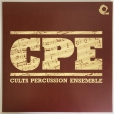
Dreamy percussion exotica by a group of fourteen-year-old students (ten girls, including Evelyn Glennie, and one boy) in Aberdeen, 1978.
Jarvis Cocker’s thrilled to bits — ‘Here, at last, is the the soundtrack to maybe THE underground film of all time in all its crazy daisy glory’. A mental cut & paste of Czech orchestras, folk, jazz and experimental sounds.
‘Experimental jazz, chanson, bluesy folk and various strains of outsider music permeate a rich layering of music boxes, walkie-talkies and plastic straws, plucked charrango and banjo, kazoos, flutes and snake-charming ocarina, accordion and melodica, found percussion and traditional tuned drums. The moods switch from child-like and epiphanic (Tarzan en Tasmanie, Madrigal for Lola) to babbling (Pocarina), mysterious and dark (Septième Ciel, Rugit Le Coeur) to tender and simple (Rainbow de Nuit, Chevalier Gambette); from murky, suspenseful melancholy (Levy Attend, Eno Ennio) to pensive psychedelia (Un Cercueil à Deux Places). A world of echoes. A tale of tales. You’ll be whistling and humming along on first listen.’
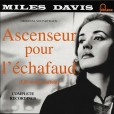
The CD is from Fontana / Decca France; with a sixty-page booklet.
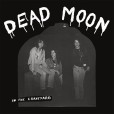
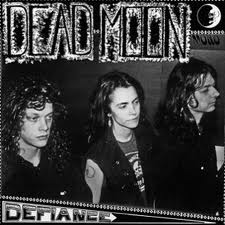
Dead Moon’s first record, originally released in 1988.
‘An authentic mix of psychedelic rock, punk, blues, country & every other American music worth a damn,’ writes Mississippi, questionably. ‘This LP features all-time classics such as Graveyard (a 13th Floor Elevators type vibrating psychedelic song), Don’t Burn The Fires & I Hate The Blues. Lo-fi as hell.’
‘Dora’s signature, sublime, open-hearted refinement of modern classical, folk and ambient is at its most colourful and rhythmic in this suite of keyboard instrumentals; an aural mille-feuille, in dramatic contrast with her previous, melancholic vocal works.
‘Atmospheric drone miniatures underpin flowing, cyclical arpeggios, spiralling into an unpredictable dream space of melodic polyphony. Drawing on an essay by Hartmut Rosa, the music mulls over conceptions of the acceleration of time and the experience of alienation. It reveals the inescapable pulsation of time as at once mesmerizing and unsettling.’

‘The opener is a statement of intent — frazzled, shuffling drums, ketamine oud, heavy sub bass — something like Wordsound’s Scarab zooming out of the 90s into the future. Tombaroli is a head nodder, with insistent percussion and banging pulse. A lysergic fever-dream, Bullet Holes dips into spooked psychedelia; No Minus sounds like a distant cousin of DJ Premier’s production Come Clean, for Jeru.
‘Channel 83 lands us back in the club for a rib-rattling stomp, weaving mystical soundsystem magic with its stunted horns and swirling voices. The grimy judder of Expect Excerpt slides proceedings down to a bleary-eyed half-speed, like a party which won’t let you leave. Mount Point is a welcome release, an early morning sunrise — rich, slow, and shimmering — before Landings Dub signals the end of the journey with a metallic elegy; both a summing up of the record, and the contemplation of your flipping it, and re-entering the world of Detraex Corp.’
Astounding, deeply exploratory, previously unreleased work by the legendary Brazilian percussionist and composer.
A wild and unsettling collage, implacably original and startlingly intense — from the electroacoustic opener, which channels ancestral African inspirations into cosmogony, through the proto-mixtape Exemplo de Sintetizadores, which transitions from transcendental drones to astral cha-cha-chas, to a musical consideration of dripping water, in Suite Contagotas.
Djalma is best known for his studio work on benchmark albums, including numerous classics by Caetano Veloso, Gilberto Gil, and Jorge Ben, and for his own polyrhythmic opus Baiafro; and the finale here was first performed at the 1964 Nós, Por Exemplo concert, an event often cited as the inauguration of the Tropicalia movement. Djalma brings the electronics — medical oscillators, for example — to beef up his percussion. It’s eye-opening.
Corrêa called it ‘spontaneous music’; sonic adventures ranging audaciously across an array of genres, from jazz to deep funk to complete abstraction, all imbued with his signature DIY ethic.
Drawn from the original master-tapes, guided by Corrêa himself, just prior to his death.
Intriguing, immersive music. Dazzling, engrossing artwork, too.
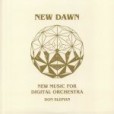
“360 degrees of freedom is overwhelming in music, and you need not truly begin to find freedom until you put yourself under extremely narrow constraints.”
‘Slepian’s work draws equally from the harmonic terrain he explored while performing with a Javanese gamelan ensemble, as well as time spent building and modifying electronic audio equipment for studios and fellow musicians. Gravitating towards improvisation and experimentation, he built a breathtaking sound-world that stretched the briefest of moments into an eternity of detail and depth.’
In 1980, Slepian consolidated his vision with a series of cassette albums. His ‘New Music For Digital Orchestra’ was actually performed by instruments, tools and recording techniques which are entirely analogue, and captured live with no overdubs.
‘A new twist to the Don’t DJ sound. Leftfield tribalism at its best, with a pinch of Zoviet France fourth world voodoo for the 5am crew that wants to get hazy in the dance. A drum ritual of epic proportions.
‘Then Morgan Buckley — from the mighty Wah Wah Wino crew — takes up this deep and intense trip… and goes ballistic. He peppers the original with some live Bodhran drumming to invoke the ancient Celtic spirits. If the essence of a remix is to keep the original vibe of the tune and add a different flavour to it, Morgan Buckley nailed it in a big way.’
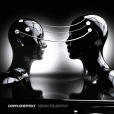
You can hear their stage experience in ‘the sizzle and swing of the percussive highlights here, programmed with a serious depth and wriggle that reflect both an extension of and return to form. Considerations of the machine-human interface, neurological realities and physical probabilities dominate. But these tracks are economical and precise, glittering with emotional depth and cinematic effects. The album’s core, a three-act movement of symphonic uncertainty and revelation, marks one of the pair’s most evocative compositions in a career full of them.’