



Your basket is empty

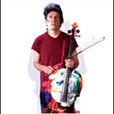
‘The compilation that started the renaissance… twelve tracks of Buddhist Bubblegum Alt Disco Pop recorded during Arthur’s prime years 1985-90.’
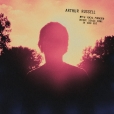
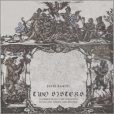
‘An intimate unedited solo live performance recorded at Phill Niblock’s Experimental Intermedia Foundation in Downtown NYC on 12/20/85. Arthur titled this performance Open Vocal Phrases, Where Songs Come In and Out. He would later edit sections from this performance merging it with studio material recorded at Battery Sound to finalize the World of Echo album released in 1986.’
“Some of it sounds so pure and clear and I am picturing him huddled around all that gear, simply magical. In my memory he didn’t play “for” the audience but was rather trying to perfect these various permutations of sound within himself…and a few of us just happened to be present” - Tom Lee
The double vinyl LP includes the complete nineteen-minutes-plus version of Tower of Meaning/Rabbit’s Ear/Home Away along with the previously unreleased songs That’s The Very Reason and Too Early To Tell. Also two instrumental tracks from Sketches For World Of Echo, originally published in 2020 as a cassette.
The double CD includes both Open Vocal Phrases and Sketches For World Of Echo, in full.

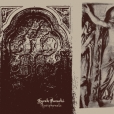
The son of the world-renowned tar and setar virtuoso Hossein Alizadeh; a true master of the Iranian spike fiddle, or kamancheh; and a key voice in contemporary Iranian music, blending classical Persian traditions with avantgarde experimentation.
The two Rituals presented here are deeply immersive, epic, meditative soundscapes, charged with memory, emotion, and the spirit of resistance.
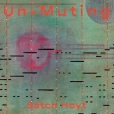
The ‘un-muting’ or ‘sonic restitution’ of African instruments held in Western museum collections, this project began with a recording session in October 2023 at the British Museum in London, when Hoyt was granted access to instruments from the Department of Africa, Oceania, and the Americas. These recordings were then developed in his studio, blending in African and Western instruments from his own collection.
‘This record is not an album but a diagram, a blackground score for a people who have never stopped dancing. Instruments exiled into the vitrines of empire, their voices stilled by taxonomic theft, now murmur and hum again. This is restitution by vibration, and the sounds you hear refuse to be forgotten, to be fixed, to refuse to die. You won’t find Western time signatures here; you’ll find time folding, spilling, catching fire. His compositions bespeak an afro-sonic-philo-sophy, more drastic than gnostic. These desperate times call for desperate pleasures.’

Mid-sixties beat with authentic Middle Eastern character by this Lebanese foursome. Issued in London by Decca as sevens, but much more popular at home (on the Symbol label), and especially in Turkey.

‘Gainsbourg’s most elusive, coveted soundtrack studio recording — co-written, arranged and orchestrated by Jean-Claude Vannier (the genius behind Histoire De Melody Nelson), at the creative apex of their partnership — this LP crystallises the inimitable psychedelic, funky pop brilliance of collaborations like La Horse, Cannabis and Sex Shop. Thick, plucked bass-lines, close-miked drums, biting clavinet, subtle Gallicisms, eastern strings and percussion…’
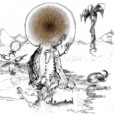
No-one else makes music like this: devilishly complex but warm and intuitive, stirring together a dizzying assembly of outernational and outerspace influences, whilst retaining the subby funk-and-hot-breath pressure of Shackleton’s soundboy, club roots.
The result is an evolutionary, truly alchemical music — great shifting tides of dub, minimalist composition and choral song (Five Demiurgic Options); ritual spells to ward off the darkness (Before The Dam Broke, The Prophet Sequence); radiophonia and zoned-out guitar improv (Seven Virgins); even the febrile, freeform psychedelia of eighties noise rock (Sferic Ghost Transmits / Fear The Crown).
Over the five years since Music For The Quiet Hour, Vengeance’s vocal and lyrical range has rolled out across this new terrain. Throughout these six transmissions he’s hoarse preacher, sage scholar and ravaged bluesman; blind man marching off to war, and exhausted time-traveller warning of impending socio-ecological catastrophe.
Six dialogic accounts of our conflicted times, then, expanding beyond the treacly unease of the duo’s early collaborative work into something subtler and more emotionally shattering — its shades of brightness more dazzling, and its darkness even murkier.
“We almost didn’t hear it when the foundations went.”
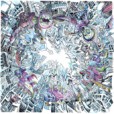
Shackleton’s most expansive, ecstatic and hallucinatory music to date. Four extended excursions channeling Congotronics way to the east, with an aura of restrained mania reminiscent of the feral pomp and gallows humour of Coil’s moon-musick phase.
The pairing with Tomasini is a match made in heaven. Swooping from deep growl to piercing falsetto, his four-octave voice both heightens the taste for the theatrical that’s always been integral to Shackleton’s music, and makes explicit the latter’s kinship to the occult energies of the UK’s post-industrial underground.
As the title suggests, these are shadowy songs rich with allusions to bodily ritual and psychic exploration, with Tomasini’s lyrics framed by luminous whirls of hand-struck drums and synthetic gamelan, bells and tumbling organ melodies, all earthed by dubwise bass. You Are The One escalates from delicate choral chant to full-bore psychedelic organ freakout; Rinse Out All Contaminants is a slow incantation, to purge all negative thoughts; the melodies of Father You Have Left Me are smudged like early Steve Reich, then burned out by snarling subs; and the magnificent Twelve Shared Addictions balances elliptical melodies like spinning plates, gradually unfurling into a breakneck storm of voice and hammered keys.
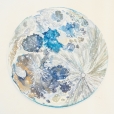
‘Marvelling, playful, inquisitive contemplations, ranging from the stardust that forms us to the very first human sound that reverberated through a cave; ambient, liminal narratives woven by poetic recitation and Buchla, bass and sitar, edging towards blues and spiritual jazz.’