
Your basket is empty

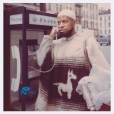
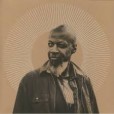
‘An overview of his earliest works, gathering selections from his 1978 debut Celestial Vibration and six additional studio sessions from the era. Full of discovery and wonderment, Glimpses of Infinity is a miraculous chronicle of new age’s most fabled artist.’
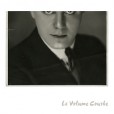
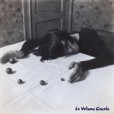
The first of three 10” comprising Charlotte Courbe’s third album; her compelling return to Honest Jon’s after two decades, laced with surprise and subversiveness, and a refreshing, unique candour.
After a cancer diagnosis last year, Charlotte felt the urge to produce and release new music. “It became like a vital thing.”
MRI Song and Planet Ping Pong were recorded during chemotherapy. Mind Contorted is a duet with Terry Hall, also featuring Terry’s son Theodore and Noel Gallagher on guitars, in a cover of Daniel Johnston. The song Fourteen Years is the oldest inclusion, announcing a fresh, freer direction.
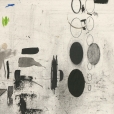
The sleeve exclusively presents new work by John Stezaker, in the first of a triptych.
“I put out the first Le Volume Courbe single in 2001… she reminded me of a female Syd Barrett… real psychedelic soul” (Alan McGee).
“Inspiring originality, fiercely independent, beautiful music, always years ahead of its time. I remember hearing Charlotte’s music for the first time and being immediately taken by the freshness, great melodies and utterly unique approach” (Kevin Shields).

‘Swooping, sub-heavy sci-fi from Riz Maslen, under a new moniker.
‘Heavy-lidded and ethereal, its balance of bass weight, mechanical metre, and darkly tinted new age feels like a cinematic re-approach to some of the textures, moods, and themes of her 1996 Laundrophonic maxi, under the alias Neotropic.
‘Stairway 13 folds in decades of experience in sound design and theatre, along with shards and elements abstracted from Riz’ more recent folk-like music, zoning into a deep, retreated, altogether dreamlike and expansive atmosphere. The scale and soundscape is reminiscent of Geinoh Yamashirogumi and their Ecophony album series, resonating to similar frequencies and exploring themes of chaos and rebirth in feature-length form.
‘The four parts spread and swoop as single extended sides across this double LP. Carried by waves of sub bass and heavenly chorus, and later punctuated with autonomic clicks of machinery, whirrs, and pulses, the work forms a gothic, otherworldly ambience. A subtle space opera.’
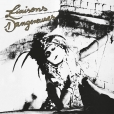
Notorious, seminal electropunk from 1981 — Beate Bartel from Einstürzende Neubauten and Chrislo ‘DAF’ Haas, with vocalist Krishna Goineau — which coursed into Chicago house and Detroit techno. Undiminished; still vital.

Startling, exhilarating concrete music by this experimental Canadian film-maker, beloved of Stanley Kubrick and George Lucas. (A homage to him is embedded in Star Wars.)
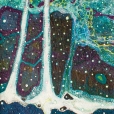
His treasurable third solo LP in three decades of collaborative work as Vilod, the Moritz Von Oswald Trio, Non Standard Institute, Sun Electric, Ambiq, and company.
‘Max at his most exhilarating, morphing through bittersweet and optimistic soundscapes to bleak moments of throbbing unease — all while maintaining a musical grace and elegance. Petrichor is a reflection of Loderbauer’s impactful trips to the mountains, and returning from these summits with an electrifying urge to paint this mighty perspective. The harmonies and melodies on the tracks simulate emotional peaks and valleys, with vibration and rhythm rooted in the foundation of the sound, as though woven into the fabric of the fauna and flora.’
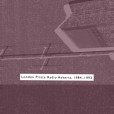
The first volume in a two-part collection of pirate radio adverts & idents, assembled from home recordings of London stations made between 1984 & 1993.
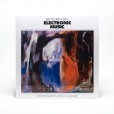
Three rare recordings by this pioneer of early Danish electronic music — compelling, often dazzling, but focussed and without bombast.
‘Electronic Music was originally released in 1987 as a retrospective album, collecting three of Bent Lorentzen’s electronic works from the 70s. These clearly demonstrate Lorentzen’s close familiarity with his equipment and his great technical proficiency regarding the creation and manipulation of all sorts of electronic and recorded acoustic sounds — typically in the form of speed changes, reversed sounds, and reverb and filter effects. The music is often quite dramatic with distinct narratives and multiple dynamic layers of sound, but still with a clear sense of disposition and restraint, possibly stemming from Lorentzen’s experience with classical instrumentation and orchestration.’
Fastidiously prepared and stylishly presented by IDL, as per.

‘Deep and haunting; a dense tapestry of layered percussion, time-warped tape loops, and spiralling drumgita figures, all underpinned by hypnotic improvisations from Brazilian pianist Rafael Dos Santos. Privately pressed in 1982, it is both ecstatic and unsettling, a landmark recording in black British experimental music.’
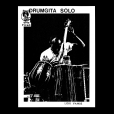
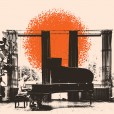
A reissue of Vambe’s privately pressed album from 1982.
‘Occasionally, you find music outside the commercial mainstream, outside of everything – the music of visionaries, eccentrics, inventors, loners. Moondog, Daphne Oram, Harry Partch are from this mould. And so too is Lori Vambe.
‘A self-taught drummer, inventor, and sonic experimentalist, who moved from Harare to London in 1959, Vambe is a unique figure in British music. The creator of his own instrument, the drumgita (pronounced ‘drum-guitar’) or string-drum, Vambe intended to create a kind of music that had never been made in order to pursue access to the fourth dimension. The album plays with time, mixing hypnotic, trance-like drumgita pieces with the same segments played backwards. You can hear echoes of African drumming traditions, minimalist repetition, and tape-manipulated musique concrète— but ultimately, the album defies genre. It is a solitary voyage, spiritual and futuristic.’
‘An extraordinarily lush, poignant collaboration… Bombscare bleeds mood, space, and texture as sounds ring out and echo into the distance. Hand So Small works like a literate lullaby as musical flourishes appear from thin air, a piano haunts the outskirts of the song, and Alan Sparhawk and Mimi Parker take turns singing about life “getting smaller.” So Easy (So Far) is perhaps the most traditional Low song, but Spring Heel Jack manages to make the band sound like they’re singing modern day Brothers Grimm tales. Way Behind is a stunning closer. It’s a truly exhilarating song that sounds like it was recorded in heaven, as Parker and Sparhawk again take turns singing angelically that they’ve left someone “way behind” over a jazzy electronic stew full of subtle found-sounds…
‘It’s too bad the collaborators didn’t compile an entire album’s worth of material, as these sixteen minutes seem magically fleeting. Bombscare couldn’t be a more superb collaboration between these innovative artists’ (AllMusic).
First reissue of the original release in 2000.