

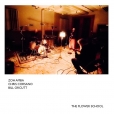
‘The album emanates a deliberate, contemplative quality, inviting listeners to immerse themselves in its rich sonic tapestry. Myers’ masterful piano work, showcased prominently throughout the album, guides the listener through a series of elegant, introspective episodes, each imbued with a sense of profound depth and emotional resonance. Smith’s trumpet, with its radiant tones and illuminating presence, serves as a beacon of hope and upliftment.’
‘This is full of playing so poignant that it’ll make your chest ache’ (The Guardian).
‘Spare and gorgeous’ (Qobuz).
Thrilling, angular hard bop, impatiently itching itself open to the new thing.
Dolphy plays b-flat clarinet and alto; Ron Carter plays cello. Booker Ervin is rawly eloquent as per. The seven compositions are all by Waldron, who centres proceedings with inimitable brilliance.
Feelingly recorded by Van Gelder in the summer of 1961, in the same few weeks as Ron Carter’s Where.
In this iteration — all-analogue remastering from the master-tapes, tip-on sleeve, first-class pressing — it’s a must.
From 1977.
‘Music of extreme sophistication yet perfect lucidity… A Zen-like tranquillity pervades this album of duets’ (Richard Williams in Melody Maker).
‘Quite an achievement, balancing fantasy and friction with grace as a fulcrum… calm, lucid, colourful, and captivating’ (Art Lange in Coda).
The late seventies Hat Hut LP — Ware’s debut as leader, when he was with Cecil Taylor — unavailable for decades; plus a full disc of material from the same sessions, never released before.
A protege of Sonny Rollins, with Ayleresque fervour; very warmly recommended.
Three live scorchers with William Parker and Warren Smith, from 2010 — plus four treasurable out-takes from the Onecept album sessions.
TW’s first Blue Note session was The Jody Grind. His debut as leader, at 23, Natural Essence is a winning mid-sixties set of his own compositions. Post-Trane dancers, jams; some lovely tunes. Woody Shaw, too.
With different lineups in 1966, including pianists Ran Blake, Burton Greene and Dave Burrell; and Giuseppi Logan.
The first recording in twenty years by this path-breaking vocalist — introduced to ESP by Albert Ayler — is a 2018 concert with Burton Greene (from her 1966 debut) and bassist Mario Pavone and percussionist Barry Altschul, from the group of musicians around Paul Bley.
‘Dedicated to Cecil Taylor, who had passed away moments before she took the stage, Live preserves the mournful tension that was in the air that night. Side A comprises a set of desolate ballads, including Waters’ own classic Moon, Don’t Come Up Tonight. Fifty years after her unforgettable recording of Black Is The Color Of My True Love’s Hair — one of the 20th century’s most harrowing, deeply political expressions of madness and grief — the B-side is a stark reminder that the fight for civil rights is far from over. Beginning with Strange Fruit, the suite’s form-bending contortions also feature Waters’ take on Ornette’s Lonely Woman.’