
Your basket is empty

‘Winding operations down after End Starting, Archipel is likewise planned-out music, mixing free rock and European free jazz in a series of collective explosions based on abrupt and contrasting improvisations. For much of the time, piano, guitar and saxophone intertwine over intense rhythms. Everything is electric, with the density of On The Corner, and flashes of viciousness all its own.
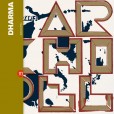
‘Along with the Cohelmec Ensemble, the Workshop de Lyon, the Full Moon Ensemble, Perception, Armonicord or the Michel Portal Unit, the Dharma Quintet stands out as one of the most important examples of free jazz as it was played in France at the beginning of the 1970s.’
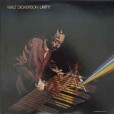
A moody, ambitious, intriguing record, originally released by Audio Fidelity in 1964.
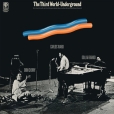
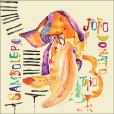
Just two side-long tracks — and an amazing lineup, with Walter Davis on piano, bassist George Tucker, and two drummers together, Edgar Bateman and the great Andrew Cyrille.
The sleeve-notes quote a Downbeat article from the same year, claiming that Dickerson was the most important vibraphonist since Milt Jackson: ‘instead of solos made up of one related note following another, Dickerson often builds areas of sound, placing them one on the other, creating a total effect.’
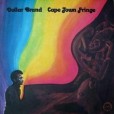
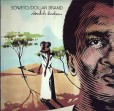
The towering jazz landmark originally issued in South Africa in 1974 under the title Mannenberg Is Where It’s Happening. Recorded with Basil Coetzee, Robbie Jansen, Monty Weber and Morris Goldberg, the music protested the evictions underway from District Six, whereby ‘coloureds’ were murderously booted out to Mannenberg township (where Coetzee was from). The LP sold by the thousands within weeks, becoming South Africans’ unofficial national anthem.
“I’d had the experience of playing dance bands, African dance bands like the Tuxedo Slickers, and we played xhosa, American swing music, mbaqanga… I also played with coloured dance bands — waltzes, quick-steps, squares, paso doble, then also the traditional Cape music…”
An upfully ravishing, hypnotically danceable, rootsily syncretic, universal call to resistance.
Magnificent jazz from 1977 by this nonet including Don Cherry, Johnny Dyani — both top-form — Hamiett Bluiett and Roy Brooks. The grooving, rolling, side-long Hajj — with eastern-style oboe — is knockout.
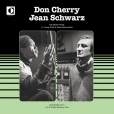
Don Cherry meets the Groupe de Recherches Musicales!
Recorded in 1977 at the Paris MIX festival organised by INA grm and hosted by François Bayle, this is a terrific, deeply congruent, soulful encounter.
Cherry plays pocket trumpet extensively and beautifully (also n’goni and whistles), with characteristically unguarded, elemental sublimity; Nana Vasconcelos is dazzlingly, hypnotically grooving. Electro-acoustic pioneer Jean Schwarz — a collaborator of Jean-Luc Godard — contributes elegant tape-work, synths, and treatments; his long-time associates Michel Portal and JF Jenny-Clark are highly accomplished European jazz legends. (Feted recently by Souffle Continu, the clarinettist is a mainstay of the Jef Gilson set-up, who recorded with Serge Gainsbourg, Karlheinz Stockhausen, and Sunny Murray; the bassist played on DC’s 1965 Blue Note classic Symphony For Improvisers… not to mention Brigitte Fontaine’s Comme à la Radio).
Remastered from the original master tapes; out here for the first time.
It’s a must.

Luminessence Series.
‘Sangam means ‘meeting place’ in Sanskrit. Don obviously knew exactly what he wanted to do, and Latif immediately understood, his fingers fizzing across the tablas at frightening speed… It was Don who suggested that Latif overdub new tabla parts to enrich and add complexity to the first takes. We could reasonably have expected to spend the night doing this because this was the first time the percussionist had done this. It took him all of five minutes to get used to listening to the first tracks over the headphones before playing them without the slightest mistake. When we got to the timpani, which he was playing for the first time, his keen sense of pitch and tone once again did miracles. During one take, just for the fun of it Latif started to play a fairly slow, disconnected duple time, moving on to three and then four… all the way up to 19 by which time his fingers were whizzing invisibly across the skins, leaving us in awe and him looking as if he didn’t know what the fuss was all about. All this just made Don even keener to impress his musical companion for a day…
‘Of course, the subtleties of this album call for greater analysis, for example the meeting between the Malian doussou n’gouni and Indian tablas, the Hammond organ taking over from the tampura, 5 1/4 time as if it were the easiest thing in the world, the reinvented Indonesian gamelan… and the lyricism of the pocket cornet.’
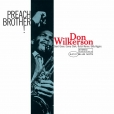
Hard, rollicking soul-jazz by the Texas Twister — sideman to Ray Charles and Amos Milburn, spar of Cannonball Addereley — with Sonny Clark and Grant Green.
Dem Tambourines is for the dancers.
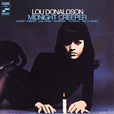
Bringing the funk in 1968, with George Benson, Lonnie Smith, Blue Mitchell, and Leo Morris (who became Idris Muhammed)... not forgetting Dapper Dan.
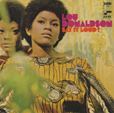
‘Classic Vinyl.’
With Blue Mitchell, Lonnie Smith, Jimmy Ponder and Leo Morris (aka Idris Muhammad) in 1967. Peepin’ steals the show.
‘Blue Note Classics’ series.

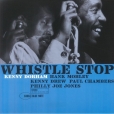
Live at the Jazz Workshop in San Francisco, at the close of 1961. Jackie Mac is on fire. Tearing version of Una Mas a year before the Blue Note. Leroy Vinnegar, Walter Bishop, Art Taylor.
Scorcher!
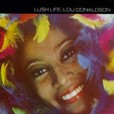
Originals, and covers of Coltrane, Horace, Shorter and co. Bobby Hutcherson’s Little B’s Poem steals the show, with the great Jean Carn singing. From 1974.
The legendary jazz-funk album recorded in Auckland, New Zealand, in 1971, mapping ‘the same territory as such acolytes of Miles Davis’s late- 60s explorations as Return To Forever, Weather Report, and Tony Williams Lifetime. Experimental studio techniques combine with blazing artistry, juxtapositioning trippy electronic textures and improvised jazz, creating a hypnotic kaleidoscope of sound.’
Lovely job as usual by Wallenbink: heavyweight tip-on gatefold sleeve featuring archival photographs; sound restoration and remastering at Abbey Road (including previously unreleased recordings and outtakes); 180g vinyl. A limited edition of six hundred: half for NZ; just three hundred copies for the rest of the world.
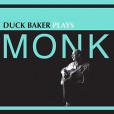
Solo acoustic guitar renditions of nine Thelonious Monk tunes.
‘Baker will remind you through his playing that the idiosyncrasies of Monk’s composing are further dimensions of the Americana continuum (and source musics) that has been his turf for years. Especially in Monk’s centennial year, many will address Monk’s oeuvre, in fact hundreds will interpret the scores, but very few can inhabit this music in the way Duck Baker does here.’
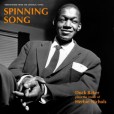
Superlative solo acoustic guitar interpretations of the compositions of the brilliant, offbeat pianist. (Herbie’s two mid-fifties Blue Note LPs are unmissable; dazzlingly just a totter sideways of Monk. He co-wrote Lady Sings The Blues with Billie Holiday.)
Acoustic Guitar magazine called it ‘one of the best guitar records ever recorded — by anybody.’
“Nowadays a lot of people are giving Nichols’ music the attention it deserves, but only Duck Baker’s playing makes me feel Herbie in the room” (Roswell Rudd).
Warmly recommended.