
Your basket is empty

Fourteen new pieces of organic beat music cut from the original sessions in New York, Chicago, London and Los Angeles, featuring Brandee Younger, Tomeka Reid, Dezron Douglas, Joel Ross, Shabaka Hutchings, Junius Paul, Nubya Garcia, Daniel Casimir, Ashley Henry, Josh Johnson, Jeff Parker, Anna Butters, Carlos Niño and Miguel-Atwood Ferguson.
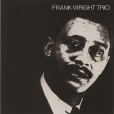
His 1966 debut (with Henry Grimes on bass), after ESP founder Bernard Stollman saw him play as John Coltrane’s guest at the Village Vanguard.
Clifford Allen commented in All About Jazz: ‘Wright was one of the forerunners of the multiphonics-driven school of saxophonists to follow the direction pointed by Ayler, but with a more pronounced bar-walking influence than most of his contemporaries. Whereas Ayler’s high-pitched wails, wide vibrato and guttural honks all belied an R&B pedigree, his solos still contained the breakneck tempos and facility of bebop… Wright, on the other hand, offers his honks and squawks with a phraseology derived from the slower, earthier funk of R&B and gospel music… The opening The Earth starts with a brief vibrato-heavy and bluesy slow theme on unaccompanied tenor that quickly erupts into a frantic screamer of a solo, a mix of buzzing upper-register cries and low bleating honks, occasional recognizable stock R&B phrases making their way into the melange… Unlike Ayler, there is not a significant amount of solo construction, for it appears Wright was throwing together ideas in a spirit of jubilation.’
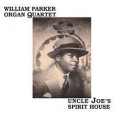
‘A gorgeous soul-jazz organ quartet album that hearkens back to the early-mid ‘60s; fully revitalized by William Parker’s indelible compositions and the generous musical gifts of Darryl Foster, Cooper-Moore, and Gerald Cleaver. A straight-up joy. This very special project was produced by William Parker for his own Centering Records imprint, and dedicated to his Aunt Carrie Lee and Uncle Joe (pictured on the cover). It was created to celebrate the occasion of their 65th wedding anniversary on August 6th, 2010.’
A one-time-only LP pressing, remastered and re-sequenced, including a download card for the album as originally released on CD, adding three tracks.
‘Committed to tape on February 20, 1979… a real declaration of identity for Loren. He was introducing himself publicly as a guitar player, although his approach was still very much dictated by the influence of the painter, Mark Rothko, who Loren once described as using a minimal palette to create vital art… The feel to this session is bluesy, in as much as Loren’s wordless vocals have a surface similarity to a hellhound’s, and while he was not using a slide, most of the notes he plays are bent to the edges of their known range. Fahey always said blues was ‘about’ anger, though there’s not really any of that here. I am more reminded of this Rothko quote. ‘You’ve got sadness in you, I’ve got sadness in me ... and my works of art are places where the two sadnesses can meet, and therefore both of us need to feel less sad.’ The first side is solo. On the second Loren is joined for a bit by Kath on hums and recorder. The music brims with sorrow more than anything else. And while it’s clear Loren was embracing an abstract avant garde aesthetic vis-a-vis his playing, the urge to communicate seems to lie at its roots. Whatever you choose to call it, this is the beginning of something quite beautiful’ (Byron Coley).
Classical, no-frills, piano-trio jazz, recorded in 1977 in San Francisco, though released only in Japan at the time. VSOP without horns; more hard-bitten and introspective.
With Ron Carter and Tony Williams in Milestones and four Herbies, including a gnarled Speak Like A Child.

Free-flowing recordings made in Pakistan with members of the instrumental quartet Jaubi (including Zohaib Hassan Khan on sarangi).
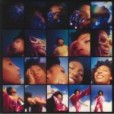
Lovely new soul from Demae (aka Bubblerap, from hip hop crew Hawk House), with contributions from Fatima, Joe Armon-Jones, Ego Ella May and Nala Sinephro.
Fresh, personable and honest in the great tradition of London street soul, suffused with Dilla, Flying Lotus and the new UK jazz scene, this is warmly recommended. Check it out.

With Barry Guy and Tony Oxley in 1971. Gatefold sleeve.
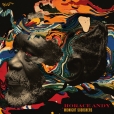
Dub-plate-style Adrian Sherwood departures from the Midnight Rocker set.
Radical re-works, with interjections from Daddy Freddy and Lone Ranger; and stripped-back dubs. Plus some new stuff.
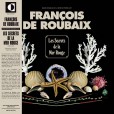
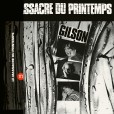
The soundtrack to the French TV series adapting Henri de Monfreid’s account of his travels in the Middle East. The music for the first series in 1967 features various flutes and marine conches; for underwater settings a celesta or a crystal xylophone. For the later 1975 series, de Roubaix composed a new music score, mixing old and new sounds, his EMS VCS3 synthesizer subtly mixed with acoustic instruments.
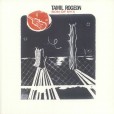
“I didn’t want to make a bebop record. I wanted to make a modal jazz record and there just aren’t that many on viola. I wanted to speak with a heavier voice, more akin to a tenor saxophone. The viola is darker and thicker. It speaks slower.”
‘Love that, kind of Miguel Atwood-Ferguson, big orchestrations with really low down dirty jazz music” (Gilles Peterson).
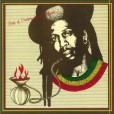
Mid-seventies Alvin Ranglin productions — an original LP, not a compilation — with the Revolutionaries deep in the groove, Sylvan Morris from Studio One at the controls, the Tamlins on backing vocals, and Deadly Headley and co chipping in tough brass.
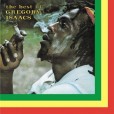
Top Gregory, with classics like Jailer and Border.
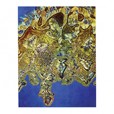
‘Bisk is back… as cheerfully unhinged as ever… absurd and exhilarating in equal measure. The Japanese producer’s drum programming weaves through knotty thickets of syncopated beats and white-noise bursts, chasing ghosts and dodging potholes. His samples are fragmentary dispatches from far-flung points, and any given musical phrase might shoehorn multiple worlds into wobbly union—free improv with easy listening, kindergarten recess with NASA Mission Control. Beneath each drum hit lies a potential trap door, and his melodies, if that’s what you can call his tangled scraps of electric bass and modal keys, ricochet like pinballs repelled at every turn by shuddering mechanical bumpers’ (Pitchfork).