Your basket is empty

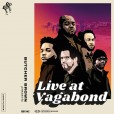
A quintet, with DJ Harrison from Stones Throw on keyboards, drummer Corey Fonville (Christian Scott, Nicholas Payton), bassist Andrew Randazzo, Marcus Tenney on trumpet and Morgan Burr on guitar. Freaking, hiphop-inflected jazz-funk, with its roots in Weather Report, Return To Forever and early Earth Wind And Fire.
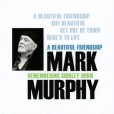
A no-frills, loving tribute — with Shirley’s longtime drummer Steve Williams and double bassist Curtis Lundy (brother of Carmen), formerly of Betty Carter’s group; also the fine pianist Alex Minasian and trumpeter Till Brönner.
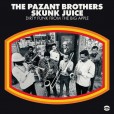
No-messing funk with whiffs of reefer, hooch and baize.
Eddie and Al Pazant came through with Lionel Hampton and Pucho. These are their locked-down, brassy, smoking, streetwise blends of R&B, soul, latin and jazz, from the late 1960s and early 70s.
Fab.
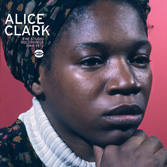
NYC soul, with at least two total killers — Don’t You Care, and Never Did I Stop Loving You. BGP has unearthed some rarities; and some great photos.
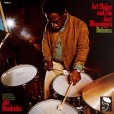
Trying out a more seventies, soulful groove, with the likes of Woody Shaw, Carter Jefferson, Cedar Walton — and Jon Hendricks, who sings on the revival of Moanin’, and Along Came Betty.
Buhaina was Blakey’s name after his conversion to Islam. Of course A Chant For Bu was sampled by A Tribe Called Quest for their almighty Excursions. Altogether now: ‘Back in the days when I was a teenager / Before I had status and before I had a pager…’
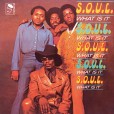
Cleveland funk from 1971, featuring a popping version of Express Yourself, a do-over of The Temps’ Message From A Black Man, and — crucially — the b-boy jazz anthem, Burning Spear.
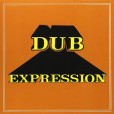
A top-notch selection of High Note and Gay Feet rhythms, expertly mixed the old-fashioned way by Duke Reid’s nephew, Errol Brown.
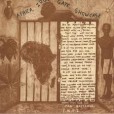
Brilliant toasting and singing by the likes of Prince Hammer, Echo Minott, Trinity and Lee Van Cliff, over gold-plated Roots Radics rhythms. A precious blend of heavier-than-lead roots, new-thing dancehall flow, and youthman promotion, curated by Hammer himself in 1982. Deeply enjoyable from start to finish.

Born in Burlington, Vermont, and conservatory-trained in the US, the cellist Tristan Honsinger moved from Montreal to Amsterdam in 1974, quickly linking with Han Bennink and Misha Mengelberg, and opening a long and fruitful musical relationship with Derek Bailey. Recorded in 1976, Duo displays a performative musical approach already characterised by the lack of inhibition which would later endear him to The Pop Group: he is knockabout, exclamatory, explosively rhythmic; burping Bach and folk melodies with spasmodic lyricism, in amongst the garrulous textures and accents of his scraping, bowing and plucking, and gibbering like a monkey; throwing out his arms and stamping the floor, grappling with his instrument like an expert clown, always on the lookout for new ways to trip himself up. You can hear Bailey revelling in the company, as he ranges between scrabbling solidarity and an askance skewering of his partner’s antics, on prepared (nineteen-string) and standard electric guitars — and a Waisvisz Crackle-box, for the garbled, quizzical, cross-species natter which closes The Shadow. Throughout, the spirited interplay between laconic, analytic wit and guttural, sometimes slapstick physicality is consistently droll, often laugh-out-loud funny; vigorously alert, alive and gripping.
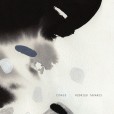
The guitarist’s debut album, inspired by a road trip through Brazil, taking in a Sun City Girls show in a remote former gay club, and a visit to a spiritual healer. He leads upright bass, drums, vibraphone, saxophone and percussion.
‘I decided that I would try to forge, in my own way, from my references, from my universe and from the collective intelligence and sensibility that surrounded me, fundamental melodies, repetitive, minimal, hypnotic rhythmic and harmonic patterns that would be crossed by some sort of improvisation, something that referred to a reality that existed before my individual history, that linked to the life of other places and other times.’
‘unique and beguiling…evocative and profound… music of rare depth’ (The Wire).
‘taps into the common ground between meditative, ambient and trance musics… delightful’
(Chris May, All About Jazz).
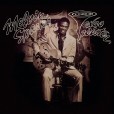
‘Producer Bob Porter brought the Texan guitarist to Prestige in 1970, where he recorded three albums as a leader and over a dozen as a session player, showing himself to be a wizard at playing funky licks and energised solos.
When Porter left Prestige to set up Eastbound Records in Detroit — as a branch of Westbound Records — Sparks followed on, and Texas Twister was his label debut, in 1973. The incredible rhythm section of Idris Muhammad, Sonny Phillips, Caesar Frazier and Wilbur Bascombe make this album a sure-fire funk bomb. On the front-line, a hard hitting horn section that includes Cecil Bridgewater and John Faddis is a perfect foil for Sparks.
‘With the monster acid jazz club cut Whip Whop and the frenetic Texas Twister, as well as a beautiful rendition of the Four Tops Ain’t No Woman (Like The One I Got).’