
Your basket is empty

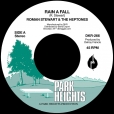
Sublime, masterful singing — poetic, polyphonic, evocative sufferers — over a stately and atmospheric Java excursion, more sombre than mystical. Super-soulful. Ace.
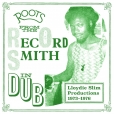
The dubwise companion to the recent Roots From The Record Smith compilation, featuring the B-side dub versions from the original 45s, nearly all taken from master tapes, and culminating cataclysmically in Tubby’s out-of-this-world dub of Ronnie Davis’ Power Of Love.
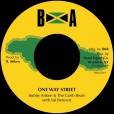
Rocksteady murder, both sides.
Val Bennett wails over a brilliantly percussive, troubled, fresh rhythm, with descending, prowling bass; Roy Man leads the heart-broken flip, with piano riding east, and rocking horns.
From the master tapes. It’s a must.
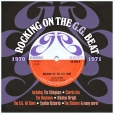
Forty-eight Alvin Ranglin productions… The Ethiopians, Cynthia Richards, Charlie Ace, The Slickers, The Maytones…
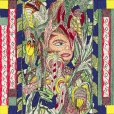
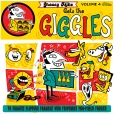
‘Who would attempt to combine cunning ethnological forgery, Scottish folk songs, claw-hammer guitar, untutored horn-tootling, elastically relaxed drumming and garage electronic fuckery? Only Greg and Stefan, high on sea, sunshine and mis-judged micro-dosing — that’s who.
‘Don’t Drown was offered as practical advice during the self-described Yellow Submarine phase of making this record. And while they managed to avoid literally doing so (phew), they sound here like they got pretty ‘deep in’ to an Octopus’s sound world all their own. This surprisingly clear analogue recording has just enough Bikini Bottom grit to ensure traction. The tunes are inviting, and the sonic disruptions are too good-natured and goofy to upset even the most delicate digestion.
‘The sessions have had a couple of years to marinate, courtesy of some pandemic, and are here offered in that most Archducal of vinyl formats, the double ten inch. What are you waiting for, a side of Crabby Patties? Get your water-wings and dive in (unless you’re tripping)!’ (Bruce Russell, The Dead C)
The Observer raved about a recent performance of this at the Wigmore Hall: ‘Solo for Cello (and fixed audio) was the highlight, an extensive, ghostly work played by Apartment House’s indefatigable artistic director, Anton Lukoszevieze. Imagine a baroque dance suite — with the familiar figurations of arpeggios, quick finger work and string crossing — played muted and whispered a few galaxies away, and you get the idea.’
The performer of this recording, Anton himself has written that Solo is ‘an extended exploration of the resonant body of the cello, but also a kind of flickering, glitchy and incessant ‘moto perpetuo’ of extreme intensity and a delicate beauty. The cello has a particular scordatura tuning, which creates an enigmatic harmonic ‘space’ to its sounding throughout the work. As the cellist constantly bows the heavily muted cello with varied arpeggiated freneticism, the instrument emits a particular halo of harmonic resonances creating a spectral and ghostly effect, deceptive and illusory. The work gradually morphs into different sections, each with their own particular motivic identity, at times accompanied by an audio playback of various densities. The latter sections of the work have a baroque-like lightness and ornamental quality, but do not allay the dramatic incisiveness of the the work, which ends with a final enigmatic spasm of sounds.’
And the composer Sheen advised the mastering engineer that ‘the cello is muted with a very heavy metal mute which thins out the sound massively, and Anton plays a super-light bow with extreme flautando, which creates a strange thin wispy sound. I’d like it to sound as distant and liminal as possible, with a lot of bow sound and strange resonances from the harmonics of the cello. With the exception of a few obvious spots where it gets louder and fuller, there should be as little ‘core’ to the sound as possible, but as many strange resonances as possible. The words we used a lot of in rehearsals were ‘baroque’ and ‘internal’ and ‘light’. I hope this helps.’
Transfixing, and good for ears; with luminous strands of Marin Marais, Derek Bailey, and Eliane Radigue.
Check it out!
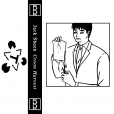
Grieving, hushed, involving music for voices, field recordings, and white noise, performed by Kantos.
A piano quintet composed for and recorded by Apartment House.
‘The instruments are muted and heavily prepared. Players are instructed to perform very quietly with an exaggerated flautando, using as much of the bow as possible while producing minimal sound. Sheen often even asks them to mime. The result is an unsettling disconnect between the intensity of physical exertion and the sound produced’ (Ed Cooper, VAN).
‘Press moves with grossly impoverished intent… trembling and stumbling on the cusp of accident… right on the edge of culture, just before language. Most of the time, it is enough simply to breathe and move: the complexity of these actions alone is astonishing… And then, through the buzz of wood, guts, and bluebottles, a piano appears—all shining lacquer, muscle, and grammar’ (Ed Atkins).
“When people play my violin pieces, I always joke with them that when you start playing them, the audience should feel like they’ve gone deaf or something. The sound is so not there that you should think there’s something wrong for a second…
“It’s so disappointing when you see a bunch of instrumentalists walk on stage and you already know how the piece is going to sound. It’s not what music is about for me…
“The word ‘liminal’ is such a cliché but it’s annoyingly pertinent for my music. Trying to find a sweet spot between states: in between presence and not presence, in between tonality and not tonality, whatever that is, between noise and pitch. I really want things to sit in an uncertain middle ground between everything.”
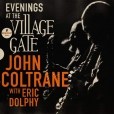
‘In August of 1961, the John Coltrane Quintet played an engagement at the legendary Village Gate in Greenwich Village, New York. Coltrane’s Classic Quartet was not as fully established as it would soon become and there was a meteoric fifth member of Coltrane’s group those nights — visionary multi-instrumentalist Eric Dolphy. Ninety minutes of never-before-heard music from this group were recently discovered at the New York Public Library for the Performing Arts, offering a glimpse into a powerful musical partnership that ended much too soon. In addition to some well-known Coltrane material (My Favorite Things, Impressions, Greensleeves), there is a breathtaking feature for Dolphy’s bass clarinet on When Lights Are Low, and the only known non-studio recording of Coltrane’s composition Africa, from the Africa/Brass album. This recording represents a very special moment in John Coltrane’s journey — the summer of 1961 — when his signature, ecstatic live sound, commonly associated his Classic Quartet of ‘62 to ‘65, was first maturing. He was drawing inspiration from deep, African sources, and experimenting with doubled-up basses both in the studio (Ole) and on stage. This truly rare recording of Africa captures his expansive vision at the time.’
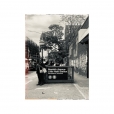
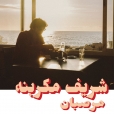
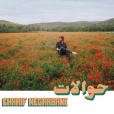
‘Megarbane finds a sonic through-line in his surrounding soundscapes as he draws on the chaotic energy of the crowded Beirut metropolis (Souk El Ahah), the warm atmosphere of the Lebanese countryside (Chez Mounir), or the lushness of a Mediterranean beach resort (Portemilio). In many ways, Marzipan is a cartographic feat — it travels and traces a journey across many dimensions, both sonic and physical. Megarbane’s instrumental catalogue is suitably wide-ranging: toy glockenspiel, harpsichord, pedal steel, a classic Wurlitzer et al are used liberally on the record. Free-ranging influences — beloved artists like Ahmed Malek and Issam Hajali, West African funk, European soundtracks — result in a record of somewhat unparalleled expansiveness. Floating melodies and frantic rhythmic interludes nestle together with psychedelia — fuzz-drenched guitar, sliding microtonal interludes, hypnotic rhythmic breakdowns. The resultant sound is as sprawling as the musician’s instrumental dexterity. The closer Bala 3anouan can be translated loosely to ‘without address’ — a fitting final word.’
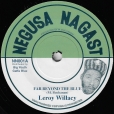
Both sides are knockout.
The Willacy is terrific roots, rough and mystical, compacted and bristling, with fine trumpet.
On the flip is Big Youth’s toast of Gregory’s Look Before You Leap.
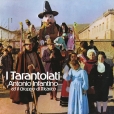
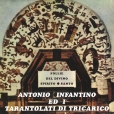
Startling 1975 excursions into Tarantism — a kind of hysteria ostensibly triggered by spider bites, for which dancing is the only cure, with its own set of cultural traditions based in Basilicata, Apulia, Sicily.
Obsessive, hypnotic chants, rhythms, and drones, mixing together folk, avant-gardism, and psych, with shots of Dylan and North African drumming.
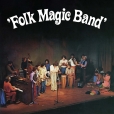
Originally released by the Folkstudio label in 1976, this is infectiously exuberant, eighteen-piece spiritual jazz in the tradition of the Arkestra, the Organic Music Society, and Mingus; strung between the post-war big bands and the Italian outernationalism of projects like Aktuala and Futuro Antico, drawing in music from Asia, Africa, and Latin America.