






Your basket is empty

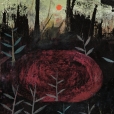
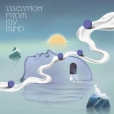
Brecht Ameel playing prepared harmonium and celesta, alongside Kim Delcour modulating air and breath via various wind and reed instruments; joined by Will Guthrie on tuned and melodic percussion (timpani, glockenspiel, marimba, vibraphone), and Paul Garriau on hurdy-gurdy.
‘With a distinct rhythmic impetus and fluidity new to Razen, and characteristic freshness and playfulness, Regression relays between dire inhospitableness and refuge, abject sorrow and cosmic transcendence. It invokes mythology and superstition as keys to the primeval and the unknown.’
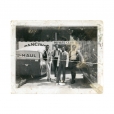
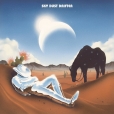
Startlingly hot, raw, late-sixties funk and soul scorchers by this Arkansas band, named after the Stevie Wonder song, but evidently inspired by James Brown. Mostly out here for the first time, so this is terrific work by AOTN, who says it’s maybe the best LP they’ve released so far.
Warmly recommended.
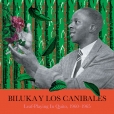
The out-of-this-world recordings of Dilson de Souza, leading a kind of tropical chamber jazz on leaves from a ficus tree.
Dilson was from Barra do Pirai, in the Brazilian countryside; moving to Rio as a young man, where he worked in construction. He recorded his first record in 1954, for RCA Victor. He travelled to Quito around 1957, soon hooking up with Benitez & Valencia, who introduced him to the CAIFE label.
Dilson played the leaf open, resting on his tongue, hands free, with his mouth as the resonator. Though a leaf can also be played rolled or folded in half, this method allowed for more precision, a tethered brilliance. A picked ficus leaf stays fresh, crisp and clean-toned for around ten hours. He could play eight compositions, four at each end, before it was spent.
Biluka plays trills and vibratos effortlessly, with utterly pure pitch, acrobatically sliding into notes and changing tone on the fly. In Manuco, he leads Los Caníbales into a mysterious landscape on a rope pulled from an Andean spaghetti western, and corrals and teases them into a dialogue. A leaf, a harp, a xylophone, and a rondador — joined in Bailando Me Despido (Dancing As I Say Goodbye) by a saucy organ, doing sloshed call-and-response. In Anacu de Mi Guambra, Biluka shows his full range of antics, hiccuping melodically over a set of magic tricks. His expressiveness was boundless.
The eucalyptus leaf is popular among Aboriginal Australians. In China, they’ve played leaves for 10,000 years. In Cambodia, people play the slek, a leaf plucked from either the sakrom or the khnoung tree. But ain’t nobody like Biluka, ever.
Astounding music.
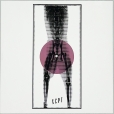
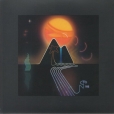
A moody, dubwise, to-the-barricades brew of jungle, rave, dubstep, and techno.
Over the five cuts, an opening, evocative, littoral play between discombobulation and mysticism gives way to mounting abrasiveness, before fetching up in the inner chambers of the temple room, echoing and spooky, with acoustic percussion.
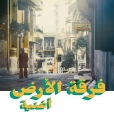
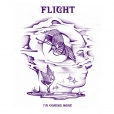
A groundbreaking, 1978 blend of Arab, jazz, Baroque pop, folk, and Brazilian styles like Bossa Nova, Tropicalia and MPB, with Fairouz’ son Ziad Rahbani as musical arranger, setting Palestinian poetry by Samih Al Qasem, Tawfiq Ziad, and the great Mahmoud Darwish.