Your basket is empty

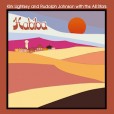
Originally released by Gallo in 1974, this is a raw, impassioned, stunning set led by bop pianist Kirk Lightsey (a regular sideman for Chet Baker) and saxophonist Rudolph Johnson (from Black Jazz), on a break from touring South Africa with Detroit crooner Lovelace Watkins.
A heavy-duty excursion into post-Coltrane spiritual modernism, ranging from the modal, cerebral intensity of the side-long title track Habiba, to the downhome breakbeat groove of There It Is, and the dark glitter of minor-key waltz Fresh Air. Long one of the most desired global jazz LPs, and never before available outside South Africa, Habiba is a forgotten masterpiece of its era.
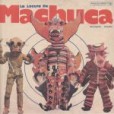
The darkest and most amazing of Rafael Machuca’s productions — dubbed ‘the B-Movies of Colombian music’ for their proliferation of ad hoc lineups and crazy artwork — fusing local and African rhythms with the swirling organs and psychedelic guitars of underground rock, at the birth of Champeta.
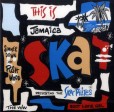
The truly iconic compilation from 1965, when ska was in its full, irrepressible, post-colonial glory.
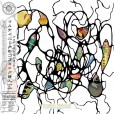
Creole poetry, rootical mysticism and heavy-grooving synths illuminate this survey of the Martiniquan’s first four albums, recorded in France in the late seventies and early nineties, but inspired by the ‘smells and colours… subliminal noises… fruity notes, the memories of funeral wakes, the bombastic organ of the cathedral and the gasps of the drums’ of home.
‘Midonet’s musical world is cosmic, mystical and he has created his own idiosyncratic style around it: not plain folk, not bélé, chouval bwa, beguine or gwoka, but rather a transcendental fusion of all these and a true reflection of his personality.’
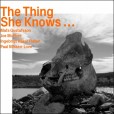
The core trio joined by Joe McPhee, playing saxophone and pocket trumpet, in readings of compositions by Don Cherry, PJ Harvey, Ornette Coleman, McPhee himself, James Blood Ulmer and Frank Lowe.
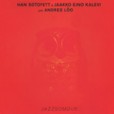
Cosmic jazz excursions on saxophone, flute, electric keys, synths and drums.
Supple, deep and spacious; sparklingly dubwise; intensely percussive.
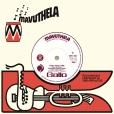
Sowetan soul jazz — ‘marabi jjive’ — originally out in 1972, by the greatest of all mbaqanga outfits, and the house band of Gallo Africa’s Mavuthela Music subsidiary from its launch in 1964 right through to 1977. Featuring Teaspoon Ndelu, West Nkosi and Michael Xaba on saxophones, and Marks Mankwane on lead guitar.
Appetisingly this is the first of seven limited-edition singles drawn by Umsakazo from the golden age of South African township jive. Restored from the original master in Gallo’s Johannesburg tape vault; spiffily sleeved and labelled with the original artwork, with notes and recording details printed on the back.
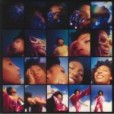
Lovely new soul from Demae (aka Bubblerap, from hip hop crew Hawk House), with contributions from Fatima, Joe Armon-Jones, Ego Ella May and Nala Sinephro.
Fresh, personable and honest in the great tradition of London street soul, suffused with Dilla, Flying Lotus and the new UK jazz scene, this is warmly recommended. Check it out.
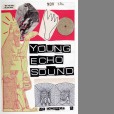
A zinging selection of posters by the duo behind O$VMV$M, for Bristol club nights run by the Young Echo collective. Buzzing, punky, detailed takes on Dada and surrealism. 48 pages, full colour. Lovely stuff, full of vibes. Nice present!
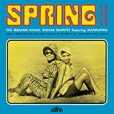
The landmark 1968 debut recording of pianist Ibrahim Khalil Shihab, aged twenty-two; also featuring terrific young saxophonist Winston ‘Mankunku’ Ngozi, Coltrane acolyte, on the verge of huge acclaim for his LP Yakhal’ Inkomo.
Scandalously, Paypal blocks anyone trying to buy this from us, because of the artist’s Arabic name.
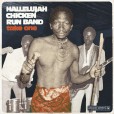
‘In 1972, the country of Rhodesia — as Zimbabwe was then known — was in the middle of a long-simmering struggle for independence from British colonial rule. In the hotels and nightclubs of the capital, bands could make a living playing a mix of Afro-Rock, Cha-Cha-Cha and Congolese Rumba. But as the desire for independence grew stronger, a number of Zimbabwean musicians began to look to their own culture for inspiration. They began to emulate the staccato sound and looping melodies of the mbira (thumb piano) on their electric guitars, and to replicate the insistent shaker rhythms on the hi-hat; they also started to sing in the Shona language and to add overtly political messages to their lyrics (safe in the knowledge that the predominantly white minority government wouldn’t understand them). From this collision of electric instruments and indigenous traditions, a new style of Zimbabwean popular music — later known as Chimurenga, from the Shona word for ‘struggle’ — was born. And there were few bands more essential to the development of this music than the Hallelujah Chicken Run Band…’
Their biggest hits — along with several rare tracks — recorded between 1974 and 1979.
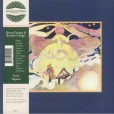
Bassist Dezron Douglas and harpist Brandee Younger doing over Alice and John Coltrane, The Stylistics, The Jackson 5, Pharoah Sanders, Kate Bush, Sting, and The Carpenters.
Douglas has worked with Pharoah Sanders and David Murray, amongst other jazz notables; Younger with Charlie Haden, Stevie Wonder, Lauryn Hill… Both are featured on Makaya McCraven’s Universal Beings.
‘It’s an uplifting suite of real, soulful comfort music — a spiritual salve.’
Ace, driving, digital roots, with a lethal dub.
Reggae veteran Dennis Fearon lends a hand.
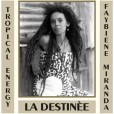
Sensational French-language do-over of the 45 Faybiene had recently cut for Jack Ruby (following up her hit Prophecy), before moving in 1977 from Kingston to Montreal with Joe Cooper (who plays organ on Police & Thieves).
Zonked, sublime and rugged like Half Moon in Toronto, with a crazy whistling effect throughout, and spaced-out dub.
Bim.
Faybiene Miranda was one of a kind — a Joni Mitchell fan from Panama City who co-published with Mutubaruka. Soon after Tropical Energy broke up she toured the UK with Benjamin Zephaniah, reading her poetry. Before her death in 2013 she was living in Brooklyn, amongst Steel Pulse crew.