



Your basket is empty


‘From recording for Brian Eno’s Obscure Records imprint in 1975 and co-publishing the radical music magazines Musics and Collusion, to developing music programming for the BBC and releasing his own recordings of Yanomami Shaman rituals — from working with artists like Bjork and Prince Far-I — Toop has experienced one of the most interesting careers in contemporary music. Musician, listener, scholar, reporter, humanitarian, parent, iconoclast — David Toop brings his own life in music to focus in a remarkable, engaging read.’
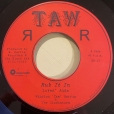
Upsetters magic from the Black Ark, circa 1976. The story goes that only thirty copies were pressed, back in the day.
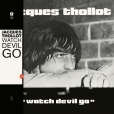
‘Four years after a first album on the Futura label in 1971, Jacques Thollot returned, this time on the Palm label of Jef Gilson, still with just as much surrealist poetry in his jazz. In thirty-five minutes, the French composer and drummer, who had been on the scene since he was thirteen — recording Gilson LPs when he was just sixteen — established himself as a link between Arnold Schoenberg and Don Cherry. Resistant to any imposed framework and always excessive, Thollot allows himself to do anything and everything: suspended time of an extraordinary delicacy, a stealthy explosion of the brass section, hallucinatory improvisation of the synthesisers, tight writing, teetering on the classical, and in the middle of all that, a hit, the title-track — which Madlib would one day end up hearing and sampling.
‘In a career lasting half a century, centred on freedom, Jacques Thollot played with a roll-call of key experimental musicians (Don Cherry, Sonny Sharrock, Michel Roques, Barney Wilen, Steve Lacy, François Tusques, Michel Portal, Jac Berrocal, Noël Akchoté...) who all heard in him a pulsation coming from another world.’
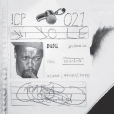
The saxophonist of the Blue Notes and the Brotherhood Of Breath, with pianist Misha Mengelberg, and Han Bennink on drums, trombone, clarinet and viola.
Originally released on ICP in 1979; an absolute classic of improvised music.

‘The city of Belém, in the Northern state of Para in Brazil, has long been a hotbed of culture and musical innovation. Enveloped by the mystical wonder of the Amazonian forest and overlooking the vastness of the Atlantic Ocean, its Amerindians, Europeans and Africans pioneered musical genres such as Carimbó, Samba-De-Cacete, Siriá, Bois-Bumbás and bambiá.
‘There was a radio station, a recording studio, a music label and a deep, cross-genre roster of artists. Beginning as simple gramophones connected to loudspeakers tied to lamp posts or trees, the aparelhagem sonora of Belém evolved into sophisticated setups, drawing thousands of revelers.
‘The music and tales found in Jambu are stories of resilience, triumph against all odds, and, most importantly, of a city at the edge of the Amazon which has always known how to throw a damn good party.’
‘The area’s best club music from the mid-‘70s, an exuberant, carnival-esque mishmash of local carimbó and siriá styles with big-band brass and frenetic Afro-Latino percussion. Best of all there are the three hip-swivelling cuts by Pinduca, founding father of lambada and king of Carimbó’ (Q).
Superb Caribbean disco by the same Trini bros behind the West End boogie classic Touch Your Life. Lithely grooving; expertly arranged.
Presumably the same Glen Miller who did Whey No Dead and How Can You Mend, for Studio One.
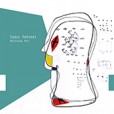
The legendary AMM drummer recorded roundabout his home village of Matching Tye, Essex, in amongst the acoustics and significance of the village green and All Saints church in High Laver (where John Locke is buried).
‘At times it sounds like he’s sharpening blades on a grinding wheel, as keening tones slowly scythe through the air. Elsewhere, he appears to be dragging the side of a cymbal against a bass drum skin, producing low groans that complement the glistening high end… In Air, Oak, Metal, Hair, Prevost’s cymbals whistle and shimmer as they catch the breeze.
‘Other tracks nod towards Prevost’s jazz background. MaxPlus draws inspiration from a Max Roach hi-hat study… Rotology touches on a range of drumming traditions, from East Asia to West Africa’ (The Wire).
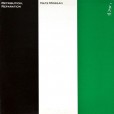
A core member of the circle around Horace Tapscott, pianist Nate Morgan was a key member of the Pan Afrikan People’s Arkestra, known as The Ark.
Here is the second of his two LPs for Nimbus West. His first, Journey Into Nigritia had been a declaration of arrival laced with energies drawn from Cecil Taylor and Coltrane. One year later, in 1984, with nods to Herbie Hancock (One Finger Snap) and Ellington (Come Sunday), Retribution, Reparation was a confident statement of purpose. Politically charged with pan-Africanist Black nationalism, and titled with uncompromising directness, the album focusses the soundworld of the Ark into a surging, restless masterpiece of spiritualised modal jazz.
Danny Cortez on trumpet and Jesse Sharps on saxophones comprise an explosive frontline. Fritz Wise and Ark regular Joel Ector hold down the rhythm section. Morgan’s forceful, Tyner-like chords and virtuosic solos bind the music together.
From the poised drama of the opening dedication to Tapscott’s U.G.M.A.A. organisation, through the propulsive militancy of the title track, Retribution, Reparation spreads the word: ‘Advance to Victory, Let Nigritia Be Free!’

Free-flowing recordings made in Pakistan with members of the instrumental quartet Jaubi (including Zohaib Hassan Khan on sarangi).

Recorded in St. Edmund’s Church, Oslo, on 13 December 2017.
Compositions by James Weldon Johnson and Thelonious Monk; also originals, including a tribute to Don Cherry.
Another humdinger in the Actions For Free Jazz series supervised by Smalltown Supersound.
Vinyl only, no digital. 500 copies, that’s it.