Your basket is empty

A second helping as sublimely pleasurable as the first, with Prince Buster, Rupie Edwards, Derrick Harriott, Dobby Dobson and Joe Higgs amongst the singers.
‘Enthralling to anyone,’ according to The Guardian.
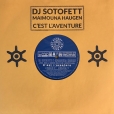
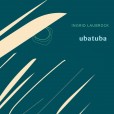
Precious, timely, moody reflections on migrating from Côte d’Ivoire to Moss, in Norway, over ruff breakbeat funk supplied by the nimble bass-playing of Maimouna’s old man (from Kambo Super Sound), and the expert conga and kit-drumming of Stliletti-Ana (from Jesse, in Helsinki). Even in their delirium, b-boys and girls will savour traces of the Incredible Bongo Band, in the chorus. Over the eight minutes, and going deeper on the flip, the mix lifts off into a cosmic steppers dub, featuring Gilb-r alongside Sotofett on keyboards, with no let up for the dancefloor in energy and vibes.
“It was in 2001 / I got the letter / A letter that said / I would travel to a cold world / Not knowing what would happen / I was full of loneliness / No country / Everyone was different / Not only skin colour / The way people spoke / The way people behaved / That’s the adventure / Obey / This is the story we’re told / The key to success / So we can do everything for our parents / Who need us / Desperate for a better life / That’s the adventure.”
Three knockout EPs, in hand-stamped, poly-lined sleeves.
Slightly theatrical female sufferers from 1977, arranged by Cedric Brooks.
Lovely singing by the Hombres over a limber, spaced-out Upsetters rhythm you could listen to for hours. The dub attenuates the political reasoning with cruel brilliance.
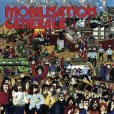
‘In 1969, the Art Ensemble of Chicago arrived at the Théâtre du Vieux Colombier in Paris and a new fuse was lit. Their multi-instrumentalism made use of a varied multiplicity of ‘little instruments’ (including bicycle bells, wind chimes, steel drums, vibraphone and djembe: they left no stone unturned), which they employed according to their inspirations. The group’s stage appearance shocked as well. They wore boubous (traditional African robes) and war paint to venerate the power of their free, hypnotic music, directly linked to their African roots. They were predestined to meet up with the Saravah record label (founded in 1965 by Pierre Barouh), already at the vanguard of as-yet unnamed world music. Brigitte Fontaine’s album Comme à la Radio, recorded in 1970 after a series of concerts at the Théâtre du Vieux Colombier, substantiated the union of this heiress to the poetic and politically committed chanson francaise (Magny, Ferré, Barbara) together with the Art Ensemble of Chicago’s voodoo jazz and the Arab tradition perpetuated by her companion Areski Belkacem…’
A droning, slo-mo Leonard Cohen cover, and a collaboration with violinist Jessica Moss, from A Silver Mt. Zion; both around twelve minutes. Grouper’s a big fan.