


Your basket is empty

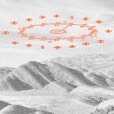
Visceral, elemental, electronic funk, conjured from scraps of sound, breath, mutterings, dubwise remembrances, scuffling, sweat and blood, thin air — ‘crawled out of the slime’, as the opener puts it, self-engendering like the baddie in Terminator — all harnessed to cruelly grooving earthquake bass and b-boy drum science.
Rhythmically it has ants in its pants and it needs to dance, with an improvisatory, streetwise nervous energy and uninhibited, purposeful rapture — akin to this guy, say, eighteen minutes in — crossed with on-song Pepe Bradock and stripped-to-the-bone, mongrel hip-hop.
It’s unruly and edgy, a bit off its rocker, emotionally ranging — typically anxious, often nostalgic — and riveting dance music.
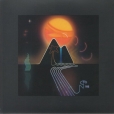
Judge-dread mastering by D&M; first-class Pallas pressing; stunning gatefold artwork by Will Bankhead.
Ruff ruff ruff.
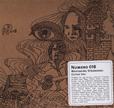
‘Bridging the gap between American primitive pioneers John Fahey and Leo Kottke and the California Modernists… the private side of the solo guitar movement from 1966-81.’ 40-page booklet, usual Numero class.
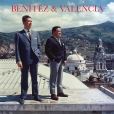
Gonzalo Benitez and Luis Alberto Valencia were kingpins of the musica nacional movement in Ecuador. Check them out on the cover, on a rooftop in Quito’s Old Town, surveying their dominion.
In 1970, when Valencia collapsed onstage during a performance of the yaravi Desesperacion — ‘My heart is already in ashes’ — and died four days later, aged 52, his coffin was carried through those city streets on the shoulders of a throng of his fans.
They began singing as a duo in their mid-teens. During twenty-eight years together they recorded more than six hundred songs, for Discos Ecuador, Nacional, Granja, Ortiz, Rondador, Onix, Fuente, Real, Tropical, Fadisa, RCA Victor — and of course CAIFE.
Their exquisitely romantic harmonising is a sublime blend of collected forbearance and abject self-annihilation, underpinned and elaborated by the heart-piercing, improvisatory guitar-playing of Bolivar Ortiz. Effectively the third member of the group. ‘El Pollo’ sets the tone and intensity for everything that follows: listen to his soloing at the start of our opener, Lamparilla.
Musically a pasillo — a cross between a Viennese waltz and the indigenous yaravi rhythm — Lamparilla draws its verses from a poem by Luz Martinez from Riobamba, written in 1918 when she was 15, under the influence of Baudelaire and Mallarme. Another pasillo here, Sombras (‘Shadows’) is one of the best-loved songs in the musica nacional canon, setting poetry about undercover sex and lost love by the Mexican poet Maria Pren, which was considered pornographic on publication in 1911. ‘When oblivion comes / I will lose you to the shadows / To the hazy gloom / Where one warm afternoon I laid bare my unbridled feelings for you / Never again will I search out your eyes / Or kiss your mouth.’
And Benitez & Valencia looked back still further, to the indigenous roots of Ecuadorian music, as the key to its future. Carnaval de Guaranda is their take on a song dating back to the era of the Mitimaes, a broad group of Bolivian tribes conquered by the Incas and displaced to Ecuador. ‘Impossible love of mine / I love you for being impossible / Who loves what is impossible / Is the truest lover.’
Fiercely beautiful, desolate music from the shadowy mists of time, the lip of oblivion, for anyone who had a heart, for anyone who ever dreamed.

Opening in 1973, tucked into a tangle of railway parts scattered across an industrial park at the western edge of Orlando East, Club Pelican was Soweto’s first night-club, and its premier live music venue throughout the seventies.
Pretty much everyone on the scene passed through its doors — to sing, or perform in the house band, or hang out. Schooled in standards, and fluent in the local musical vernacular, the music would take off in different directions at a moment’s notice — SA twists on jazz, funk, fusion, disco — spurred by the sounds coming in from Philadelphia, Detroit and New York City.
One Night In Pelican encapsulates these halcyon times, with a musical roll call of all the key groups and players, besides evocative, previously-unseen photographs, cover artwork by Zulu ‘Batsumi’ Bidi, and notes by Kwanele Sosibo, lit up by a gallery of first-person testimony.
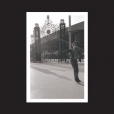
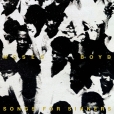
Camae Ayewa aka Moor Mother, trumpeter Aquiles Navarro, drummer Tcheser Holmes, saxophonist Keir Neuringer, and bassist Luke Stewart.
Raw, organic punk-jazz, trying out electronics and synthesizers for the first time.
‘Irreversible Entanglements’ fearless music takes to task the police, American politics, capitalism, and racism (The Nation).
‘The jazz ensemble evokes our American topography, both physically and psychologically, by capturing what’s in the news and what’s underneath that surface’ (Pitchfork).
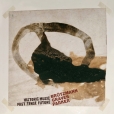
Peter Brötzmann, Milford Graves, and William Parker, live and direct form the front room of CBGBs in 2002, with the drummer’s hand-painted, Orisha-adorned double-bass-drum kit, captured in its full thunderous glory on this recording, occupying most of the available space.
First in a series of records presenting previously unreleased works featuring Milford Graves.
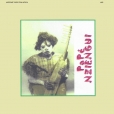
Stunningly modernised Tsogho ritual music from the interior forest of Gabon.
Beaten rattles, synths, Bwiti harp, male-female dialogical singing.
Released in 1989, to the intense consternation of purists; never before available outside Gabon.
Game-changing, and as authentic as it gets; warmly recommended.

His first two, liberating, aching, rawly beautiful LPs: Something Else!!!! The Music of Ornette Coleman from 1958, and Tomorrow Is the Question! The New Music of Ornette Coleman, from 1959.
With Don Cherry, Walter Norris, bassist Don Payne, Billy Higgins; Don Cherry, Shelly Manne, Percy Heath / Red Mitchell.

Two teenagers’ amapiano music from Gauteng province in South Africa, drawing on jazz, folk, afro, deep and tech house, kwaito, and dibacardi… but sounding like none of them.
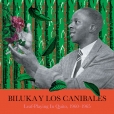
The out-of-this-world recordings of Dilson de Souza, leading a kind of tropical chamber jazz on leaves from a ficus tree.
Dilson was from Barra do Pirai, in the Brazilian countryside; moving to Rio as a young man, where he worked in construction. He recorded his first record in 1954, for RCA Victor. He travelled to Quito around 1957, soon hooking up with Benitez & Valencia, who introduced him to the CAIFE label.
Dilson played the leaf open, resting on his tongue, hands free, with his mouth as the resonator. Though a leaf can also be played rolled or folded in half, this method allowed for more precision, a tethered brilliance. A picked ficus leaf stays fresh, crisp and clean-toned for around ten hours. He could play eight compositions, four at each end, before it was spent.
Biluka plays trills and vibratos effortlessly, with utterly pure pitch, acrobatically sliding into notes and changing tone on the fly. In Manuco, he leads Los Caníbales into a mysterious landscape on a rope pulled from an Andean spaghetti western, and corrals and teases them into a dialogue. A leaf, a harp, a xylophone, and a rondador — joined in Bailando Me Despido (Dancing As I Say Goodbye) by a saucy organ, doing sloshed call-and-response. In Anacu de Mi Guambra, Biluka shows his full range of antics, hiccuping melodically over a set of magic tricks. His expressiveness was boundless.
The eucalyptus leaf is popular among Aboriginal Australians. In China, they’ve played leaves for 10,000 years. In Cambodia, people play the slek, a leaf plucked from either the sakrom or the khnoung tree. But ain’t nobody like Biluka, ever.
Astounding music.