


Your basket is empty

The 2011 album available on vinyl for the first time.
Bonjo Iyabinghi Noah meets Adrian Sherwood, with numerous guest spots including Jazzwad and Adamski.
Some of the hardest hitting AHC rhythms are here; more tailored to sound-system transmission than ever before.
The first vinyl release of this 2005 reunion of Bonjo Iyabinghi Noah and Adrian Sherwood.
Richly percussive African rhythms, bubbling with trippy effects; pounding bass.
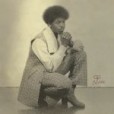
His terrific Positive-Negative LP from 1976, plus singles for Golden Voice, Mercury and Tosted (including the original Now That I Have You), and the sixties sides of his organ-funk combo the TMGs.
Lovely, characterful, poignant soul music which irresistibly radiates the singer’s worship of Curtis Mayfield and Marvin Gaye.
Al Green, Philly Soul and also-ran frustration are in the wings: What Can I Do came out of Grand Rapids on the coat-tails of Back Up Train; I’m A Stranger was recorded at Sigma, in the slipstream of Be Thankful For What You Got.
“I’m out here all alone… trying to find my way… I don’t know where to roam… I just don’t know what to say about all this… I’m a stranger.”
‘Mind-melting West Javanese gong pop, recorded in 2007 at Jugala studios in Bandung, based on a Javanese secular village music and dance tradition known as ketuk-tila, which was transformed into a popular studio music in the early 1960s by the producer Gugum Gumbira, founder of Jugala. With vocals by Idjah Hadidjah, one of the key historic voices of jaipongan, the situation here is disorientatingly heavy, low bpm gong pressure coming straight from the originators. It is a much less dainty affair than classical Javanese gamelan, and less febrile than the fully automatic Balinese variant. Hadidjah’s golden voice sews together shifting polyrhythms that would baffle a watchmaker; the whole is embroidered by rehab and underpinned by Mariana Trench level bass drops. A second disc features a set of thoughtful electronic reworkings’ (Frances Gooding, The Wire).

‘Imagine the opposite of a snake shedding its skin: slithering among the debris of 21st-century music, a porous body, its viscid skin picking up bits and pieces along the way. Rusty, discarded remnants; scraps. Amongst them the jewels of crowns, unglued and fallen from grace, now recovered by this makeshift form. Where does a body end? Does it end where these prostheses begin?
‘This Soma — ‘body’ in Greek — is a palimpsest. Up close you can trace all sorts of DNA microarrays across its surface. Bristol voices, Detroit electro hums, the amen break, an all-encompassing dub haze. As with all palimpsests, they are simultaneously one and a multitude. The body lives, its prostheses live. The body moves.’
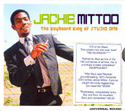
An excellent introduction — a tip-top, well-paced selection ranging across styles and vintages, with some marvellous photographs of the great man at Kingston airport, Canada-bound.
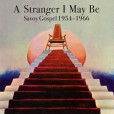
The first of three volumes surveying surely the mightiest Gospel label of them all.
Stomping, rollicking gospel music, intermingling with raw soul, searing blues, hard-rocking doo-wop and jazz, and storming r&b.
Infused and incandescent with the hurting, surging indignation of the Civil Rights movement, here are twenty-four precious scorchers by giants like the Staple Singers and Jimmy Scott, alongside devastating sides by less celebrated names like the Harmonising Five of Burlington, North Carolina, and teen-group the North Philadelphia Juniors, culminating triumphantly with slamming, sanctified versions of Hit The Road Jack and Wade In The Water. Drawn from nigh-impossible-to-find 78s, sevens and LPs, hardly any of these recordings have been reissued since their first release.
Presented in a gatefold sleeve, with full-size booklet; beautifully designed, with stunning, rare photographs and original Savoy artwork. Sound restoration and mastering at Abbey Road; pressed at Pallas.
Co-curated by Greg Belson, compiler of Divine Disco; with deep, extensive notes by Robert Marovich, author of A City Called Heaven: Chicago and the Birth of Gospel Music (University of Illinois), and host of the award-winning radio show Gospel Memories.
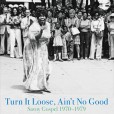
The second of three volumes presents sublime crossings of gospel with the soul, funk and jazz of the Black Power era. Twenty cuts dot dazzlingly between Muscle Shoals soul, screwed breakbeat, Mizells-style fusion, disco and proto-house. Triumphant re-workings of Sly Stone, Donny Hathaway and Herbie Hancock’s Head Hunters will have listeners throwing their pew cushions into the air.

Seventeen gems of fierce funk, rapturous soul and transcendent disco and boogie, super-charged with celebration and affirmativeness, loaded with roaring choirs, rocking horns and popping bass guitars, from the years leading up to Savoy’s acquisition by Malaco.
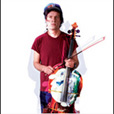
‘The compilation that started the renaissance… twelve tracks of Buddhist Bubblegum Alt Disco Pop recorded during Arthur’s prime years 1985-90.’

A terrific compilation of vintage UK street soul — at its nexus with rare groove and lovers rock, so intensely nostalgic for us at HJ — by the same crew which put together the excellent For The Love Of You volumes.
A dozen gems here: treasurable DIY labels and whites teeming with raw longing and overproof sincerity, riding limber Soul II Soul-style grooves, wannabe Jam & Lewis, and crunchy, synthy, electro-soul. (The System were the US overmasters of this.)
Just a touch of cheese, a smidgen of sublimely out-of-tune singing, splashes of sploshy beatbox and dodge sampling, a brazen Roy Ayers pinch… components of loveliness.
Calling all midnight ravers and undercover lovers. You know who you are.
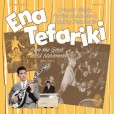

The opening track of the Ecstatic Computation album, re-imagined by eight friends and long-time collaborators.
‘Kali Malone turns in a slowed-down, austere and eerie version for two Organs; Evelyn Saylor a vocal ensemble conveying its choral, psychedelic and vitalistic nature. Walter Zanetti composes Fantas for electric guitar. Bendik Giske’s reinterpretation for saxophone and voice captures its atmosphere and its psychic meteorology. Carlo Maria resynthesizes for TR808 and MC202, with an eye on the dancefloor. Jay Mitta’s Singeli pitches up the percussion, unleashing the frenetic, shifting matter within the original into euphoric dance. Baseck’s variation is a hardcore rave fantasia; whilst Kara-Lis Coverdale’s take is a phantasmagoria for piano that gently, yet inexorably, captures the relentlessness chimerical qualities of the original, unveiling its spectral backbone.’
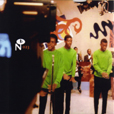
An early associate of Ray Charles and Ike Turner, Alan Merry ran his YoDi, Gateway and Merry labels like a kind of community youth project, in tough, late-sixties East St. Louis, Illinois.