
Your basket is empty

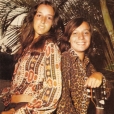
Irresistible tropical psych-funk by Colombian sisters Elia and Elizabeth Fleta.
Drawn from just a handful of recordings, between 1972 and 1973, accompanied by Jimmy Salcedo and his group La Onda Tres.
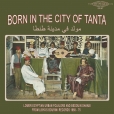
‘Egypt’s ‘official’ popular music throughout much of the twentieth century was a complex form of art song steeped in tradition, well-loved by the middle and upper classes. The music business was highly structured and professional; centred in Cairo. However, far from the metropolis, to the north and northwest, in towns like Tanta and Alexandria and extending across the Saharan Desert to the Libyan border, a raw, hybrid shaabi/al-musiqa al-shabiya style of music was springing up, supported by small, upstart labels.
‘This compilation covers the full range of styles presented by the short-lived but fecund Bourini Records, launched in the late 1960s in Benghazi, Libya. Gobsmacking moments include Basis Rahouma’s transformation into a growling, barking man-lion, and Reem Kamal’s onwards-and-upwards hand-clapping party banger, with a grooving nihilistic dissonance reminiscent of the Velvet Underground. The thorough-going contrast with mainstream Egyptian popular music is stark in Ana Mish Hafwatak, its vocal woven deftly through a constant accordion drone, and the sparse, slow-burning lament Al Bint al Libya. Whereas the mainstream was aspirational, projecting Egyptian culture at its most refined, the performances captured by Bourini were authentic expressions of ordinary, everyday life. More than half a century old, this music has lost none of its urgency, presence, or relevance.’
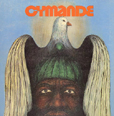
The South Londoners’ amazing 1972 LP debut, including Caribbean-funk classics Bra and The Message, the deep Santana vibes of Dove, the playful grounation of Folk Song…
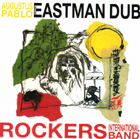
Excellent dub set originally released in 1988, based around Tetrack’s classic Let’s Get Started LP, from nearly a decade before. Roomy and reverberating, with synths preferred to melodica.
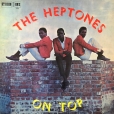
Studio One activist Sugar Minott’s favourite LP of all time.
A stone-classic mixture of foundational rhythms, peerless rocksteady lovers, and songs with the political concerns of the roots reggae to come.
Killer after killer. An absolute must.
It was intended that one of Hudson’s teenage sons would voice the dubs. In the event the Love Joys, Wayne Jarrett, and most inimitably Hudson himself featured at the microphone. Like Wackies, Hudson was a Studio One devotee — ‘I used to hold Don Drummond’s trombone for him so I can be in the studio’ — and the album follows Coxsone’s recent strategy of overdubbing signature rhythms.
The Studio One sides were aimed at the dancefloor; Hudson’s reworks of tracks like Melody Maker are more psychological. Heavy Barrett Brothers rhythms are pitched down and remixed deeper still with reverb, filters and other distortion, and overlaid with new recordings of guitar, percussion, keyboard, voice, often crazily treated.
Originally released in 1981 on the Joint International label, in NYC.
Legendary, strange, compelling music.