






Your basket is empty


Lovely, rootsy, melancholic, multifarious music from Angola. Check the sublime, chugging proto-house of Kazum-zum-zum, to start, with its twist of Afrobeat; then the hypnotic Fourth World marimba of Kizomba Kya Kisanji; then the expressive soul of Dembita, flowering out of Baden Powell… Warmly recommended.

The opening track of the Ecstatic Computation album, re-imagined by eight friends and long-time collaborators.
‘Kali Malone turns in a slowed-down, austere and eerie version for two Organs; Evelyn Saylor a vocal ensemble conveying its choral, psychedelic and vitalistic nature. Walter Zanetti composes Fantas for electric guitar. Bendik Giske’s reinterpretation for saxophone and voice captures its atmosphere and its psychic meteorology. Carlo Maria resynthesizes for TR808 and MC202, with an eye on the dancefloor. Jay Mitta’s Singeli pitches up the percussion, unleashing the frenetic, shifting matter within the original into euphoric dance. Baseck’s variation is a hardcore rave fantasia; whilst Kara-Lis Coverdale’s take is a phantasmagoria for piano that gently, yet inexorably, captures the relentlessness chimerical qualities of the original, unveiling its spectral backbone.’

Coloured vinyl.
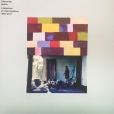
Improvisatory, personal recordings made on various synthesisers between 1989 and 2017.
‘Amazing music that moves between abstract electronic experiments to melodic, DMT bent sounding, classical contemporary music and futuristic soundtracks from non-existing sci-fi movies you’ll wish you could see. It time-warps you from here to there then freezes the moment… very focused, unpretentious and highly emotive music . A wonderful and dreamy sound garden’ (Tako Reyenga, Music From Memory).
‘Chateauroux is mighty… A proper zoner. Flung on earth’ (John T. Gast).

Visceral, elemental, electronic funk, conjured from scraps of sound, breath, mutterings, dubwise remembrances, scuffling, sweat and blood, thin air — ‘crawled out of the slime’, as the opener puts it, self-engendering like the baddie in Terminator — all harnessed to cruelly grooving earthquake bass and b-boy drum science.
Rhythmically it has ants in its pants and it needs to dance, with an improvisatory, streetwise nervous energy and uninhibited, purposeful rapture — akin to this guy, say, eighteen minutes in — crossed with on-song Pepe Bradock and stripped-to-the-bone, mongrel hip-hop.
It’s unruly and edgy, a bit off its rocker, emotionally ranging — typically anxious, often nostalgic — and riveting dance music.
Judge-dread mastering by D&M; first-class Pallas pressing; stunning gatefold artwork by Will Bankhead.
Ruff ruff ruff.
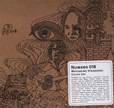
‘Bridging the gap between American primitive pioneers John Fahey and Leo Kottke and the California Modernists… the private side of the solo guitar movement from 1966-81.’ 40-page booklet, usual Numero class.

Impatiently returning to the golden age of Ecuadorian musica national, this second round of retrievals is more of a selectors’ affair: less reverent, more free-flowing, with more twists and turns. There is no let-up in the quality of the music, maintaining the same judicious, heart-piercing balance between emotional desolation and dignified endurance, the same bitter-sweet play between affective excess and formal sublimity.
This time around, the woman steal the show. Laura and Mercedes Suasti were child stars, with an exclusive Radio Quito contract. Unlike nearly all the men here, they lived long and prospered: Mercedes died last year, at the age of 93. Gladys Viera and Olga Gutierrez both came to Ecuador from Argentina. To start, Gladys plugged the scandalous new Monokini swimwear; Olga performed for visiting British royalty in 1962. Olga was glamorous but tough. She would make little of the amputation of one of her legs: ‘I don’t sing with my leg.’ She is accompanied on our opener by quintessentially reeling, sultry musica national: haunted-house organ, twinkling xylophone, Guillermo Rodriguez’ heart-plucking guitar-playing, and lilting, dance-to-keep-from-crying double-bass. ‘Sometimes I think that you will leave me with no memories,’ she sings, ‘that you hold only disappointments in store for me… In the future your love will search me out, full of regret. By then it will be too late, there will be no consolation, only disappointment awaiting you.’
Other highlights include the two contributions of Orquesta Nacional: Ponchito Al Hombro, like an off-the-wall forerunner of the Love Unlimited Orchestra, beamed into the tropics from an unknowable time and space; and the tone poem Atahualpa, a mystical yumbo invoking Quito’s most ancient inhabitants, the Kichwa. Also the tremulous, gypsy-flavoured violin-playing of Raul Emiliani, who arrived in Quito from Italy, suffering PTSD from the Second World War; the inscrutable, sardonic experimentalism of organist Lucho Munoz; and the mooing and whistling of Toro Barroso — cow-thief school of Lee Perry — in which a muddy bull dashes home to his darling chola, fearless, full of desire.
Lavishly presented, with a full-size, full-colour booklet, with transporting art-work and expert notes. Luminous sound, by way of Abbey Road, D&M and Pallas.
Truly spell-binding music.
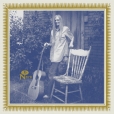
‘Home to Cuca Records and hundreds of Nashville-fantasizing pluckers and singers, Wisconsin’s Driftless region was a hotbed of country music in the 1960s. Influenced by old-timey ethnic songs, Bakersfield outlaws, countrypolitan rainbows, and the lonesome twang of every rural route roadhouse, these seventeen Driftless Dreamers washed up at Jim Kirchstein’s Sauk City record plant with little more than $100 and a longing.’

Deep-fried rural psychedelia, primitive drum-machine grooves and woozy country-funk — including unlikely covers of The Blackbyrds, Michael Hurley and Jimmy Cliff — by Matt Valentine (MV) and Pat Gubler (PG Six), locked down in Vermont with pals S. Freyer Esq, Jim Bliss, Coot Moon and Carson ‘Smokehound’ Arnold.

Gonzalo Benitez and Luis Alberto Valencia were kingpins of the musica nacional movement in Ecuador. Check them out on the cover, on a rooftop in Quito’s Old Town, surveying their dominion.
In 1970, when Valencia collapsed onstage during a performance of the yaravi Desesperacion — ‘My heart is already in ashes’ — and died four days later, aged 52, his coffin was carried through those city streets on the shoulders of a throng of his fans.
They began singing as a duo in their mid-teens. During twenty-eight years together they recorded more than six hundred songs, for Discos Ecuador, Nacional, Granja, Ortiz, Rondador, Onix, Fuente, Real, Tropical, Fadisa, RCA Victor — and of course CAIFE.
Their exquisitely romantic harmonising is a sublime blend of collected forbearance and abject self-annihilation, underpinned and elaborated by the heart-piercing, improvisatory guitar-playing of Bolivar Ortiz. Effectively the third member of the group. ‘El Pollo’ sets the tone and intensity for everything that follows: listen to his soloing at the start of our opener, Lamparilla.
Musically a pasillo — a cross between a Viennese waltz and the indigenous yaravi rhythm — Lamparilla draws its verses from a poem by Luz Martinez from Riobamba, written in 1918 when she was 15, under the influence of Baudelaire and Mallarme. Another pasillo here, Sombras (‘Shadows’) is one of the best-loved songs in the musica nacional canon, setting poetry about undercover sex and lost love by the Mexican poet Maria Pren, which was considered pornographic on publication in 1911. ‘When oblivion comes / I will lose you to the shadows / To the hazy gloom / Where one warm afternoon I laid bare my unbridled feelings for you / Never again will I search out your eyes / Or kiss your mouth.’
And Benitez & Valencia looked back still further, to the indigenous roots of Ecuadorian music, as the key to its future. Carnaval de Guaranda is their take on a song dating back to the era of the Mitimaes, a broad group of Bolivian tribes conquered by the Incas and displaced to Ecuador. ‘Impossible love of mine / I love you for being impossible / Who loves what is impossible / Is the truest lover.’
Fiercely beautiful, desolate music from the shadowy mists of time, the lip of oblivion, for anyone who had a heart, for anyone who ever dreamed.

Meditative, devotional music pondering racism and ancestorship, co-produced by Meshell Ndegeocello. Featuring the saxophonist’s usual quartet, plus vocalists for the first time — including Ganavya — who shine.

Opening in 1973, tucked into a tangle of railway parts scattered across an industrial park at the western edge of Orlando East, Club Pelican was Soweto’s first night-club, and its premier live music venue throughout the seventies.
Pretty much everyone on the scene passed through its doors — to sing, or perform in the house band, or hang out. Schooled in standards, and fluent in the local musical vernacular, the music would take off in different directions at a moment’s notice — SA twists on jazz, funk, fusion, disco — spurred by the sounds coming in from Philadelphia, Detroit and New York City.
One Night In Pelican encapsulates these halcyon times, with a musical roll call of all the key groups and players, besides evocative, previously-unseen photographs, cover artwork by Zulu ‘Batsumi’ Bidi, and notes by Kwanele Sosibo, lit up by a gallery of first-person testimony.